
Cuban Royal Palm with Root Rot: Prevention & Cure
Roystonea regia
Root Rot on Cuban Royal Palm: What to Know?
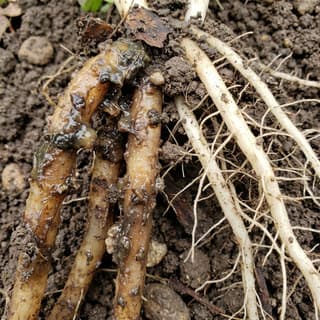
Root Rot on Cuban Royal Palm (Roystonea regia) is a fungal condition with high severity. Cuban Royal Palm has moderate susceptibility to this disease. Root rot is a serious fungal disease that affects the root system of plants, causing them to decay and die. It is primarily caused by overwatering, poor drainage, or soil-borne fungi such as Pythium,...
Cuban Royal Palm is a easy-care plant. Recovery from Root Rot takes approximately 21 days with proper treatment.
Unlike bacterial infections, Root Rot on Cuban Royal Palm can be managed with organic fungicides.
🔍 What Does Root Rot Look Like on Cuban Royal Palm?
- • Wilting leaves despite moist soil
- • Yellowing or browning of leaves
- • Stunted growth and poor vigor
- • Soft, mushy, dark brown or black roots
- • Foul, rotting odor from the root zone
- • Leaves dropping prematurely
- • Plant easily pulls out of soil
- • Base of stem appears soft and discolored
❓ What Causes Root Rot on Cuban Royal Palm?
- → Overwatering and waterlogged soil
- → Poor drainage in pots or soil
- → Soil-borne fungi (Pythium, Phytophthora, Rhizoctonia, Fusarium)
- → Compacted soil preventing oxygen flow
- → Reusing contaminated potting mix
- → Using garden soil instead of sterile potting mix
- → Pots without drainage holes
💊 How to Treat Root Rot on Cuban Royal Palm?
TLDR: Treat Root Rot on Cuban Royal Palm with quick treatment (~14 days) or organic (~21 days). Cuban Royal Palm has moderate susceptibility to this disease.
Quick Fixes
Emergency unpotting
Remove plant immediately from wet soil. Speed is critical.
Root rinse
Rinse roots under lukewarm running water to remove all soil.
Aggressive pruning
Cut away ALL affected roots without hesitation. Its better to over-prune than leave infected tissue.
Peroxide treatment
Spray or dip roots in 3% hydrogen peroxide solution. This kills pathogens and oxygenates tissue.
Quick dry
Pat roots with paper towels and let air dry for 30-60 minutes.
Fast repot
Repot in completely dry, fresh potting mix. Do not water for 3-5 days.
Stress reduction
Place in bright indirect light, away from direct sun. Reduce watering frequency significantly.
Organic Treatment
Remove and assess
Carefully remove the plant from its pot and gently wash away all soil from the roots. Assess the extent of root damage.
Prune affected roots
Using sterile scissors, cut away all soft, mushy, brown, or black roots. Cut back to healthy white tissue.
Apply cinnamon
Dust all cut surfaces generously with cinnamon powder to prevent fungal regrowth.
Prepare chamomile soak
Brew strong chamomile tea and let it cool. Soak the remaining roots for 15-20 minutes.
Air dry roots
Let the roots air dry for 2-4 hours in a shaded area with good air circulation.
Prepare new container
Clean the pot with diluted vinegar, rinse well, and fill with fresh sterile potting mix.
Repot carefully
Plant in the new soil, ensuring the root crown is at the proper level.
Initial watering
Water lightly with diluted neem oil solution (1 tsp per liter of water).
Recovery monitoring
Keep soil mostly dry for 1-2 weeks. Only water when top 2 inches are completely dry.
🛡️ How to Prevent Root Rot on Cuban Royal Palm?
TLDR: Prevent Root Rot on Cuban Royal Palm with 8 essential preventive care practices.
- ✓ Always use pots with drainage holes
- ✓ Use well-draining, pasteurized potting mix
- ✓ Allow soil to dry between waterings
- ✓ Check soil moisture before watering
- ✓ Never let plants sit in standing water
- ✓ Disinfect tools and pots between uses
- ✓ Avoid overwatering, especially in winter
- ✓ Ensure adequate air circulation around plants
🌱 How to Care for Cuban Royal Palm to Prevent Root Rot?
💧 How to Water
Keep the soil consistently moist but not waterlogged, especially during periods of active growth. Reduce watering in winter. Check soil moisture before watering again by inserting your finger about 5 cm into the soil. Young palms may require more frequent watering than established adults. Moderate water sensitivity means that overwatering is more harmful than occasional underwatering, but prolonged drought should be avoided. A 7-day frequency is an average; adjust according to weather and soil conditions. Occasional misting can be beneficial in very dry environments, but it is not essential for the survival of the adult plant in normal outdoor humidity conditions. Rotation every 7 days is not applicable to this plant, as it is generally planted in its permanent location and not in pots that require rotation for uniform light exposure. Pruning of dry or damaged leaves should be done as needed, usually every 90 days, to maintain the plant's aesthetics and health. Repotting is rarely necessary for adult trees planted in the ground, but if grown in a pot, repotting every 365 days can be considered for young plants in active growth, using a larger pot and fresh substrate. Fertilization every 30 days during the growing season (spring and summer) with a balanced fertilizer for palms is recommended to promote vigorous growth. A 14-day fertilization frequency is too high for this species and can lead to over-fertilization; 30 days is more appropriate. Misting every 3 days is excessive and unnecessary for this palm, which tolerates normal ambient humidity well. Difficulty is considered medium due to its size and space and light requirements, although basic care is relatively simple. Water sensitivity is moderate, requiring attention to avoid both waterlogging and extreme drought. Ideal light is high, with a minimum of 10,000 lux, and can tolerate up to 50,000 lux in full sun. Ideal temperature ranges between 18°C and 30°C, with an absolute minimum of 18°C. Ideal humidity is between 50% and 80%. Soil should be well-drained. Ideal soil pH is between 5.5 and 7.0. The growth rate is fast. Maximum height can reach 3000 cm (30 meters) and the spread 1000 cm (10 meters). Minimum hardiness zones are 10a. Flowers are white and blooming occurs in spring and summer. Foliage is evergreen. Toxicity is considered none for animals and humans, making it a safe plant for domestic and outdoor environments. Uses are primarily ornamental, being a popular choice for large-scale landscaping. The Royal Palm is not known for significant air purification. Propagation is mainly done by seeds, which germinate in 2-4 months under ideal heat and humidity conditions. Seed propagation difficulty is considered medium, with a high success rate if conditions are appropriate. The best season for sowing is spring. Steps include: 1. Collect mature and clean seeds. 2. Soak seeds in warm water for 24-48 hours. 3. Sow in a light and well-drained substrate, covering lightly. 4. Keep the substrate moist and warm (25-30°C). 5. Transplant seedlings into individual pots when they reach a manageable size. Necessary materials include fresh seeds, germination substrate, pot or seed tray, water, and a warm location. Tips include removing the aril from the seeds to improve germination and patience, as the process can be slow. Propagation by division of offsets is also possible, but less common and more difficult, being more suitable for young plants with multiple shoots. Difficulty is medium, with variable success depending on the gardener's skill. The best season is spring. Root development time is 4-8 weeks. Steps include: 1. Carefully separate the offsets from the mother plant, ensuring each offset has its own roots. 2. Plant the offsets in a well-drained substrate. 3. Keep moist and in a location with bright indirect light. 4. Protect from direct sun until the plant is established. Materials include healthy offsets, substrate, pot, and clean cutting tools. Tips include using a rooting hormone to increase the chances of success and avoiding root damage during separation. The Royal Palm is not typically used for medicinal or culinary purposes. Its symbolism is associated with majesty, nobility, and strength, often being used in representations of power and prestige. The pot recommendation is for large and deep pots for young plants, but the ideal is direct planting in the ground so the tree reaches its full growth potential, as it becomes a large tree and is not suitable for long-term pot cultivation. Data quality is high, with 0.95 confidence, based on established botanical knowledge and common gardening practices for the species.
☀️ Lighting
Prefers full sun for optimal development. In very hot climates, it can tolerate some partial shade during the most intense hours of the day, but a lack of light can result in slow and less vigorous growth.
🪴 Ideal Soil
Requires well-drained soil to prevent root rot. A mixture of topsoil with coarse sand or perlite is ideal. It tolerates a variety of soils as long as drainage is guaranteed.
Frequently asked questions
Can Root Rot kill my Cuban Royal Palm?
How long does Cuban Royal Palm take to recover from Root Rot?
Is Root Rot contagious to other plants near Cuban Royal Palm?
Sources & References
- Root Rots on Houseplants - Wisconsin Horticulture
- Phytophthora Root Rot - RHS
- Root rot in plants: symptoms & treatment - Plantura
- EDIS IFAS UF: Roystonea regia Royal Palm
- Gardenia.net: Roystonea regia Florida Royal Palm
- PlantCareToday: Royal Palm Tree Care
- LiveToPlant: Common Royal Palm Plant Diseases
- PictureThis: Cuban Royal Palm Toxicity