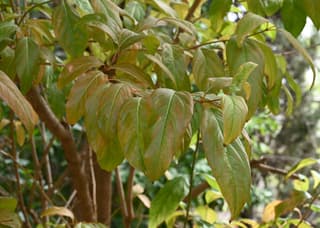
Fiddlewood with Scale Insects: Prevention & Cure
Citharexylum spinosum
Scale Insects on Fiddlewood: What to Know?
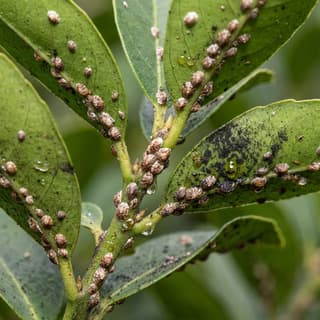
Scale Insects on Fiddlewood (Citharexylum spinosum) is a pest condition with moderate severity. Fiddlewood has moderate susceptibility to this disease. Scale insects are small sap-sucking pests that appear as brown, shell-like bumps on plant stems and leaves. There are over 25 species, divided into armored (hard) and unarmored (soft) scales. They fee...
Fiddlewood is a easy-care plant. Recovery from Scale Insects takes approximately 30 days with proper treatment.
Unlike fungal diseases, Scale Insects on Fiddlewood responds quickly to integrated pest management.
🔍 What Does Scale Insects Look Like on Fiddlewood?
- • Small brown rounded lumps on leaves and stems
- • Shell-like or waxy bumps on undersides of leaves
- • Yellowing or chlorotic (pale) leaves
- • Sticky honeydew coating on leaf surfaces
- • Black sooty mold fungus growing on honeydew
- • Drooping or wilting leaves
- • Stunted growth and reduced plant vigor
- • Presence of ants feeding on honeydew
❓ What Causes Scale Insects on Fiddlewood?
- → Introduction of infected plants from nurseries
- → Poor plant health making them more susceptible
- → Warm indoor environments favoring reproduction
- → Lack of natural predators indoors
- → Overcrowding of plants allowing easy spread
- → Stress from heat, drought, or poor care
💊 How to Treat Scale Insects on Fiddlewood?
TLDR: Treat Scale Insects on Fiddlewood with quick treatment (~15 days) or organic (~30 days). Fiddlewood has moderate susceptibility to this disease.
Quick Fixes
Step 1
Blast affected plants with strong water spray from garden hose to dislodge scale insects
Step 2
Mix emergency soap solution: 1 tablespoon dish soap + 1 teaspoon vegetable oil + 1 teaspoon 90-proof alcohol + 1 quart water
Step 3
Spray solution directly on scale insects, focusing on undersides of leaves
Step 4
Physically wipe off visible scale with damp cloth or soft brush
Step 5
Repeat treatment every 2-3 days for one week
Organic Treatment
Step 1
Inspect plants weekly to identify scale insects in their crawler stage (before protective coating develops)
Step 2
Mix insecticidal soap: 1 tablespoon dish soap + 1 quart water in spray bottle
Step 3
Spray affected areas thoroughly, ensuring contact with insects, once daily for 3-4 days
Step 4
Apply horticultural oil (neem oil) to suffocate eggs, nymphs, and adults
Step 5
Physically remove visible scale by wiping leaves with damp cloth
Step 6
Introduce beneficial insects like ladybugs, lacewings, or parasitic wasps for ongoing control
Step 7
Apply fermented stinging nettle tea spray as additional organic treatment
🛡️ How to Prevent Scale Insects on Fiddlewood?
TLDR: Prevent Scale Insects on Fiddlewood with 7 essential preventive care practices.
- ✓ Carefully inspect all new plants before bringing them home
- ✓ Quarantine new plants for 2-3 weeks away from other plants
- ✓ Maintain plant health with proper watering and fertilization
- ✓ Ensure good air circulation around plants
- ✓ Regularly inspect plants, especially leaf undersides
- ✓ Keep plants properly spaced to prevent spread
- ✓ Encourage natural predators like ladybugs and lacewings
🌱 How to Care for Fiddlewood to Prevent Scale Insects?
💧 How to Water
Allow the top few inches of soil to dry out between waterings. Established plants are drought-tolerant and should be watered deeply every 10-14 days in warm weather; reduce to once every 3-4 weeks during cooler periods. Overwatering is the primary cause of decline, so always ensure good drainage.
☀️ Lighting
Position in full sun (more than 6 hours of direct sunlight) for a dense, floriferous canopy. It tolerates partial shade, but shade results in a sparser canopy and fewer flowers. Indoors, keep it within 1 m (3 ft) of the brightest window.
🪴 Ideal Soil
It is remarkably adaptable to soil, doing well in sandy, loamy, or clay substrates. The ideal is a well-drained, loamy soil rich in organic matter. In pots, use a well-draining mix with about 30 percent perlite or coarse sand. A pH between 5.5 and 7.5 is ideal, although it tolerates a range of 5 to 8.
Frequently asked questions
Can Scale Insects kill my Fiddlewood?
How long does Fiddlewood take to recover from Scale Insects?
Is Scale Insects contagious to other plants near Fiddlewood?
Sources & References
- How to Treat Scale on Indoor Houseplants - Greenery Unlimited
- Scale Management Guidelines - UC IPM
- Controlling Scale Insects and Mealybugs - Alabama Extension
- Scale Insects: Identification and Control - RHS
- How to Get Rid Of Scale Insects on Plants - Almanac
- Citharexylum spinosum: Fiddlewood - UF IFAS
- Citharexylum spinosum - Useful Tropical Plants
- Citharexylum spinosum (Florida Fiddlewood) - Gardenia.net
- Citharexylum spinosum - Florida Native Plant Society