Sooty Mold: Fungal Disease | Treatment Guide
Sooty mold is a fungal disease that develops on surfaces coated with honeydew, a sticky sweet substance secreted by sap-sucking insects like aphids, scale insects, and whiteflies. While it does not directly infect plant tissue, it reduces photosynthetic capacity by blocking sunlight and diminishes the plant's aesthetic appearance.
Medium
14 days
What is Sooty Mold?
Sooty Mold is a fungal condition with moderate severity that affects plants. Sooty mold is a fungal disease that develops on surfaces coated with honeydew, a sticky sweet substance secreted by sap-sucking insects like aphids, scale insects, and whiteflies. While it does not directly infect plant tissue, it reduces photosynthetic capacity by blocking sunlight and diminishes t...
Sooty Mold is a fungal disease with moderate severity that spreads at a moderate rate. Recovery typically takes approximately 14 days with proper treatment. It affects 10 plant species in our database.
Unlike bacterial infections, Sooty Mold spreads slowly but is harder to eradicate. Without treatment, affected leaves won't recover. Unlike many common diseases, Sooty Mold is not contagious between plants.
🔍 What Are the Symptoms of Sooty Mold?
TLDR: Sooty Mold presents 5 main symptoms. Early identification is crucial for effective treatment.
Main Symptoms
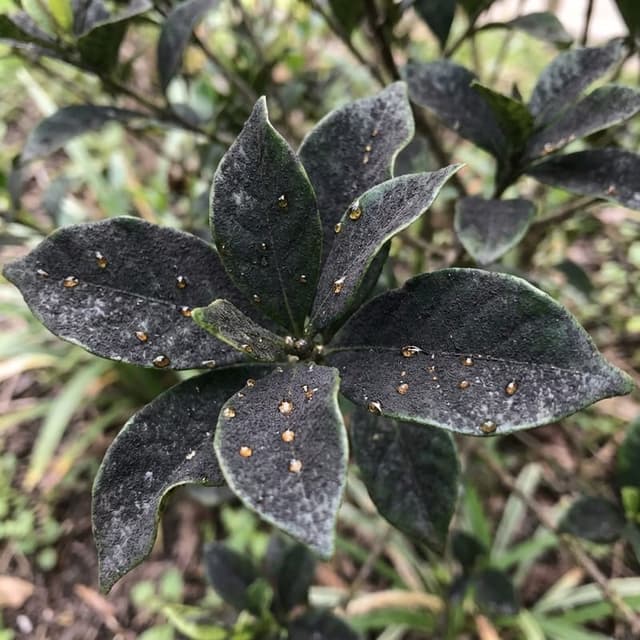
- ! Black, powdery coating on leaves, stems, and fruits
- ! Dark fungal growth resembling soot or coal dust
- ! Sticky honeydew residue on leaf surfaces
- ! Yellowing or premature leaf drop due to reduced light
- ! Black layer may flake off or peel during rain
Visual Signs
❓ What Causes Sooty Mold in Plants?
- → Fungal colonization of honeydew produced by sap-sucking insects
- → Infestation of aphids, scale insects, whiteflies, or psyllids
- → Poor air circulation around plants
- → Excessive fertilization promoting succulent growth that attracts pests
- → Ants protecting honeydew-producing insects
💊 How to Treat Sooty Mold?
TLDR: Treat Sooty Mold with 7 days of quick treatment or 14 days of organic treatment. Full recovery takes approximately 14 days.
Quick Fixes
~7 days
Immediate physical removal
Use a strong water stream to remove as much sooty mold as possible. Do this in the morning so leaves dry during the day.
Apply insecticidal soap
Spray insecticidal soap directly on pests (aphids, scale). Cover all leaf surfaces including undersides.
Chemical pest control
Use fast-acting insecticide (pyrethroids or organophosphates) if infestation is severe. Strictly follow manufacturer's instructions.
Second application
After 5-7 days, repeat insecticide application to eliminate newly hatched pests.
Final cleaning
Once pests are controlled, wash leaves again with water and soap to remove sooty mold and honeydew residue.
Materials needed:
Organic Treatment
~14 days
Identify the pest
Inspect the plant to find aphids, scale insects, or whiteflies. Sooty mold will disappear after eliminating these insects.
Wash off sooty mold
Mix 1 tablespoon of mild soap in 1 gallon of lukewarm water. Use a soft cloth to gently wipe affected leaves.
Apply neem oil
Dilute neem oil according to instructions and spray on pests. Apply in late afternoon to avoid sun damage. Repeat weekly for 3 weeks.
Improve air circulation
Prune dense branches to increase airflow. This makes it harder for fungi and pests to thrive.
Monitor recovery
Check weekly for new signs of pests or sooty mold. Continue preventive treatment if necessary.
Materials needed:
Expert Treatment
~21 days
Complete diagnosis
Identify all pests present (aphids, scale, whiteflies, psyllids). Use magnifying glass to check immature stages. Document infestation severity.
Ant control
Apply sticky barriers on stems and ant baits in soil. Ants farm honeydew-producing pests - eliminating them is crucial.
Professional washing protocol
Mix horticultural soap (not detergent) with lukewarm water. Wash each leaf individually with soft cloth. For severe infestations, use low-pressure water jet.
Integrated pest management
Combine multiple approaches: horticultural oil (suffocates pests), insecticidal soap (contact kill), systemic insecticide (long-term protection). Apply in 5-7 day cycles.
Introduce biological control
Release natural predators: ladybugs for aphids, lacewings for scale, Encarsia formosa for whiteflies. Avoid broad-spectrum pesticides after release.
Cultural management
Prune to improve air circulation. Adjust fertilization (avoid excess nitrogen). Water properly - water stress attracts pests.
Professional monitoring
Install yellow sticky traps to monitor pest populations. Inspect weekly with magnifying glass. Record data to evaluate treatment effectiveness.
Step by Step
- 1
Identify and control honeydew-producing insects
- 2
Wash affected leaves with water and mild soap solution
- 3
Prune areas with poor air circulation
- 4
Apply neem oil or insecticidal soap weekly
- 5
Monitor plant regularly for 2-3 weeks
- 6
Remove severely affected leaves if necessary
🧪 Natural vs Chemical: Which Treatment Works for Sooty Mold?
🌱 Natural Solutions
- ✓ Wash affected areas with lukewarm water and mild soap (1 tablespoon per gallon)
- ✓ Apply neem oil to control honeydew-producing insects
- ✓ Use insecticidal soap or horticultural oil on pests
- ✓ Remove severely infested branches and leaves
- ✓ Spray off sooty mold with strong water stream
- ✓ Introduce natural predators like ladybugs
💉 Chemical Solutions
- ✓ Apply fungicides in severe cases (consult professional)
- ✓ Use systemic insecticides for persistent pest control
- ✓ Apply organophosphates (acephate, malathion) for severe infestations
- ✓ Spray copper-based fungicides in extreme cases
Treatment Comparison
| Type | Estimated time | Steps | Difficulty | Best For |
|---|---|---|---|---|
| ⚡Quick | ~7 days | 5 | Advanced | Urgent cases |
| 🌿Organic | ~14 days | 5 | Advanced | Indoor plants |
| 🔬Expert | ~21 days | 7 | Advanced | Severe infections |
🛡️ How to Prevent Sooty Mold?
TLDR: Prevent Sooty Mold with 6 essential care practices. Regular monitoring is key for early detection.
- ✓ Control sap-sucking insects using insecticidal soap or neem oil
- ✓ Improve air circulation through regular pruning
- ✓ Avoid excessive fertilization that stimulates succulent growth
- ✓ Maintain healthy plants with proper watering and nutrition
- ✓ Control ants using sticky barriers or baits
- ✓ Regularly inspect new growth for insects
🔗Related Diseases
Rust
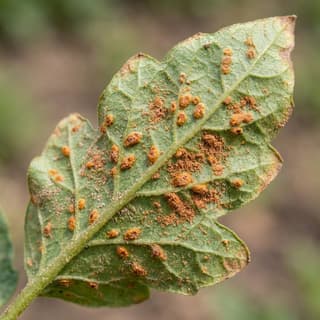
Rust fungi (Pucciniales) are fungal diseases that form rust-colored, usually orange to brown pustules with powdery spore dust on leaves, stems, or fruits. Typical symptoms include small spots that develop into cushions or rings; leaves turn yellow, curl, and drop prematurely. The fungi spread primarily in damp weather and dense foliage. Many ornamental and crop plants are affected, frequently including roses, mallows (hollyhocks), pears (pear rust), and currants. Some rust fungi require two host plants for their life cycle, such as pear and certain juniper species.
Cherry Witches' Broom
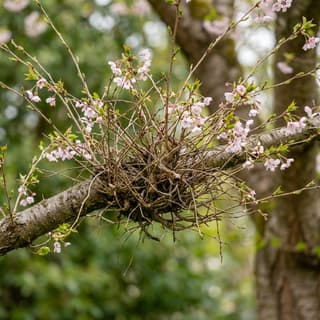
Taphrina wiesneri is a fungal disease affecting cherry trees (Prunus species, including sweet, sour, and ornamental varieties). The fungus overwinters in buds and bark, infecting young leaves and shoots during cool, wet spring weather. Infected leaves become thickened, puckered, and curled, often displaying reddish or yellow blotches and a fine whitish bloom on the surface. Severely affected leaves may drop prematurely. Small twigs can develop 'witches' brooms,' which are dense clusters of weak, distorted shoots.
Powdery Mildew
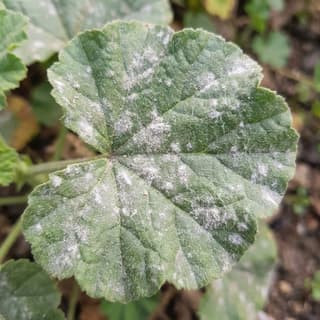
MediumPowdery mildew is a common fungal disease caused by various fungi species including Erysiphe, Podosphaera, Oïdium, and Leveillula. It affects over 10,000 plant species worldwide. The disease thrives in warm, dry climates with high humidity and appears as a distinctive white powdery coating on plant surfaces.

Root Rot
HighRoot rot is a serious fungal disease that affects the root system of plants, causing them to decay and die. It is primarily caused by overwatering, poor drainage, or soil-borne fungi such as Pythium, Phytophthora, Rhizoctonia, and Fusarium. The disease thrives in waterlogged conditions where roots are deprived of oxygen, making them susceptible to fungal infection.