Spermosporina — Plant Disease
Spermosporina refers to seed‑borne fungi that live on or inside seeds. They thrive in cool, damp conditions and can cause seeds to rot before sprouting or make young seedlings collapse soon after emergence. Typical signs are poor or patchy germination, soft or discolored seeds, fuzzy mold on the seed surface or seed‑starting mix, and thin seedlings that topple (damping‑off). You may also see weak, stunted growth or water‑soaked spots on the first leaves. Many plants started from seed can be affected, including vegetables, herbs, grasses, grains, and ornamentals.
What is Spermosporina?
Spermosporina is a fungal condition with moderate severity that affects plants. Spermosporina refers to seed‑borne fungi that live on or inside seeds. They thrive in cool, damp conditions and can cause seeds to rot before sprouting or make young seedlings collapse soon after emergence. Typical signs are poor or patchy germination, soft or discolored seeds, fuzzy mold on the see...
Spermosporina is a fungal disease with moderate severity. This condition is contagious and can spread between plants.
Unlike bacterial infections, Spermosporina spreads slowly but is harder to eradicate. Without treatment, affected leaves won't recover. Without isolation, nearby plants can become infected within days.
🧪 Natural vs Chemical: Which Treatment Works for Spermosporina?
🌱 Natural Solutions
- ✓ Use fresh, certified seed and a sterile seed-starting mix, and sow in clean trays or pots.
- ✓ Provide gentle airflow, avoid overwatering, maintain temperatures in the crop's ideal range (about 18 to 24 C), and let the surface dry slightly between waterings.
- ✓ Sanitize seed by hot-water treatment at about 50 to 55 C for 20 to 30 minutes followed by quick drying, or by brief surface disinfection with a mild household bleach solution at 1 part bleach to 9 parts water for 1 minute followed by a thorough rinse, or by a 3 percent hydrogen peroxide rinse, and test a small batch first.
- ✓ Avoid dense sowing and thin or transplant crowded seedlings early.
- ✓ Bottom-water to keep stems and leaf bases dry.
- ✓ Remove and discard rotting seeds, damped-off seedlings, and contaminated mix, and do not compost them.
- ✓ Apply biologicals containing Trichoderma spp. or Bacillus subtilis to the mix or as a drench to suppress seed and root pathogens.
💉 Chemical Solutions
- ✓ Use copper-based fungicides such as copper hydroxide or copper octanoate for surface protection.
- ✓ Use sulfur for general fungal suppression.
- ✓ Use potassium bicarbonate for surface fungi on young foliage.
- ✓ Apply phosphorous acid (phosphite) drenches to support root health against some seedling pathogens.
- ✓ Avoid overuse of copper in soil.
🛡️ How to Prevent Spermosporina?
TLDR: Prevent Spermosporina with 8 essential care practices. Regular monitoring is key for early detection.
- ✓ Buy high-quality, disease-free seed and store it cool and dry.
- ✓ Use a sterile seed-starting mix and clean containers each season.
- ✓ Avoid overwatering, ensure good drainage, and provide gentle airflow with a small fan on low.
- ✓ Warm the medium before sowing in cool weather, and use a heat mat for warmth-loving crops.
- ✓ Rotate where you start or plant the same crop, and do not reuse contaminated mix.
- ✓ Disinfect tools, trays, and benches between batches.
- ✓ Sow at the recommended depth and spacing for each crop.
- ✓ Quarantine new seedlings briefly before placing them near established plants.
🔗Related Diseases
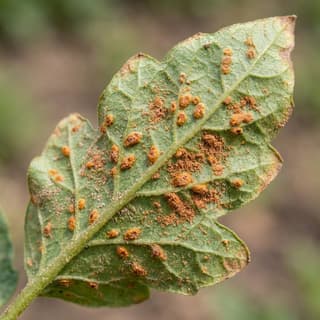
Rust
Rust fungi (Pucciniales) are fungal diseases that form rust-colored, usually orange to brown pustules with powdery spore dust on leaves, stems, or fruits. Typical symptoms include small spots that develop into cushions or rings; leaves turn yellow, curl, and drop prematurely. The fungi spread primarily in damp weather and dense foliage. Many ornamental and crop plants are affected, frequently including roses, mallows (hollyhocks), pears (pear rust), and currants. Some rust fungi require two host plants for their life cycle, such as pear and certain juniper species.
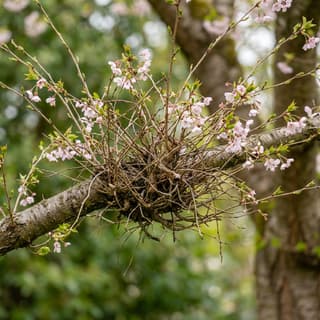
Cherry Witches' Broom
Taphrina wiesneri is a fungal disease affecting cherry trees (Prunus species, including sweet, sour, and ornamental varieties). The fungus overwinters in buds and bark, infecting young leaves and shoots during cool, wet spring weather. Infected leaves become thickened, puckered, and curled, often displaying reddish or yellow blotches and a fine whitish bloom on the surface. Severely affected leaves may drop prematurely. Small twigs can develop 'witches' brooms,' which are dense clusters of weak, distorted shoots.
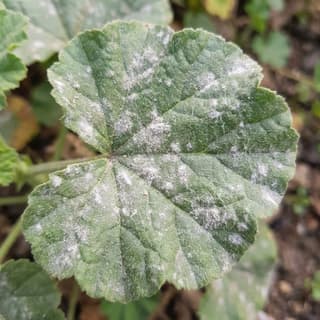
Powdery Mildew
MediumPowdery mildew is a common fungal disease caused by various fungi species including Erysiphe, Podosphaera, Oïdium, and Leveillula. It affects over 10,000 plant species worldwide. The disease thrives in warm, dry climates with high humidity and appears as a distinctive white powdery coating on plant surfaces.
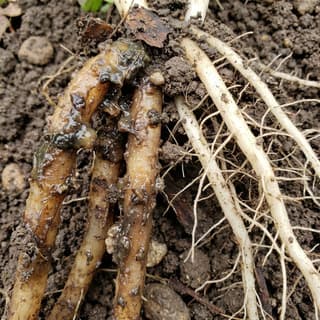
Root Rot
HighRoot rot is a serious fungal disease that affects the root system of plants, causing them to decay and die. It is primarily caused by overwatering, poor drainage, or soil-borne fungi such as Pythium, Phytophthora, Rhizoctonia, and Fusarium. The disease thrives in waterlogged conditions where roots are deprived of oxygen, making them susceptible to fungal infection.