Shot Hole Disease: Fungal Disease | Treatment Guide
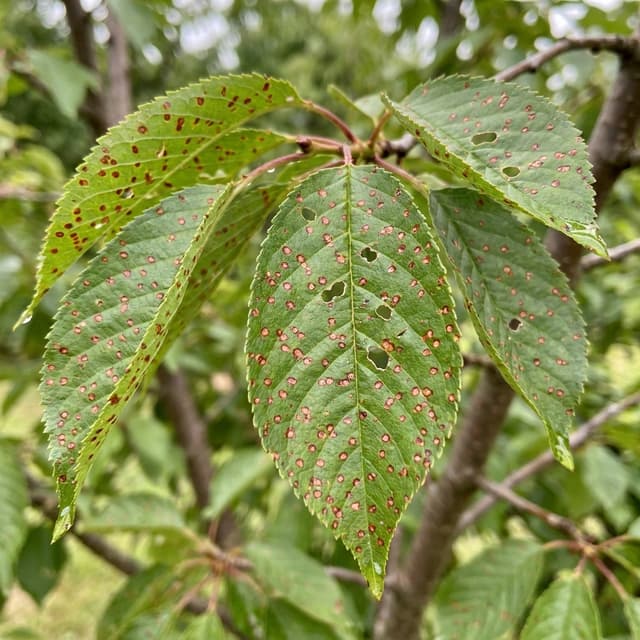
Stigmina carpophila (syn. Wilsonomyces carpophilus) is a fungus that primarily affects stone fruits: peach, apricot, plum, cherry, and almond. It is activated by rain, humidity, and mild temperatures, especially between late autumn, winter, and spring. Typical symptoms include small round spots on the leaves that dry out and fall off, leaving holes like buckshot; dark, rough spots appear on the fruit which may crack; cracks and gum exudation (gummosis) are noted on branches and young shoots. It is also known as 'shot hole disease' of stone fruits.
What is Shot Hole Disease?
Shot Hole Disease is a fungal condition with moderate severity that affects plants. Stigmina carpophila (syn. Wilsonomyces carpophilus) is a fungus that primarily affects stone fruits: peach, apricot, plum, cherry, and almond. It is activated by rain, humidity, and mild temperatures, especially between late autumn, winter, and spring. Typical symptoms include small round spots on t...
Shot Hole Disease is a fungal disease with moderate severity. It affects 3 plant species in our database. This condition is contagious and can spread between plants.
Unlike bacterial infections, Shot Hole Disease spreads slowly but is harder to eradicate. Without treatment, affected leaves won't recover. Without isolation, nearby plants can become infected within days.
🧪 Natural vs Chemical: Which Treatment Works for Shot Hole Disease?
🌱 Natural Solutions
- ✓ Perform thinning pruning in winter or late summer to increase aeration and promote rapid drying of the canopy.
- ✓ Collect and dispose of fallen leaves and mummified fruits, and remove heavily affected twigs by cutting back to healthy wood.
- ✓ Avoid overhead irrigation; prefer drip or ground-level irrigation in the morning.
- ✓ Maintain the plant's nutritional balance by avoiding excessive nitrogen fertilization.
- ✓ Disinfect pruning tools between plants.
- ✓ Use mulch to reduce rain splash from the soil.
- ✓ As preventive support, where registered, use products based on beneficial microorganisms such as Bacillus amyloliquefaciens or Bacillus subtilis.
💉 Chemical Solutions
- ✓ During high-risk periods, after leaf fall and at bud break before flowering, use copper-based products authorized for stone fruits, such as copper oxychloride, copper hydroxide, or Bordeaux mixture.
- ✓ Avoid treatments during flowering to protect pollinators.
- ✓ In home gardens, choose formulations registered for residential or hobbyist use.
🛡️ How to Prevent Shot Hole Disease?
TLDR: Prevent Shot Hole Disease with 6 essential care practices. Regular monitoring is key for early detection.
- ✓ Choose less susceptible varieties and rootstocks whenever possible.
- ✓ Plant in sunny, well-ventilated locations with well-draining soil and avoid waterlogging.
- ✓ Maintain an airy canopy with regular pruning and immediately remove infected debris.
- ✓ Reduce prolonged leaf wetting and limit water splashing by using mulch.
- ✓ Perform frequent checks in late winter and spring and intervene at the first signs of infection.
- ✓ Schedule any preventive treatments only at key moments, such as leaf fall and bud break, avoiding the flowering period.
🔗Related Diseases
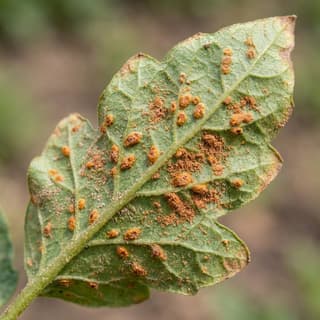
Rust
Rust fungi (Pucciniales) are fungal diseases that form rust-colored, usually orange to brown pustules with powdery spore dust on leaves, stems, or fruits. Typical symptoms include small spots that develop into cushions or rings; leaves turn yellow, curl, and drop prematurely. The fungi spread primarily in damp weather and dense foliage. Many ornamental and crop plants are affected, frequently including roses, mallows (hollyhocks), pears (pear rust), and currants. Some rust fungi require two host plants for their life cycle, such as pear and certain juniper species.
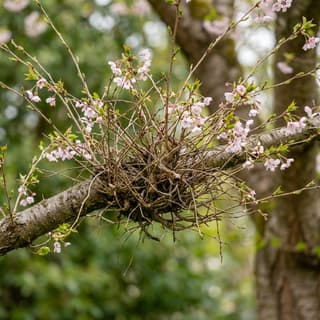
Cherry Witches' Broom
Taphrina wiesneri is a fungal disease affecting cherry trees (Prunus species, including sweet, sour, and ornamental varieties). The fungus overwinters in buds and bark, infecting young leaves and shoots during cool, wet spring weather. Infected leaves become thickened, puckered, and curled, often displaying reddish or yellow blotches and a fine whitish bloom on the surface. Severely affected leaves may drop prematurely. Small twigs can develop 'witches' brooms,' which are dense clusters of weak, distorted shoots.
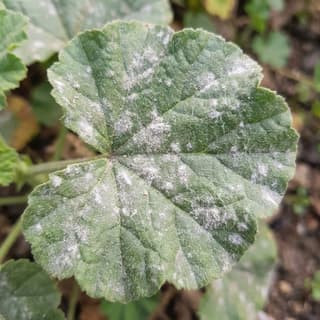
Powdery Mildew
MediumPowdery mildew is a common fungal disease caused by various fungi species including Erysiphe, Podosphaera, Oïdium, and Leveillula. It affects over 10,000 plant species worldwide. The disease thrives in warm, dry climates with high humidity and appears as a distinctive white powdery coating on plant surfaces.
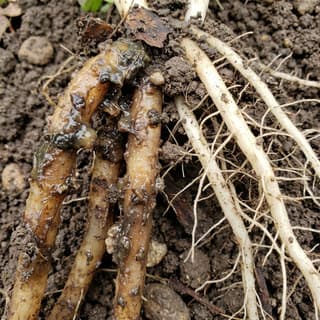
Root Rot
HighRoot rot is a serious fungal disease that affects the root system of plants, causing them to decay and die. It is primarily caused by overwatering, poor drainage, or soil-borne fungi such as Pythium, Phytophthora, Rhizoctonia, and Fusarium. The disease thrives in waterlogged conditions where roots are deprived of oxygen, making them susceptible to fungal infection.