
Scarlet Runner Bean with Fungus: Causes & Solutions
Phaseolus coccineus
Scarlet Runner Bean is a plant that needs bright light and frequent watering. When showing fungus, it may indicate issues related to its environment or care.
Is your Scarlet Runner Bean showing fungus? Discover 3 possible causes and how to treat them.
🔍 Possible Causes (3)
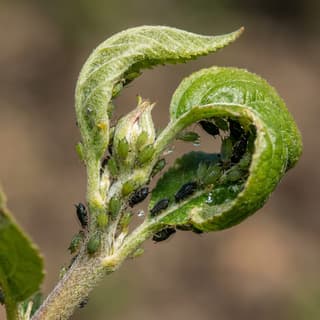
Aphids
Aphids are small, soft-bodied, pear-shaped insects (1/16 to 1/8 inch long) that feed by sucking nutrient-rich sap from plants. They reproduce rapidly and can quickly weaken plants, causing distorted growth and transmitting plant viruses. Aphids come in various colors including green, black, red, yellow, brown, and gray. They secrete honeydew, a sticky substance that attracts ants and encourages sooty mold growth.
✓ Related symptoms:
- • Black sooty mold growing on honeydew deposits
⚡ Quick Fixes:
Step 1
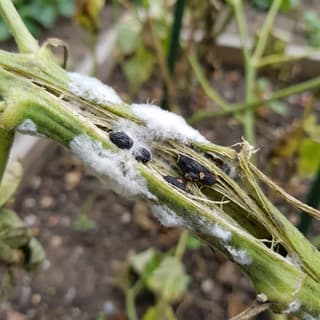
White Mold
White mold (Sclerotinia sclerotiorum) is a devastating fungal disease affecting over 400 plant species worldwide. The fungus produces black, seed-like structures (sclerotia) that can survive in soil for 5 or more years. The disease is favored by cool, moist weather (50-68°F/10-20°C), especially during flowering.
✓ Related symptoms:
- • Fluffy white mold growth on stems and leaves
⚡ Quick Fixes:
Immediate removal
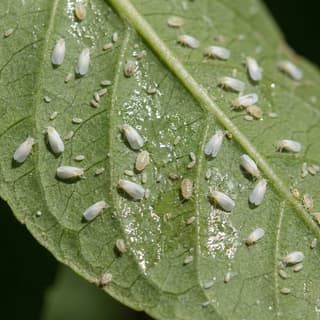
Whiteflies
Whiteflies are small, soft-bodied, winged insects closely related to aphids and mealybugs. They are moth-like in appearance, about 1/16 inch long, triangular in shape, and gray-white in color. These sap-sucking pests feed on plant tissue, causing yellowing, stunted growth, and wilting. They also excrete honeydew, which attracts ants and promotes sooty mold growth. Whiteflies can transmit serious plant viruses.
✓ Related symptoms:
- • Black sooty mold growing on honeydew deposits
- • Reduced photosynthesis due to mold coverage
⚡ Quick Fixes:
Step 1