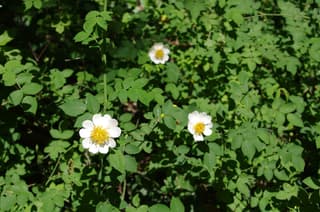
Field Rose with Yellow Leaves: Pet-Safe Treatment
Rosa arvensis
Field Rose is a plant that needs bright light and infrequent watering. When showing yellow leaves, it may indicate issues related to its environment or care.
Is your Field Rose showing yellow leaves? Discover 5 possible causes and how to treat them.
🔍 Possible Causes (5)
Rust
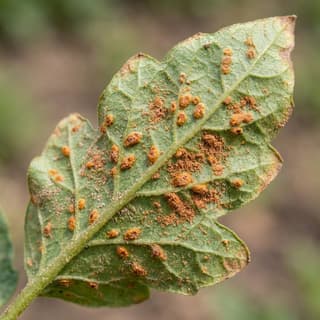
Rust is a common fungal disease caused by fungi in the order Pucciniales that affects a wide variety of plants. The disease gets its name from the characteristic orange, yellow, or reddish-brown pustules that appear on leaves, resembling metal rust. This obligate fungal parasite requires living plants to survive and can cause significant economic losses in agricultural crops.
✓ Related symptoms:
- • Raised orange, yellow, brown, or red pustules on leaf surfaces
- • Premature yellowing and leaf drop
⚡ Quick Fixes:
Immediate Pruning
Aphids
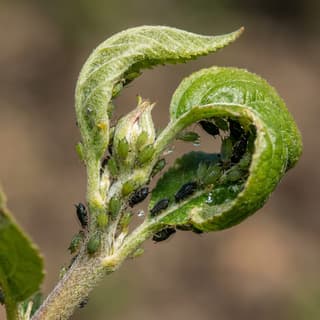
Aphids are small, soft-bodied, pear-shaped insects (1/16 to 1/8 inch long) that feed by sucking nutrient-rich sap from plants. They reproduce rapidly and can quickly weaken plants, causing distorted growth and transmitting plant viruses. Aphids come in various colors including green, black, red, yellow, brown, and gray. They secrete honeydew, a sticky substance that attracts ants and encourages sooty mold growth.
✓ Related symptoms:
- • Clusters of soft-bodied insects in various colors (green, black, red, yellow)
- • Curled, distorted, or yellowing leaves
⚡ Quick Fixes:
Step 1
Scale Insects
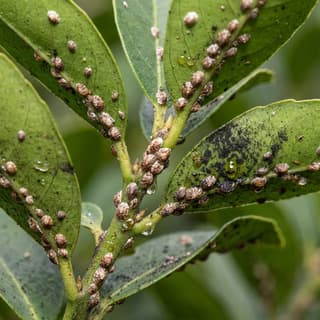
Scale insects are small sap-sucking pests that appear as brown, shell-like bumps on plant stems and leaves. There are over 25 species, divided into armored (hard) and unarmored (soft) scales. They feed by piercing plant tissue and extracting sap, which weakens the plant and can lead to yellowing, stunted growth, and even death if left untreated. They also excrete honeydew, which attracts ants and promotes sooty mold growth.
✓ Related symptoms:
- • Yellowing or chlorotic (pale) leaves
⚡ Quick Fixes:
Step 1
Black Spot
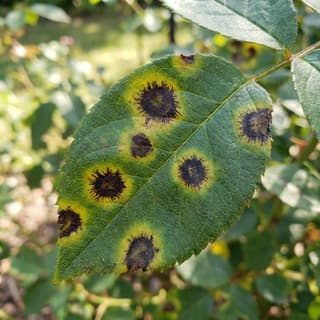
Black spot is the most serious fungal disease affecting roses, caused by the fungus Diplocarpon rosae. It is characterized by dark circular spots on leaves that progress to yellowing and premature leaf drop. The disease thrives in humid and cool conditions, especially early in the growing season.
✓ Related symptoms:
- • Yellow halo developing around spots
- • Progressive yellowing of leaves starting from plant base
⚡ Quick Fixes:
Remove all visibly infected leaves
Downy Mildew
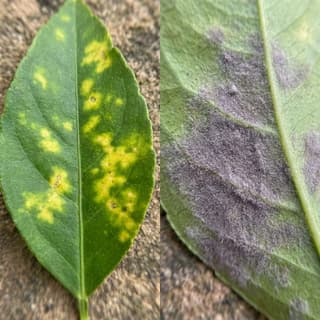
Downy mildew is a fungal-like disease caused by oomycetes (water molds) that thrives in cool, wet conditions. It affects a wide range of plants, causing yellowing leaves with fuzzy white-gray growth underneath, leading to defoliation and reduced yields if left untreated.
✓ Related symptoms:
- • Small green or yellow translucent spots on leaves
- • Yellow to brown irregular patches on upper leaf surfaces
- • Leaf yellowing, curling, and distortion
⚡ Quick Fixes:
Remove and destroy all infected plant parts. For severe infections, remove entire plant.