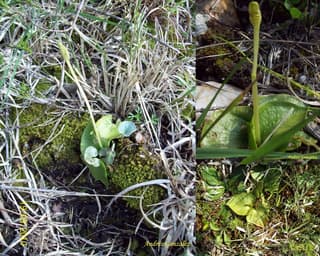
Bulbous Adder's-tongue with Wilting Leaves: Pet-Safe Treatment
Ophioglossum crotalophoroides
Bulbous Adder's-tongue is a plant that needs indirect light and moderate watering. When showing wilting leaves, it may indicate issues related to its environment or care.
Is your Bulbous Adder's-tongue showing wilting leaves? Discover 3 possible causes and how to treat them.
🔍 Possible Causes (3)
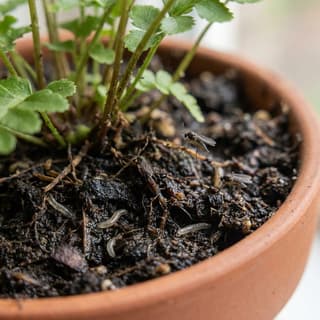
Fungus Gnats
Fungus gnats are small, gray-to-black mosquito-like insects (1/8 to 1/10 inches long) commonly found in indoor plants. Adult gnats are mostly a nuisance, but their larvae feed on plant roots and organic matter in soil, potentially causing serious damage to young or vulnerable plants. The larvae are translucent white with distinctive black heads and can leave slime trails on the soil surface in heavy infestations.
✓ Related symptoms:
- • Wilting despite adequate watering
⚡ Quick Fixes:
Step 1

Root Rot
Root rot is a serious fungal disease that affects the root system of plants, causing them to decay and die. It is primarily caused by overwatering, poor drainage, or soil-borne fungi such as Pythium, Phytophthora, Rhizoctonia, and Fusarium. The disease thrives in waterlogged conditions where roots are deprived of oxygen, making them susceptible to fungal infection.
✓ Related symptoms:
- • Wilting leaves despite moist soil
⚡ Quick Fixes:
Emergency unpotting
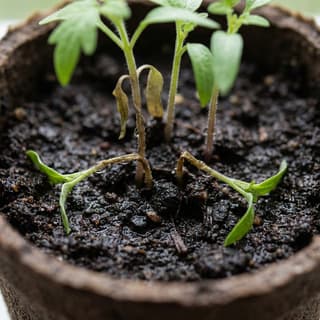
Damping Off
Damping off is a soil-borne fungal disease that affects seeds and young seedlings, causing rotting of stem and root tissues at and below the soil line. It is caused by several fungi including Pythium, Rhizoctonia, Fusarium, and Phytophthora. The disease thrives in cold, wet conditions with poor air circulation.
✓ Related symptoms:
- • Wilting of young leaves
⚡ Quick Fixes:
Immediate Discard