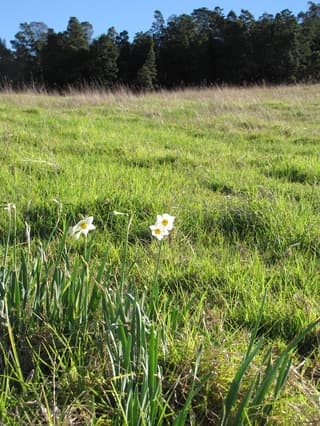
Paperwhite Narcissus with Yellow Leaves: Causes & Solutions
Narcissus tazetta
Paperwhite Narcissus is a plant that needs bright light and moderate watering. When showing yellow leaves, it may indicate issues related to its environment or care.
Is your Paperwhite Narcissus showing yellow leaves? Discover 5 possible causes and how to treat them.
🔍 Possible Causes (5)
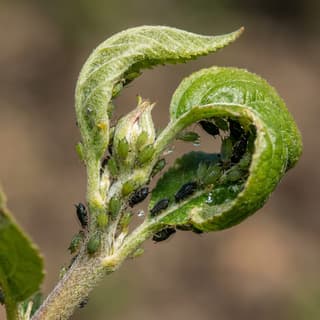
Aphids
Aphids are small, soft-bodied, pear-shaped insects (1/16 to 1/8 inch long) that feed by sucking nutrient-rich sap from plants. They reproduce rapidly and can quickly weaken plants, causing distorted growth and transmitting plant viruses. Aphids come in various colors including green, black, red, yellow, brown, and gray. They secrete honeydew, a sticky substance that attracts ants and encourages sooty mold growth.
✓ Related symptoms:
- • Clusters of soft-bodied insects in various colors (green, black, red, yellow)
- • Curled, distorted, or yellowing leaves
⚡ Quick Fixes:
Step 1
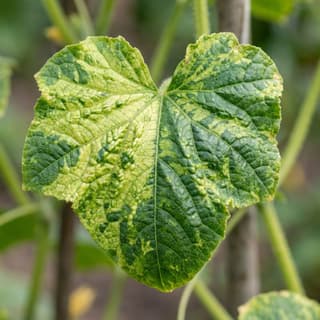
Mosaic Virus
Mosaic virus is a group of plant viruses that cause mottled, patchy patterns on leaves and can affect a wide variety of plants. The virus creates characteristic yellow, white, and green mosaic patterns, often accompanied by stunted growth and deformed plant parts. This highly contagious disease spreads rapidly through insect vectors and contaminated tools.
✓ Related symptoms:
- • Mottled or mosaic pattern of yellow, white, and green on leaves
- • Yellowing between leaf veins
⚡ Quick Fixes:
Step 1
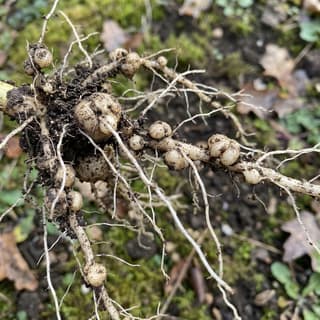
Root-Knot Nematodes
Root-knot nematodes (Meloidogyne species) are microscopic roundworms that parasitize plant roots, causing characteristic galls or knots. These soil-borne pests are among the most economically damaging plant pathogens worldwide, affecting a wide range of ornamental and edible plants. The nematodes inject enzymes into root cells, causing abnormal swelling and disrupting water and nutrient uptake.
✓ Related symptoms:
- • Yellowing of leaves (chlorosis), especially lower leaves
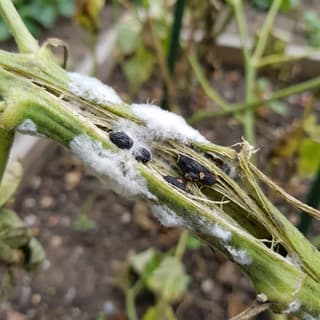
White Mold
White mold (Sclerotinia sclerotiorum) is a devastating fungal disease affecting over 400 plant species worldwide. The fungus produces black, seed-like structures (sclerotia) that can survive in soil for 5 or more years. The disease is favored by cool, moist weather (50-68°F/10-20°C), especially during flowering.
✓ Related symptoms:
- • Sudden wilting and yellowing of leaves
⚡ Quick Fixes:
Immediate removal

Root Rot
Root rot is a serious fungal disease that affects the root system of plants, causing them to decay and die. It is primarily caused by overwatering, poor drainage, or soil-borne fungi such as Pythium, Phytophthora, Rhizoctonia, and Fusarium. The disease thrives in waterlogged conditions where roots are deprived of oxygen, making them susceptible to fungal infection.
✓ Related symptoms:
- • Yellowing or browning of leaves
⚡ Quick Fixes:
Emergency unpotting