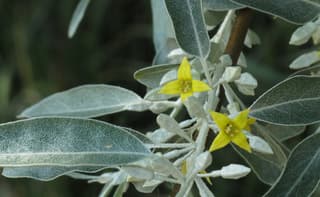
Russian Olive with Wilting Leaves: Pet-Safe Treatment
Elaeagnus angustifolia
Russian Olive is a plant that needs bright light and infrequent watering. When showing wilting leaves, it may indicate issues related to its environment or care.
Is your Russian Olive showing wilting leaves? Discover 5 possible causes and how to treat them.
🔍 Possible Causes (5)
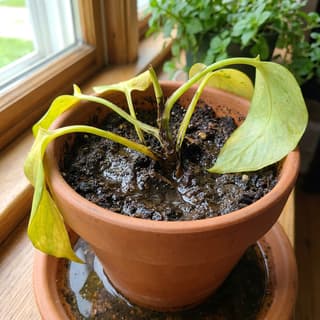
Overwatering
Overwatering occurs when plants receive too much water, depriving roots of oxygen and causing root rot. This environmental stress is one of the most common causes of houseplant death, as waterlogged soil prevents roots from breathing and functioning properly.
✓ Related symptoms:
- • Yellow or brown limp, droopy leaves that feel soft and mushy
- • Wilting despite wet soil
⚡ Quick Fixes:
Step 1
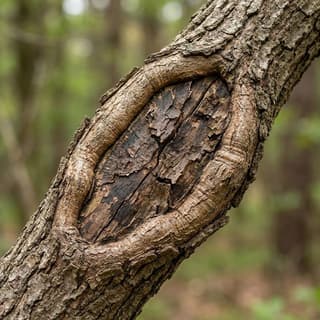
Canker
Canker is a disease caused by various fungi and bacteria that create necrotic, sunken areas on bark of branches, stems, and trunks. Pathogens enter through wounds and natural openings, especially when plants are stressed. Canker can gradually weaken or kill branches by disrupting water and nutrient flow.
✓ Related symptoms:
- • Wilting foliage above infection site
⚡ Quick Fixes:
Identify and mark all branches with canker
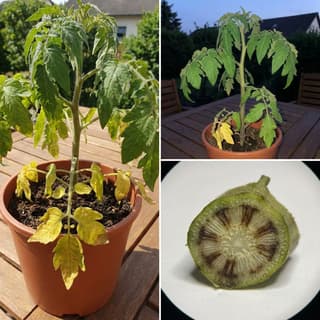
Verticillium Wilt
Verticillium wilt is a soil-borne fungal disease caused primarily by the fungi Verticillium dahliae and V. albo-atrum. These pathogens infect plant roots and grow within the vascular tissues, blocking water and nutrient transport, resulting in wilting and eventual plant death. The disease affects over 350 plant species including vegetables, fruits, ornamental flowers, and trees. The fungi can survive in soil for more than 10 years as resistant structures called microsclerotia.
✓ Related symptoms:
- • Sudden wilting of leaves and stems, especially in hot weather
- • Asymmetric wilting pattern - only one side of plant affected
⚡ Quick Fixes:
Quick Assessment

Root Rot
Root rot is a serious fungal disease that affects the root system of plants, causing them to decay and die. It is primarily caused by overwatering, poor drainage, or soil-borne fungi such as Pythium, Phytophthora, Rhizoctonia, and Fusarium. The disease thrives in waterlogged conditions where roots are deprived of oxygen, making them susceptible to fungal infection.
✓ Related symptoms:
- • Wilting leaves despite moist soil
⚡ Quick Fixes:
Emergency unpotting
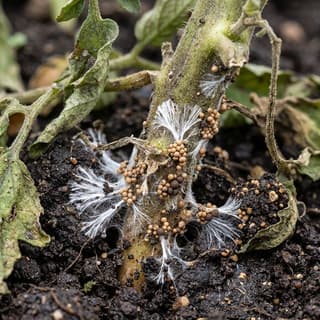
Southern Blight
Southern blight is a devastating soilborne fungal disease caused by Athelia rolfsii (formerly Sclerotium rolfsii), affecting over 500 plant species including vegetables, ornamentals, and fruit crops. The fungus survives in soil through resting structures called sclerotia that resemble mustard seeds and can remain viable for years.
✓ Related symptoms:
- • Sudden and permanent wilting of entire plant within days
⚡ Quick Fixes:
Step 1