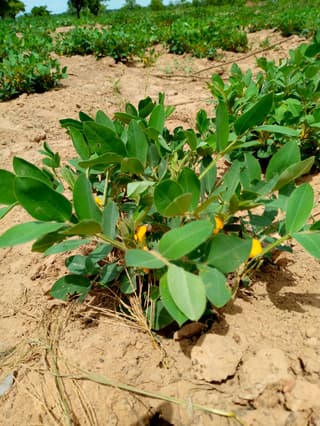
Peanut with Leaf Spots: Pet-Safe Treatment
Arachis hypogaea
Peanut is a plant that needs bright light and moderate watering. When showing leaf spots, it may indicate issues related to its environment or care.
Is your Peanut showing leaf spots? Discover 5 possible causes and how to treat them.
🔍 Possible Causes (5)
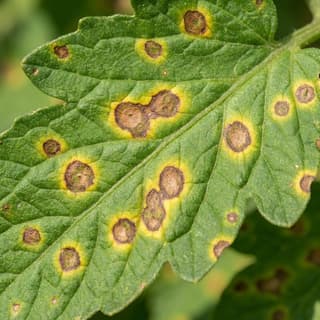
Leaf Spot
Leaf spot is a common fungal disease caused by various pathogens including Alternaria, Ascochyta, Colletotrichum, Septoria, and Venturia. It primarily affects leaves, causing discolored spots that can lead to premature leaf drop if left untreated.
✓ Related symptoms:
- • Circular brown, gray, black, or yellow spots on leaves
- • Spots with concentric rings or dark margins
- • Yellow halo surrounding spots
⚡ Quick Fixes:
Remove all visibly infected leaves
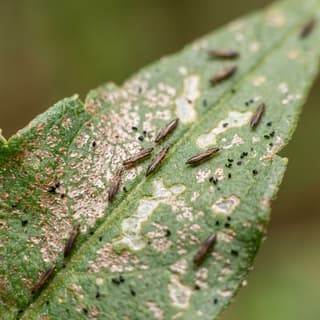
Thrips
Thrips are tiny cigar-shaped insects (1/25-inch long) that damage plants by sucking plant juices and scraping at fruits, flowers, and leaves. With over 6,000 species and rapid reproduction (lifecycle as short as 14 days), they can quickly infest plants and transmit viruses like tomato spotted wilt virus.
✓ Related symptoms:
- • Black spots on foliage from thrips excrement
⚡ Quick Fixes:
Step 1
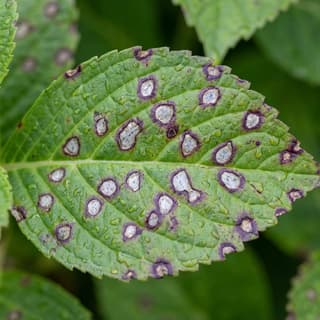
Cercospora Leaf Spot
Cercospora leaf spot is a common fungal disease caused by Cercospora species that affects many plant types, particularly beets, roses, and leafy vegetables. The disease thrives in warm, humid conditions and can cause significant defoliation, reducing plant vigor and yield. It spreads rapidly through water splash, wind, and contaminated tools.
✓ Related symptoms:
- • Small circular spots (0.02-0.2 inch) on leaves
- • Spots coalesce into larger necrotic lesions
⚡ Quick Fixes:
Step 1
Southern Blight
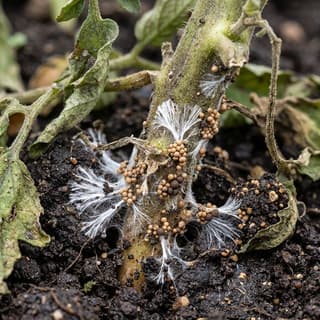
Southern blight is a devastating soilborne fungal disease caused by Athelia rolfsii (formerly Sclerotium rolfsii), affecting over 500 plant species including vegetables, ornamentals, and fruit crops. The fungus survives in soil through resting structures called sclerotia that resemble mustard seeds and can remain viable for years.
✓ Related symptoms:
- • Brown to black lesions on stem near soil line
- • On fruits: sunken yellow lesions turning water-soaked
⚡ Quick Fixes:
Step 1
Tomato Spotted Wilt Virus (TSWV)
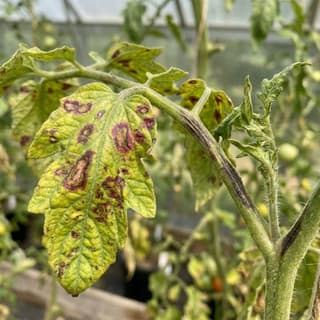
Tomato Spotted Wilt Virus (TSWV) is one of the most devastating viral diseases affecting over 1,000 plant species across 85 families. It is transmitted by thrips and cannot be cured once a plant is infected. The virus causes severe stunting, bronzing of leaves, necrotic spots, and significant yield losses. Early detection and removal of infected plants is critical to prevent spread.
✓ Related symptoms:
- • Small brown necrotic spots and lesions
- • Chlorotic yellow ring spots on foliage
- • Yellow ringspots and brown necrotic sunken areas on fruit
⚡ Quick Fixes:
Step 1