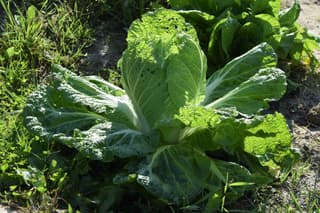
Chinese Cabbage with Root Rot: Pet-Safe Treatment
Brassica rapa pekinensis
Chinese Cabbage is a plant that needs bright light and frequent watering. When showing root rot, it may indicate issues related to its environment or care.
Is your Chinese Cabbage showing root rot? Discover 4 possible causes and how to treat them.
🔍 Possible Causes (4)
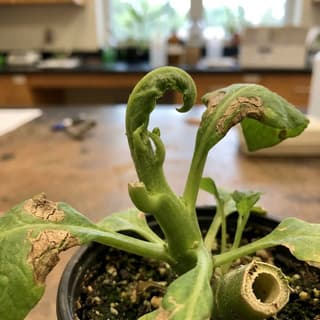
Boron Deficiency
Boron deficiency is a nutrient disorder that affects plant growth and development, particularly at growing points. Boron is essential for cell wall formation, reproductive development, and carbohydrate transport. While critical for plant health, boron has a narrow range between deficiency and toxicity, requiring careful management.
✓ Related symptoms:
- • Brown necrotic spots on leaf tips and margins
⚡ Quick Fixes:
Identify symptoms quickly
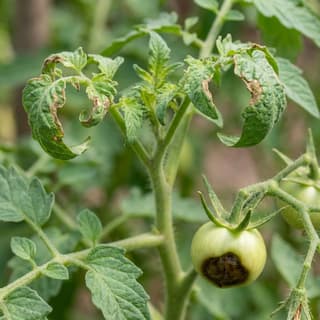
Calcium Deficiency
Calcium deficiency is a common plant disorder caused by insufficient bioavailable calcium in the growing medium or, more frequently, by low transpiration rates that prevent proper calcium transport to new growth. It manifests as necrotic leaf margins, curling of young leaves, stunted growth, and in severe cases, conditions like blossom end rot in fruits. The disorder primarily affects rapidly growing tissues where calcium demand is highest.
✓ Related symptoms:
- • Necrotic margins on young leaves
- • Blossom end rot on tomatoes, peppers, and eggplants
- • Cavity spot on carrots and root vegetables
⚡ Quick Fixes:
Step 1
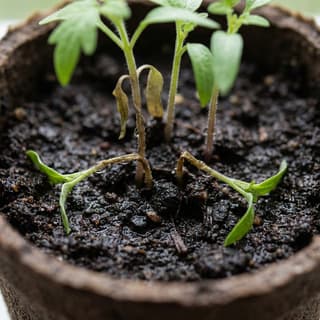
Damping Off
Damping off is a soil-borne fungal disease that affects seeds and young seedlings, causing rotting of stem and root tissues at and below the soil line. It is caused by several fungi including Pythium, Rhizoctonia, Fusarium, and Phytophthora. The disease thrives in cold, wet conditions with poor air circulation.
✓ Related symptoms:
- • Rotted roots with grayish-brown sunken spots
⚡ Quick Fixes:
Immediate Discard

Root Rot
Root rot is a serious fungal disease that affects the root system of plants, causing them to decay and die. It is primarily caused by overwatering, poor drainage, or soil-borne fungi such as Pythium, Phytophthora, Rhizoctonia, and Fusarium. The disease thrives in waterlogged conditions where roots are deprived of oxygen, making them susceptible to fungal infection.
✓ Related symptoms:
- • Foul, rotting odor from the root zone
⚡ Quick Fixes:
Emergency unpotting