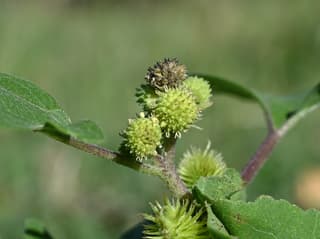
Rough Cocklebur with Root Rot: Causes & Solutions
Xanthium strumarium
Rough Cocklebur is a plant that needs bright light and moderate watering. When showing root rot, it may indicate issues related to its environment or care.
Is your Rough Cocklebur showing root rot? Discover 2 possible causes and how to treat them.
🔍 Possible Causes (2)
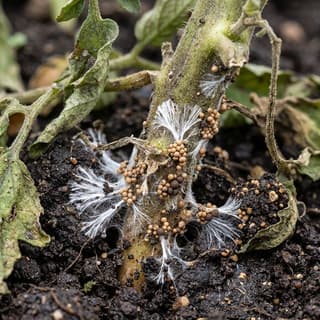
Southern Blight
Southern blight is a devastating soilborne fungal disease caused by Athelia rolfsii (formerly Sclerotium rolfsii), affecting over 500 plant species including vegetables, ornamentals, and fruit crops. The fungus survives in soil through resting structures called sclerotia that resemble mustard seeds and can remain viable for years.
✓ Related symptoms:
- • Spherical tan to reddish-brown sclerotia (1-2mm)
- • Crown and root rot
⚡ Quick Fixes:
Step 1
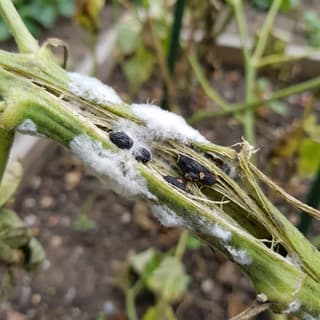
White Mold
White mold (Sclerotinia sclerotiorum) is a devastating fungal disease affecting over 400 plant species worldwide. The fungus produces black, seed-like structures (sclerotia) that can survive in soil for 5 or more years. The disease is favored by cool, moist weather (50-68°F/10-20°C), especially during flowering.
✓ Related symptoms:
- • Soft, watery rot near soil level
- • Black sclerotia (0.5-1cm) in white fungal mass
⚡ Quick Fixes:
Immediate removal