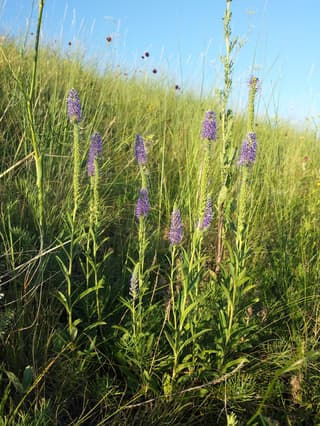
Spiked Speedwell with Leaf Spots: Pet-Safe Treatment
Veronica spicata
Spiked Speedwell is a plant that needs bright light and moderate watering. When showing leaf spots, it may indicate issues related to its environment or care.
Is your Spiked Speedwell showing leaf spots? Discover 5 possible causes and how to treat them.
🔍 Possible Causes (5)
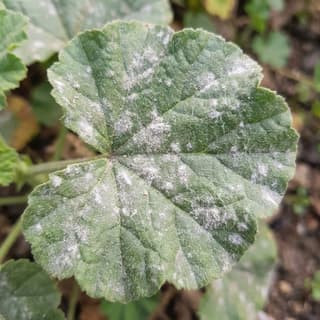
Powdery Mildew
Powdery mildew is a common fungal disease caused by various fungi species including Erysiphe, Podosphaera, Oïdium, and Leveillula. It affects over 10,000 plant species worldwide. The disease thrives in warm, dry climates with high humidity and appears as a distinctive white powdery coating on plant surfaces.
✓ Related symptoms:
- • White to gray powdery spots on leaves, stems, and buds
⚡ Quick Fixes:
Remove heavily infected areas
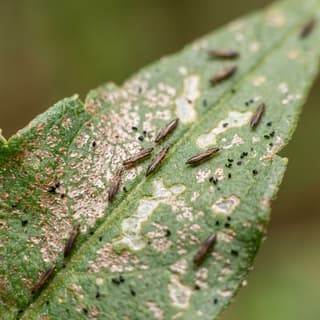
Thrips
Thrips are tiny cigar-shaped insects (1/25-inch long) that damage plants by sucking plant juices and scraping at fruits, flowers, and leaves. With over 6,000 species and rapid reproduction (lifecycle as short as 14 days), they can quickly infest plants and transmit viruses like tomato spotted wilt virus.
✓ Related symptoms:
- • Black spots on foliage from thrips excrement
⚡ Quick Fixes:
Step 1
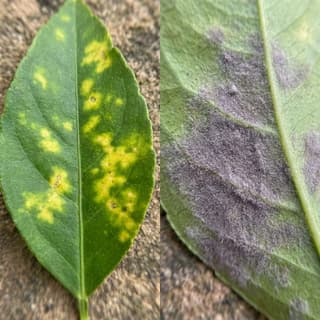
Downy Mildew
Downy mildew is a fungal-like disease caused by oomycetes (water molds) that thrives in cool, wet conditions. It affects a wide range of plants, causing yellowing leaves with fuzzy white-gray growth underneath, leading to defoliation and reduced yields if left untreated.
✓ Related symptoms:
- • Small green or yellow translucent spots on leaves
⚡ Quick Fixes:
Remove and destroy all infected plant parts. For severe infections, remove entire plant.
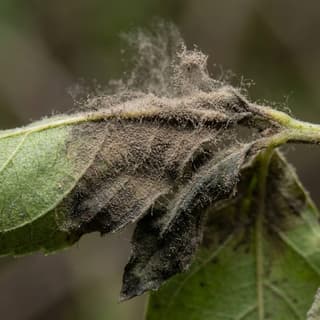
Gray Mold (Botrytis Blight)
Gray mold, caused by the fungus Botrytis cinerea, is a widespread necrotrophic pathogen affecting over 1,400 plant species. It thrives in cool, humid conditions and attacks weakened or aging plant tissues, causing soft rot and characteristic gray fuzzy growth.
✓ Related symptoms:
- • Soft, water-soaked brown lesions that rapidly expand
- • Ghost spots on fruits - small whitish rings from aborted infections
⚡ Quick Fixes:
Step 1
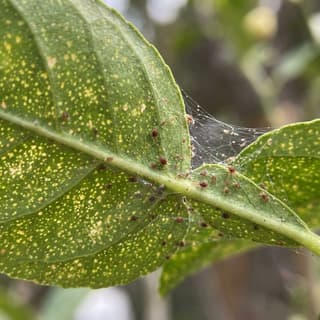
Spider Mites
Spider mites are tiny arachnids (less than 1/20 inch long) related to spiders and ticks that feed on plant sap. They thrive in hot, dry conditions and can cause significant damage to ornamental and vegetable plants. During severe infestations, crop losses can reach 14% or higher as these pests disrupt vital plant processes including photosynthesis, carbon dioxide absorption, and transpiration.
✓ Related symptoms:
- • Pale discoloration spots on leaves
⚡ Quick Fixes:
Step 1