Monilinia — Plant Disease
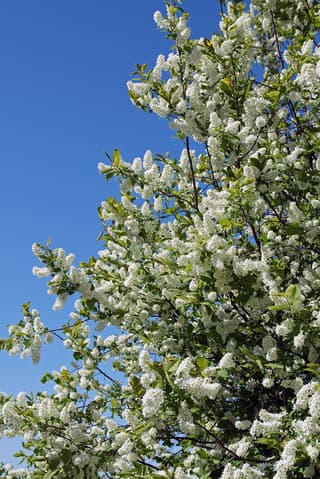
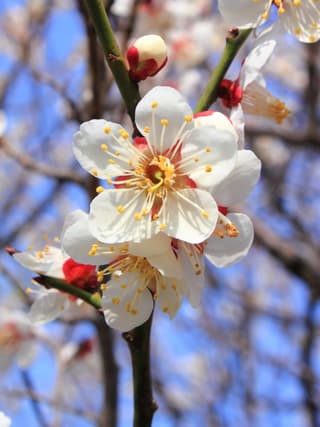
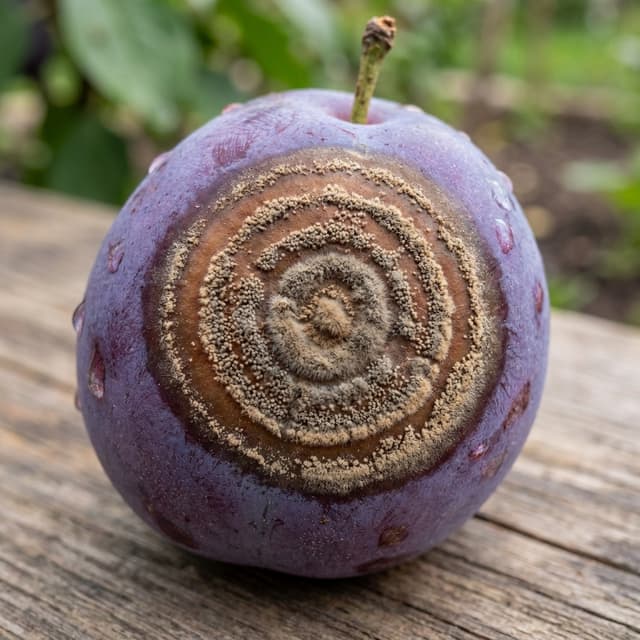
Monilinia is a group of fungi that causes blossom blight and fruit rot (often called brown rot) on fruit trees. It spreads most in cool, wet weather, especially during bloom. Signs include flowers that turn brown and stick to shoots, small tan spots on fruit that expand and develop gray-beige spore pads in rings, twig tips that die back, and “mummified” fruit that shrivels and often stays on the tree. It mainly affects stone fruits (peach, nectarine, apricot, plum, cherry) and can also infect apple and pear.
Što je Smeđa trulež?
Smeđa trulež je gljivični stanje s umjeren ozbiljnošću koje utječe na biljke. Monilinia is a group of fungi that causes blossom blight and fruit rot (often called brown rot) on fruit trees. It spreads most in cool, wet weather, especially during bloom. Signs include flowers that turn brown and stick to shoots, small tan spots on fruit that expand and develop gray-beige spore...
Smeđa trulež je gljivični bolest sa umjeren ozbiljnošću. Zahvaća 6 biljnih vrsta u našoj bazi podataka. Ovo stanje je zarazno i može se širiti između biljaka.
Za razliku od bakterijskih infekcija, Smeđa trulež se širi polako, ali je teže iskorijeniti. Bez liječenja, zahvaćeno lišće se neće oporaviti. Bez izolacije, susjedne biljke mogu biti zaražene u roku nekoliko dana.
🧪 Prirodno ili kemijsko: koji tretman djeluje za Smeđa trulež?
🌱 Prirodna rješenja
- ✓ Prune out and bin infected twigs and all mummified fruit on the tree and on the ground.
- ✓ Open the canopy by thinning branches to improve airflow and speed drying.
- ✓ Prune only in dry weather and disinfect tools between cuts.
- ✓ Avoid overhead watering during bloom and fruit ripening and water at the base.
- ✓ Remove injured or cracked fruit promptly.
- ✓ Consider fruit bagging after thinning to keep rain and spores off developing fruit.
- ✓ Keep weeds and tall grass down around trees to improve airflow.
- ✓ Use biological fungicides during bloom and again before harvest if permitted, such as products containing Bacillus subtilis QST 713, Bacillus amyloliquefaciens D747, or Aureobasidium pullulans.
💉 Kemijska rješenja
- ✓ Choose lower-impact options.
- ✓ Apply copper products such as copper soap, copper hydroxide, or copper oxychloride during dormancy and around bloom.
- ✓ Apply sulfur or potassium bicarbonate as needed.
- ✓ Time sprays to protect blossoms during the primary infection period and spray again as fruit colors up before harvest if wet weather continues while observing the pre-harvest interval.
- ✓ Do not spray sulfur in very hot weather and avoid mixing copper with oils close to freezing or in heat.
- ✓ Rotate products to reduce resistance.
🛡️ Kako spriječiti Smeđa trulež?
TLDR: Spriječite Smeđa trulež s 7 osnovnih mjera njege. Redovito praćenje je ključno za rano otkrivanje.
- ✓ Plant in full sun with good air movement and give trees enough spacing.
- ✓ Prune every year to keep an open canopy.
- ✓ Remove all mummified fruit and fallen debris in winter.
- ✓ Avoid fruit injuries from insects, hail, or rough handling.
- ✓ Do not over-fertilize with nitrogen, which makes dense, disease-prone growth.
- ✓ Start protection at early bloom if a wet spring is expected.
- ✓ Choose cultivars with better tolerance where available.
🔗Srodne bolesti
Hrđa
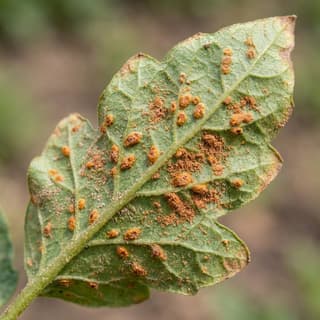
Hrđe (Pucciniales) su gljivične bolesti koje na lišću, stabljikama ili plodovima stvaraju pustule boje hrđe, obično narančaste do smeđe, s praškastim sporama. Tipične su male mrlje koje se razvijaju u jastučiće ili prstenove; lišće žuti, uvija se i rano otpada. Gljive se šire prvenstveno tijekom vlažnog vremena i u gustim nasadima. Pogođene su mnoge ukrasne i korisne biljke, često npr. ruže, sljezovi (vrtni sljez), kruške (kruškova hrđa) i ribizli. Neke hrđe zahtijevaju dvije biljke domaćina za svoj životni ciklus, poput kruške i određenih vrsta borovice.
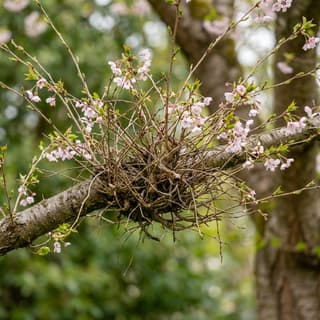
Vještičine metle trešnje
Taphrina wiesneri je gljivična bolest trešanja (vrste roda Prunus, uključujući slatke, kisele i ukrasne trešnje). Gljiva prezimljuje u pupovima i kori, a zatim inficira mlado lišće i izbojke tijekom hladnog i vlažnog proljetnog vremena. Rano lišće postaje debelo, naborano i uvijeno, često s crvenkastim ili žutim mrljama i finom bjelkastom prevlakom na površini. Jako pogođeno lišće može rano otpasti. Male grančice mogu formirati guste grozdove slabih, izobličenih izbojaka (vještičje metle).
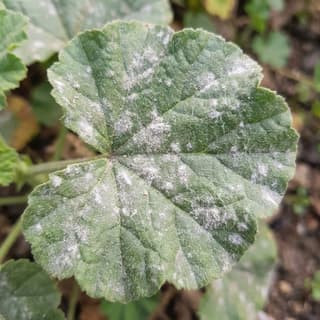
Pepelnata plamenjača
SrednjaPepelnata plamenjača je česta gljivična bolest uzrokovana različitim vrstama gljiva uključujući Erysiphe, Podosphaera, Oïdium i Leveillula. Zahvaća više od 10 000 biljnih vrsta diljem svijeta. Bolest se razvija u toplim, suhim klimatskim uvjetima s visokom vlagom zraka i pojavljuje se kao karakterističan bijeli praškasti premaz na površinama biljaka.

Trulež korijena
VisokaTrulež korijena je ozbiljna gljivična bolest koja zahvaća korijenov sustav biljaka, uzrokujući njihovo propadanje i ugibanje. Primarno je uzrokovana prekomjernim zalijevanjem, lošom drenažom ili gljivicama u tlu poput Pythium, Phytophthora, Rhizoctonia i Fusarium. Bolest se razvija u uvjetima zasićenosti tla vodom, gdje su korijeni lišeni kisika, što ih čini podložnima gljivičnoj infekciji.