Phyllachoraceae — Plant Disease
Phyllachoraceae are a family of fungi best known for causing tar spot on leaves. They take hold when foliage stays wet for long periods in mild to warm weather. Look for round, shiny, pitch‑black spots that are firm, slightly raised, and do not rub off. Severe cases can lead to yellowing and early leaf drop, which weakens the plant but rarely kills it. These fungi commonly affect grasses (including lawn turf), maize/sweet corn, and some garden ornamentals. Outbreaks often follow rainy spells and spread by wind‑blown spores and splashing water.
Ce este Phyllachoraceae?
Phyllachoraceae este o condiție fungică cu severitate moderată care afectează plantele. Phyllachoraceae are a family of fungi best known for causing tar spot on leaves. They take hold when foliage stays wet for long periods in mild to warm weather. Look for round, shiny, pitch‑black spots that are firm, slightly raised, and do not rub off. Severe cases can lead to yellowing and early l...
Phyllachoraceae este o boală fungică cu severitate moderată. Această condiție este contagioasă și se poate răspândi între plante.
Spre deosebire de infecțiile bacteriene, Phyllachoraceae se răspândește lent, dar este mai greu de eradicat. Fără tratament, frunzele afectate nu se vor recupera. Fără izolare, plantele din apropiere se pot infecta în câteva zile.
🧪 Natural vs chimic: care tratament funcționează pentru Phyllachoraceae?
🌱 Soluții naturale
- ✓ Prune or thin plants to improve airflow and avoid dense shaded canopies.
- ✓ Water at the base using drip or a watering can and avoid overhead watering, especially late in the day.
- ✓ Remove and dispose of infected leaves as soon as you notice them, rake and bin fallen leaves, and compost only in a hot compost system that reliably reaches high temperatures.
- ✓ Apply mulch to reduce soil splash during rain or irrigation.
- ✓ Rotate crops in vegetable beds for 2 to 3 years and avoid replanting the same host in the same spot.
- ✓ Keep plants healthy with balanced feeding and avoid excess nitrogen that promotes soft disease prone growth.
- ✓ For container plants, isolate affected plants, tidy leaf litter, and repot if the potting mix stays soggy or is exhausted.
💉 Soluții chimice
- ✓ When disease pressure is high, apply a copper based fungicide such as copper soap or copper hydroxide as a preventive.
- ✓ Apply a sulfur fungicide as a preventive and avoid use in hot weather.
- ✓ Apply a biological fungicide based on Bacillus subtilis or Bacillus amyloliquefaciens strains as a preventive.
- ✓ Apply potassium bicarbonate for early surface infections.
- ✓ Apply preventives before symptoms or at first signs because these products will not remove existing black spots.
- ✓ Test on a small area first and observe any temperature or interval restrictions.
🛡️ Cum să previi Phyllachoraceae?
TLDR: Previi Phyllachoraceae cu 6 practici esențiale de îngrijire. Monitorizarea regulată este cheia pentru depistare timpurie.
- ✓ Keep foliage dry when possible by watering early and at the base and increasing spacing for airflow.
- ✓ Clean up and dispose of fallen leaves promptly, especially at seasons end.
- ✓ Choose resistant or tolerant varieties when available, notably for maize, sweet corn, and turf grasses.
- ✓ Maintain mulch and avoid overcrowding to limit splash and humidity.
- ✓ Disinfect pruning tools between plants.
- ✓ After extended rainy periods, inspect plants and remove early infections quickly to break the cycle.
🔗Boli înrudite
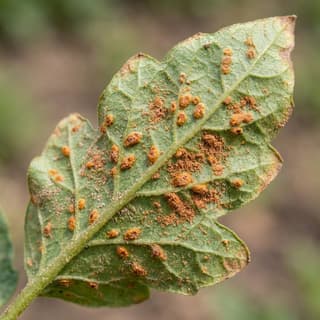
Rugină
Rugina (Pucciniales) reprezintă un grup de boli fungice care formează pustule de culoarea ruginii, de obicei portocalii până la maronii, cu spori prăfoși pe frunze, tulpini sau fructe. Simptomele tipice includ pete mici care se transformă în pernițe sau inele; frunzele se îngălbenesc, se răsucesc și cad prematur. Ciupercile se răspândesc în special în condiții de vreme umedă și frunziș dens. Multe plante ornamentale și utilitare sunt afectate, frecvent trandafirii, nalbele (de grădină), perii (rugina părului) și coacăzul. Unele specii de rugină necesită două plante gazdă pentru ciclul lor de viață, cum ar fi părul și anumite specii de ienupăr.
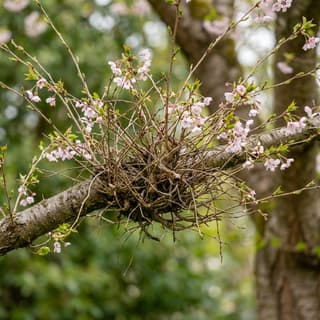
Mătura-vrăjitoarei la cireş
Taphrina wiesneri is a fungal disease of cherries (Prunus species, including sweet, sour, and ornamental flowering cherries). The fungus survives the winter in buds and bark, then infects young leaves and shoots during cool, wet spring weather. Early leaves turn thick, puckered, and curled, often with reddish or yellow blotches and a fine whitish bloom on the surface. Badly affected leaves may fall early. Small twigs can form tight clusters of weak, distorted shoots (witches’ brooms).
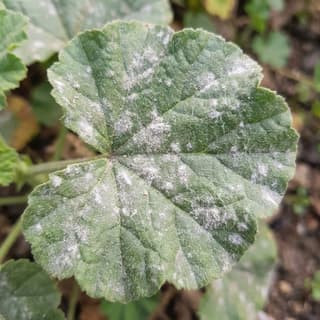
Făinare
MedieFăinarea este o boală fungică comună cauzată de diverse specii de ciuperci, printre care Erysiphe, Podosphaera, Oïdium și Leveillula. Afectează peste 10.000 de specii de plante din întreaga lume. Boala se dezvoltă în climate calde și uscate cu umiditate relativă ridicată și se manifestă printr-un strat alb, prăfos, caracteristic pe suprafețele plantelor.

Putregaiul Rădăcinilor
RidicatăPutregaiul rădăcinilor este o boală fungică gravă care afectează sistemul radicular al plantelor, provocând descompunerea și moartea acestora. Este cauzată în principal de supraудare, drenaj deficitar sau ciuperci terestre precum Pythium, Phytophthora, Rhizoctonia și Fusarium. Boala prosperă în condiții de sol îmbibat cu apă, unde rădăcinile sunt private de oxigen, devenind susceptibile la infecții fungice.