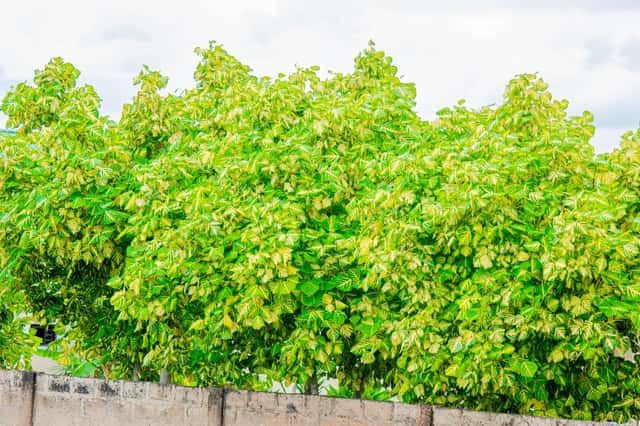
Bignoniaceae
Southern Catalpa: Rastlina na plné slnko
Catalpa bignonioides
Southern Catalpa is an easy-to-grow, low-maintenance tree best suited for large outdoor spaces. Plant in full sun (at least 6 hours of direct sunlight daily) in well-draining to moderately moist soil with a pH between 5.5 and 7.5. Water young trees weekly during the first two growing seasons; established trees are drought-tolerant and require supplemental watering only during prolonged dry spells. Fertilise once in early spring with a balanced slow-release fertiliser. Prune in late winter or early spring to remove dead, crossing, or damaged branches and to maintain shape. This tree is not suitable for indoor growing.
Každých 7 dní
Priame slnko
-20° - 38°C
40% - 70%
Kategórie
Čo je Southern Catalpa?
Southern Catalpa (Catalpa bignonioides) je rastlina s ľahká starostlivosťou z čeľade Bignoniaceae. Catalpa bignonioides, commonly known as the Southern Catalpa or Indian Bean Tree, is a fast-growing deciduous tree native to the southeastern United States, particularly the lower Mississippi Valley region of Alabama, Mississippi, Georgia, and Florida. Celebrated for its dramatic ornamental qualitie...
Southern Catalpa vyrastie až do 15.0m, šírka 1200 cm, polievanie každých 7 dní, -20°C – 38°C, 40–70% vlhkosť. Je nevhodné pre interiérové prostredia a bezpečné pre domáce zvieratá.
Na rozdiel od mnohých tropických rastlín, Southern Catalpa toleruje chyby pri polievaní. Najlepšia pre začiatočníkov. Na rozdiel od mnohých populárnych druhov, Southern Catalpa je bezpečné držať v blízkosti domácich zvierat.
Ako sa starať o Southern Catalpa?
TLDR: Southern Catalpa potrebuje Priame slnko, polievanie každých 7 dní a teplotu medzi -20–38 °C pri vlhkosti 40-70 %.
Ako často polievať Southern Catalpa?
Water newly planted trees deeply once per week for the first one to two years to encourage deep root establishment. Once established (typically after 2–3 growing seasons), Southern Catalpa is remarkably drought-tolerant and generally requires no regular irrigation except during extended summer droughts. Avoid waterlogging around the root zone — while the tree tolerates brief flooding, prolonged standing water can cause root rot.
Koľko svetla potrebuje Southern Catalpa?
Southern Catalpa performs best in full sun, receiving at least 6–8 hours of direct sunlight per day. It can tolerate partial shade (3–6 hours of sun), but flowering is reduced and growth may become more open and leggy in lower light. Always site it away from structures where its large leaves and seed pods may cause litter issues.
Aká pôda je najlepšia pre Southern Catalpa?
This tree is adaptable to a wide range of soil types including clay, loam, and sandy soils, provided drainage is adequate. It tolerates mildly acidic to slightly alkaline soils (pH 5.5–7.5) and even temporarily waterlogged conditions. For best growth, amend heavy clay soils with organic matter at planting time. Avoid highly compacted soils which restrict root development.
Aký kvetináč použiť pre Southern Catalpa?
Southern Catalpa is not suitable for container growing due to its size — it is a large tree that needs to be planted directly in the ground in a spacious outdoor setting. Even the dwarf cultivar 'Nana' is typically grafted onto a standard rootstock and grown as a lollipop-form tree in landscape settings rather than in pots.
Harmonogram starostlivosti
Hnojenie
Každých 90 dní
Čo je Southern Catalpa a odkiaľ pochádza?
Catalpa bignonioides, commonly known as the Southern Catalpa or Indian Bean Tree, is a fast-growing deciduous tree native to the southeastern United States, particularly the lower Mississippi Valley region of Alabama, Mississippi, Georgia, and Florida. Celebrated for its dramatic ornamental qualities, it produces enormous heart-shaped leaves up to 30 cm across and spectacular clusters of trumpet-shaped white flowers with yellow and purple markings in late spring to early summer. The tree reaches a mature height of 12–18 metres with a broad, irregular crown spanning 10–12 metres, making it an impressive shade tree for large gardens and parks. Its most distinctive feature — besides the showy flowers — is the production of long, slender seed pods resembling cigars or beans, which hang from the branches well into winter and give rise to several of its common names. Catalpa bignonioides has been widely cultivated across Europe and North America since the 18th century. It thrives in full sun to partial shade and tolerates a wide range of soil conditions, including clay and periodically waterlogged soils. The species is notably drought-tolerant once established and hardy in USDA zones 5–9, making it adaptable to many temperate climates.
Ako množiť Southern Catalpa?
Ako veľmi vyrastie Southern Catalpa?
TLDR: Southern Catalpa môže dorásť až do výšky 15.0m s Rýchly rastom.
Maximálna výška
15.0m
Šírka koruny
12.0m
Rýchlosť rastu
Rýchly
Lístie
Opadavá
Využitie rastliny
Okrasná
Skvelá na dekoráciu
Liečivá
Liečivé vlastnosti
Liečivé využitie
- Bark tea used traditionally by Native Americans (Cherokee, Chickasaw) as an anthelmintic (against intestinal worms)
- Seed pod infusions used in folk medicine for mild sedative and antispasmodic effects
- Leaves used in poultices for skin irritations in traditional herbal medicine
- Root bark used historically as a febrifuge (fever reducer) in 19th-century American herbalism
Vykazuje vaša rastlina príznaky?
Kliknite na príznak a objavte možné príčiny:
Aké choroby najčastejšie postihujú Southern Catalpa?
TLDR: Southern Catalpa je náchylná na 9 známych chorôb. Pravidelne kontrolujte pre včasnú detekciu.
Múčnatka pravá
Múčnatka pravá je bežná hubová choroba spôsobená rôznymi druhmi húb vrátane Erysiphe, Podosphaera, Oïdium a Leveillula. Postihuje viac ako 10 000 druhov rastlín na celom svete. Choroba sa darí v teplom, suchom podnebí s vysokou vlhkosťou a prejavuje sa charakteristickým bielym múčnatým povlakom na povrchoch rastlín.
Verticíliové vädnutie
Verticíliové vädnutie je pôdou prenášaná hubová choroba spôsobená predovšetkým hubami Verticillium dahliae a V. albo-atrum. Tieto patogény infikujú korene rastlín a rastú v cievnych tkanivách, kde blokujú transport vody a živín, čo vedie k vädnutiu a postupnému úhynu rastliny. Choroba postihuje viac ako 350 druhov rastlín vrátane zeleniny, ovocia, okrasných kvetín a stromov. Huby môžu v pôde prežiť viac ako 10 rokov ako odolné štruktúry nazývané mikrosklerócie.
Húsenice
Húsenice sú larválne štádium motýľov a molí, ktoré sa nenásytne živia listami, stonkami, kvetmi a plodmi rastlín. Medzi bežné druhy patria piadivky kapustové, lišajníky rajčiakové, armádne húsenice a podhryzky. Tieto škodcovia môžu spôsobiť rozsiahle škody tým, že za krátky čas spotrebujú veľké množstvo rastlinného pletiva. Ich veľkosť sa pohybuje od malých (0,6 cm) až po veľké (12,5 cm), pričom farby sa pohybujú od zelenej po hnedú, často s pruhmi alebo škvrnami. Húsenice sú veľmi pohyblivé a môžu sa rýchlo rozšíriť po celej záhrade, čo z nich robí jedného z najdeštruktívnejších bežných škodcov.
Škvrnitosť listov
Škvrnitosť listov je bežná hubová choroba spôsobená rôznymi patogénmi vrátane Alternaria, Ascochyta, Colletotrichum, Septoria a Venturia. Postihuje predovšetkým listy, pričom spôsobuje sfarbené škvrny, ktoré môžu pri absencii liečby viesť k predčasnému opadu listov.
Význam a symbolika
In its native southeastern United States, Catalpa has long been associated with resilience and endurance — a tree that flourishes in difficult conditions and provides generous shade. Some Native American peoples, including the Cherokees and Chickasaws, used the bark and pods medicinally and regarded the tree as a healing plant. In Victorian England, where it was popularised as a garden specimen, Catalpa symbolised exoticism and the grandeur of nature.
Porovnať s podobnými rastlinami
| Vlastnosť | Náročnosť | Svetlo | Polievanie | Bezpečné pre zvieratá |
|---|---|---|---|---|
| Javor poľný | Ľahká | Jasné nepriame svetlo | 14d | ✓ |
| Breza previsnutá | Ľahká | Priame slnko | 14d | ✓ |
| Vankúšový ker | Ľahká | Priame slnko | 14d | ✓ |
| Pieprovec mäkký | Ľahká | Priame slnko | 14d | ⚠️ |





