Peonies in Winter: Can They Handle Frost? Care by Type and in Pots
Peonies in winter: the herbaceous type tolerates lows of −15 to −20 °C, dies back above ground in winter and returns in spring, and tree peonies keep their branches. Cut dead foliage down to the ground, mulch the soil only in the first winter, protect the roots in pots, and cover the buds on frosty nights.
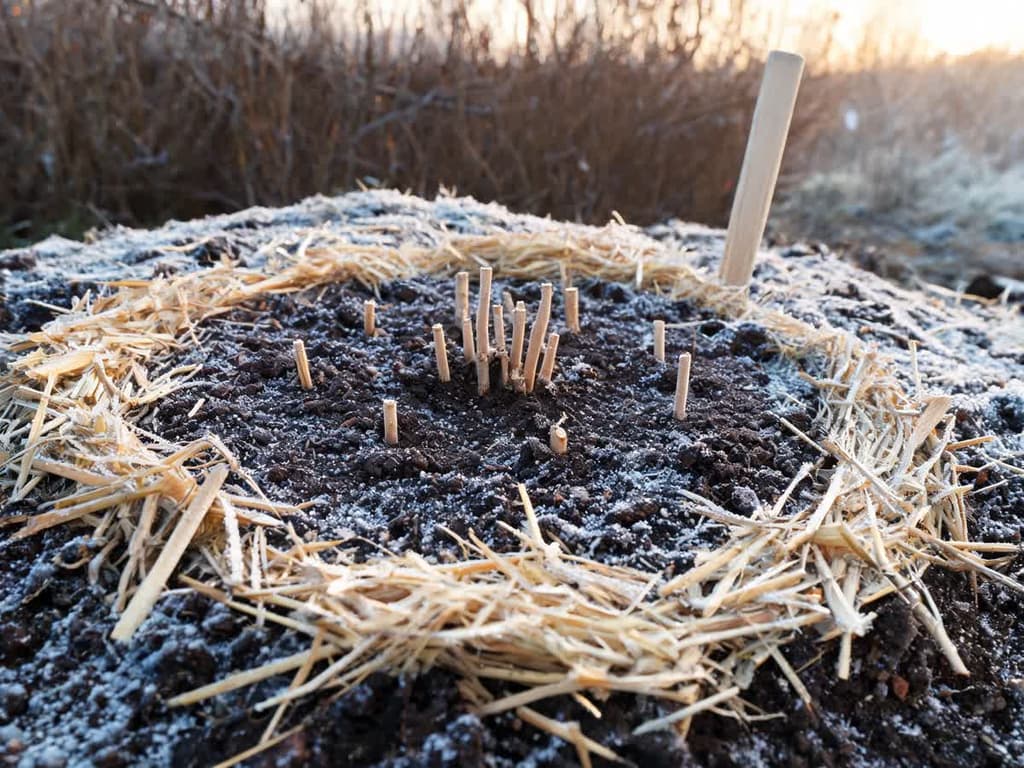
Peonies in winter can withstand frost without protection when they have been planted in the ground for over a year. Herbaceous peonies, the most common type in gardens, carry an H6 hardiness rating from the RHS (Royal Horticultural Society). This rating means they tolerate minimum temperatures of −15 to −20 °C. In winter, the top growth of herbaceous peonies dries out and disappears. The eyes (the buds that will form next year's stems) wait underground until spring. Cut dead foliage back flush with the ground, mulch the soil only during the first winter after planting, and protect the roots of potted peonies. Once shoots emerge from the soil, a hard frost can kill the flower buds, the blossoms that have not yet opened.
In Brazil, frost is concentrated in the South and in the mountains of the Southeast, and there the peony spends the winter outdoors. In the rest of the country, the winter problem is the opposite: it lacks the cold that peonies need to set flower buds. For care during the rest of the year (planting, sun, watering, and fertilizer), see the peony care guide.
Peony looks dead in winter: cut back or wait?
An herbaceous peony with brown, dry, or black stems after a frost is not dead. It is dormant, entering the phase of the year where the plant stops growing and survives on food stored in its roots. The eyes (the reddish buds that will produce the following year's stems) sit at the top of the root crown, beneath the soil. In spring, they will sprout again.
Do not dig the plant up. Cut the stems of an herbaceous peony down flush with the ground once the foliage turns yellow and withers, or after the first frost darkens it. Iowa State advises leaving the foliage on the plant until the first frost. Purdue recommends cutting as close to the ground as possible without injuring the crown, the point where the eyes emerge. The eyes sit below the cut line, so cutting flush will not damage next year's shoots.
Throw cut stems in the trash, not in the compost. According to Iowa State, the gray mold fungus (botrytis) overwinters in plant debris. For other perennials, the same extension allows leaving dead stems standing in winter. For peonies, the RHS cuts foliage flush with the ground precisely to reduce the risk of this disease. The peony rot page shows the signs of gray mold on the plant.
The other two peony types spend the winter differently:
Tree peony (Paeonia suffruticosa): loses its leaves, but its woody stems stay standing. Never cut these branches down to the ground, because next year's growth emerges from the buds on the old wood.
Itoh peony (a cross between herbaceous and tree peonies): has a woody base to its stems. The RHS cuts stems back to about 15 cm from the ground when the leaves die back. Mississippi State master gardeners warn not to cut into the woody part above ground.
Anyone who inherited a garden in winter might not know what is planted there. Without leaves, there is nothing to photograph. Mark the spot with a stake and wait for spring growth: once the first leaf opens, Bloom (available for iOS) can identify the plant from a photo.
Cold tolerance of peonies by type
Herbaceous and Itoh peonies tolerate minimums of −15 to −20 °C, and common tree peonies handle −10 to −15 °C, according to RHS ratings. The RHS assigns each plant a rating from H1 to H7 based on the lowest temperature it should withstand. Among US university extensions, NDSU in North Dakota lists herbaceous varieties down to zone 3. These zones are US climatic bands defined by winter cold extremes.
Type | Above-ground growth in winter | RHS rating | RHS minimum temperature | US extension hardiness zone |
|---|---|---|---|---|
Herbaceous (P. lactiflora) | Nothing: top growth dies back to the ground | H6 | −15 to −20 °C | Down to zone 3 (NDSU) |
Tree (P. suffruticosa) | Woody leafless branches | H5 | −10 to −15 °C | Zones 4 to 8 (Iowa State) |
Tree P. suffruticosa subsp. rockii | Woody leafless branches | H6 | −15 to −20 °C | No data available |
Itoh (e.g., 'Bartzella') | Short woody stem base | H6 | −15 to −20 °C | Zone 4 (NDSU) |
The ratings come from each plant's profile on the RHS website. The zones come from the North Dakota State University (NDSU) Extension and Iowa State. The two scales measure different things. The RHS uses the minimum temperature of a single winter night. The US zone uses the 30-year average of the lowest temperature of each winter. Therefore, do not convert one into the other.
Young tree peonies suffer more from the cold than mature plants. Iowa State warns that cold winters can damage young tree peonies. The New York Botanical Garden (NYBG) states that a properly planted tree peony with some protection can tolerate down to −29 °C (−20 °F). That figure applies only with protection; without protection, follow the RHS range.
What to do with peonies from fall to bud break
Peony winter care follows the plant's stage, not the calendar date. In Brazil, these stages run from April to September:
Foliage starts yellowing: leave the foliage on the plant. According to Virginia Tech, removing foliage before it dies back naturally interferes with next year's eye formation.
Foliage has dried or blackened after frost: cut herbaceous peonies back flush with the ground and throw the stems in the trash. On tree peonies, do not cut back the branches.
The plant is dormant and the first hard frosts have hit: mulch the soil only if this is the plant's first winter after planting (see the mulching section).
Red shoots appear above the ground (in Brazil, around August and September): remove mulch, if any. Fertilizer and staking are introduced during this phase, as explained in the care guide.
Frost forecast when shoots or buds are already exposed: cover the plant overnight with frost cloth, a lightweight fabric sold in garden centers (see the post-sprouting frost section).
In winter, water in-ground peonies only when the soil is dry 6 inches (15 cm) deep, as advised by NYBG. Virginia Tech warns that wet roots are far more prone to rotting during dormancy.
Mulching in winter: first year only
Mature in-ground peonies do not require winter mulch. The University of Missouri Extension lists peonies among the perennials that survive without winter protection. UConn notes that only first-year plants need mulching. Mulch is a protective layer of straw, leaves, or bark spread across the soil.
Mulch during the first winter prevents frost from heaving the plant out of the ground. This heaving happens when the soil freezes and thaws repeatedly. The soil swells and shrinks, and this movement pushes the crown and root out of the ground. Iowa State states that the exposed root suffers from cold and dry air, and that the plant can die. The same extension notes that a perennial planted for 1 year or more rarely suffers from this.
For peonies planted this fall, follow NDSU and NYBG:
wait until the plant enters dormancy, after the first hard frosts (the sources suggest waiting until the ground freezes);
spread 2 to 3 inches (5 to 8 cm) of leaves or straw over the soil;
remove the layer at the end of winter, before the red shoots emerge from the soil.
Mulch that is too thick or applied too early hinders blooming. NYBG explains that the plant will not receive the chilling hours it needs to enter full dormancy, weakening it and potentially preventing flowers. For Itoh peonies, Mississippi State master gardeners advise against using mulch, as it buries the crown too deeply.
The RHS spreads 2 inches (5 cm) of mulch around the peony every winter, without covering the center of the plant. The same RHS says peonies do not need winter protection. Where winter is short, NC State instructs to leave the crown uncovered, because mulch insulates the buds from the cold that sets the flower buds. For mulch, use straw or stiff leaves, such as oak leaves: according to Missouri Extension, soft leaves become waterlogged in winter and smother small shoots. Iowa State advises against Styrofoam cones, because they warm the plant too early and break its dormancy.
Potted peonies in winter
A potted peony suffers more from the cold than a peony planted in the ground. The root in the pot stays at air temperature, according to Penn State Extension. In the ground, the surrounding soil protects the root. The RHS warns, in its description of the H6 rating, that many potted plants are damaged without protection.
A potted peony with withered, brown stems in winter is dormant, not dead. Do not throw the pot away. Choose one of these protection methods:
Sink the pot into the garden: Iowa State buries the pot after the plant enters dormancy and before the ground freezes. The surrounding soil insulates the roots. Dig the pot out in early spring.
Unheated garage or shed: only if the temperature stays between −7 and 7 °C (20 to 45 °F), according to Iowa State.
Protected outdoors in a pot: Iowa State advises against leaving pots above ground in winter, so use this option only if you cannot bury the pot. Cluster the pots together and cover them with straw, leaves, or a blanket, as Penn State suggests. Illinois Extension recommends a corner sheltered from strong winds and intense sun: in Brazil, the south or east side of the house.
Cover pots with protective fabric below −7 °C (20 °F), as Virginia Tech advises for potted peony nurseries. Remove the fabric when the temperature rises above 4 °C (40 °F) to allow ventilation. The same source warns that wet roots rot in winter because the peony is dormant. Before the first frost, water the pot thoroughly: according to Penn State, moist soil freezes more slowly than dry soil. After that, water only when the soil dries out and do not leave standing water in the saucer.
Clay or ceramic pots can crack in freezing weather, according to Penn State. Do not bring peonies inside a heated home for winter. They need at least 6 weeks below 4 °C to set blooms, according to UConn, and a warm house prevents this chilling. Itoh peonies are not suitable for containers: the RHS notes that their root systems grow too deep.
Tree peonies in winter: wind and branches
The tree peony spends the winter with its branches standing, and live branches are not cut back. NC State directs you to prune the tree peony only for shape, never flush with the ground like the herbaceous type. In late winter, the RHS removes only dead branches, cutting back to a healthy bud.
According to the University of Maine Extension, wind causes the most stress to tree peonies in winter. The extension suggests a wind screen on the side where the wind blows from. The same extension warns that wrapping the entire plant can provide too much protection and attracts rodents inside. The RHS calls for a site sheltered from strong winds right from planting.
Young tree peonies benefit from extra protection during their first few winters. Iowa State sets up a wire mesh cylinder around young tree peonies and fills it with straw or pine needles. This wire cage remains in place through dormancy until shoots emerge. Follow Iowa State's advice for young plants and Maine Extension's wind screen method for mature plants. NC State notes that tree peonies cannot tolerate waterlogged soil in winter.
Frost after sprouting: when to cover peonies
Cover the peony on nights with frost in the forecast once the shoots or buds have emerged from the ground. The plant tolerates a light frost, but the bud is more sensitive to cold, according to Iowa State. A hard frost after the buds form can kill them, and the dead bud will not open.
Sources disagree on covering. NC State Extension in Lee County advises against covering peonies during a late frost, because they tolerate the cold. The RHS advises protecting tree peonies with fleece on cold nights, because new foliage and buds can turn black and fail to open. Mississippi State gardeners advise covering during a hard or prolonged frost after shoots emerge. No one has measured how much cold a peony shoot can withstand. For this reason, we follow the safer option, which three out of four sources support: cover shoots on frosty nights.
How to cover:
In the late afternoon, cover emerging shoots with frost cloth, a lightweight fabric sold in garden centers. The thicker the fabric, the more insulation it provides: the heaviest weight offers about 2 °C of protection, according to the RHS.
Support the fabric with stakes so it does not touch the foliage, as advised by Mississippi State master gardeners.
Do not touch frozen plants, because the stems snap easily.
Remove the frost cloth in the morning once the sun warms the plant.
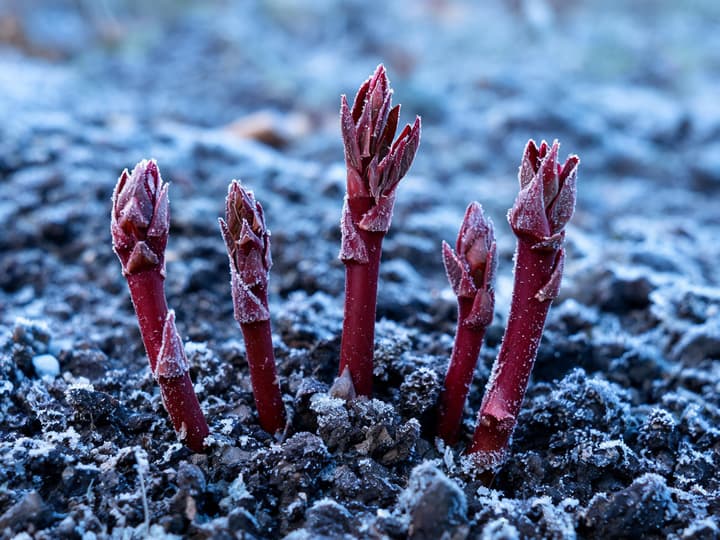
Frozen peony leaves turn dark green and look translucent, according to the University of Nebraska extension. Dead buds turn dark brown, wilted, or dry. The same extension advises removing dead foliage from damaged perennials and notes that new shoots appear within a few weeks. None of the sources consulted measure how much cold red peony shoots can withstand.
Peonies in Brazilian winters
In Brazil, frost that reaches peonies is concentrated in the South and in the mountains of the Southeast, between April and September. A study using data from 2003 to 2018 in Rio Grande do Sul (Tazzo and colleagues, 2024) points to June and July as the most critical months. In the Mantiqueira Mountains, a 2025 study (Ferreira and colleagues) recorded an average of 19 frosts per year in Monte Verde (MG).
A mature peony planted in the ground withstands these frosts without protection. The risk in the South is the end of the frost season, which lasts until September. The peony sprouts in August and September, so a late frost can hit the shoots and buds. The same Mantiqueira study links frost to nights with lows below 3 °C at the weather station. For this reason, when the forecast calls for a low below 3 °C with shoots already exposed, cover the peony with frost cloth overnight.
The herbaceous peony does not need the shelter that other garden plants in the South require during frosts. Perennial agapanthus, for example, tolerates only light frost and requires frost cloth on cold nights, as shown in the guide on agapanthus in winter.
Outside the South and the mountain ranges, winter brings no frost, and the problem is a lack of cold. Herbaceous peonies need at least 6 weeks below 4 °C to bloom, according to UConn. The causes of poor blooming in a warm winter are in the guide on how to make peonies bloom.
Frequently asked questions
Do I need to water peonies in winter?
In the ground, water only when the soil is dry 6 inches (15 cm) deep, as advised by NYBG. Waterlogged winter soil rots the root system because the plant is dormant. In containers, water deeply before the first hard freeze and then only when the soil dries out, never leaving standing water in the saucer.
When do peonies begin sprouting after winter?
Herbaceous peonies sprout again in late winter and early spring. In Brazil, red shoots emerge from the ground around August and September. Remove the mulch from the first winter before that. Tree peonies sprout from the buds on old wood at the same time.
Can I bring a peony indoors for the winter?
It is not recommended. Peonies need at least 6 weeks below 4 °C to initiate flower buds, according to UConn. Inside a heated home, they will not receive this chilling. To protect container-grown peonies, it is better to bury the pot in the garden or store it in an unheated garage held between −7 and 7 °C.
Do tree peonies lose their leaves in winter?
Yes. Tree peonies shed their foliage in autumn and go through winter with bare, woody branches that remain alive. Do not cut these branches back: spring growth develops directly from their buds. In late winter, cut away only dead wood back to a healthy bud, as recommended by the RHS.
Peonies in winter: summary
Peonies withstand frost: herbaceous and Itoh peonies tolerate minimum temperatures of −15 to −20 °C, and common tree peonies −10 to −15 °C, according to the RHS. In winter, herbaceous peonies disappear and return in spring. Cut dead foliage back flush with the ground and throw it in the trash. Mulch the soil only during the first winter. In pots, protect the roots, water thoroughly before the first frost, and after that only when the soil dries out. Once shoots emerge, cover the plant on frosty nights. In Brazil, frost occurs in the South and in the mountains; in the rest of the country, what is missing is the cold.
Related articles
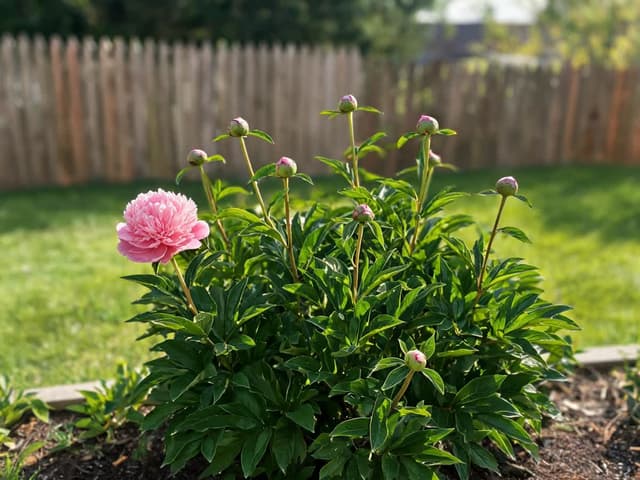
Peonies: How to Make Them Bloom and Why Buds Don't Open
Peonies: how to make them bloom. A peony that fails to bloom usually has buds buried too deep, too little sun, a warm winter, or is too young. Learn when it flowers, how long it takes to produce its first bloom, and how to identify the cause from the plant's symptoms.
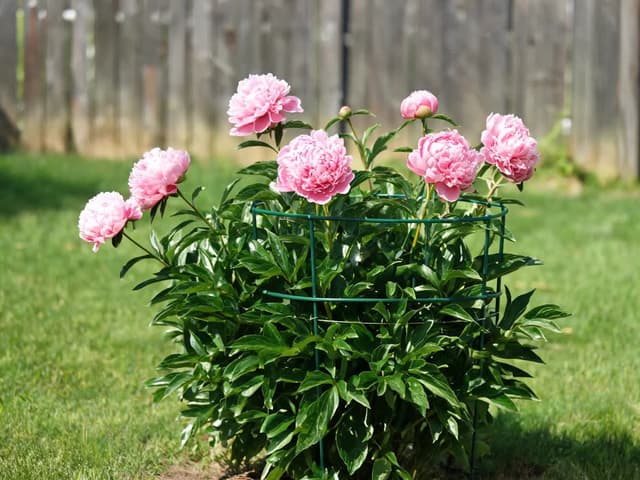
How to Take Care of Peonies: Cold, Shallow Planting, Sun and Blooms
How to take care of peonies, from planting to bloom. They need full sun, buds (eyes) 1 to 2 inches below the surface, well-draining soil, and a cold winter to flower. See what changes for tree peonies, how to water, fertilize, stake, divide, and deal with powdery mildew and ants.
Dracaena with Yellow Leaves: How to Spot the Cause by the Yellow Pattern
Dracaena with yellow leaves: one lower leaf at a time is natural aging. Learn how the location and pattern tell apart watering, cold, fluoride, nutrients, pests, and rot, and what to do in each case.