Oleaceae
Green Olive Tree (Phillyrea latifolia): Complete Care Guide
Phillyrea latifolia
Plant in full sun to light shade in well-drained soil. Water regularly for the first two seasons to establish roots, then rely mostly on natural rainfall. Prune after flowering to shape hedges or topiary; otherwise very low maintenance.
Every 14 days
Bright indirect
-15° - 38°C
30% - 60%
Categories
What is Green Olive Tree?
Green Olive Tree (Phillyrea latifolia) is a easy-care plant from the Oleaceae family. The Green Olive Tree (Phillyrea latifolia) is a slow-growing evergreen shrub or small tree native to the Mediterranean basin, where it forms part of the maquis and holm oak woodland understory. A member of the olive family (Oleaceae), it bears leathery, glossy dark-green leaves and produces small, f...
Green Olive Tree grows up to 10.0m, spread of 600cm, watering every 14 days, -15°C – 38°C, 30–60% humidity. It is not suitable for indoor environments and safe for pets.
Unlike many tropical plants, Green Olive Tree tolerates watering mistakes. Best for beginners. Unlike many popular species, Green Olive Tree is safe to keep around pets.
How to Care for Green Olive Tree?
TLDR: Green Olive Tree needs Bright indirect, watering every 14 days, and temperatures between -15-38°C with 30-60% humidity.
How Often Should You Water Green Olive Tree?
Water deeply but infrequently. During establishment (first 1-2 years) water every 10-14 days in the absence of rain; once established, this plant tolerates long dry spells and needs little to no supplemental irrigation outside of severe drought.
How Much Light Does Green Olive Tree Need?
Grows best in full sun, producing the densest, most compact foliage, but tolerates partial and even fairly deep shade, making it versatile for woodland edges or courtyards.
What Is the Best Soil for Green Olive Tree?
Adaptable to sandy, loamy, or clay soils as long as drainage is good; prefers neutral to slightly alkaline, calcareous soil but tolerates mild acidity. Avoid waterlogged sites, which promote root rot.
What Pot Should You Use for Green Olive Tree?
Best grown directly in the ground; if container-grown, use a large, heavy terracotta pot with excellent drainage holes.
What Is Green Olive Tree and Where Does It Come From?
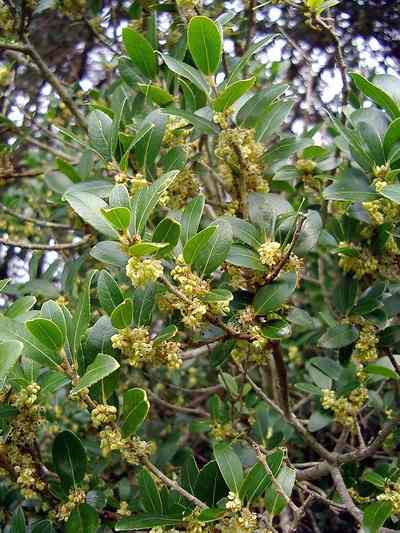
The Green Olive Tree (Phillyrea latifolia) is a slow-growing evergreen shrub or small tree native to the Mediterranean basin, where it forms part of the maquis and holm oak woodland understory. A member of the olive family (Oleaceae), it bears leathery, glossy dark-green leaves and produces small, fragrant, creamy-white flowers in axillary clusters during spring, followed by blue-black, olive-like drupes that ripen in autumn and are relished by birds. Highly drought-tolerant once established, it thrives on poor, rocky, or calcareous soils and withstands intense summer heat, making it a resilient choice for xeriscaping, hedging, and topiary in warm-temperate gardens.
How to Propagate Green Olive Tree?
Semi-hardwood cuttings
Bottom heat and consistent humidity greatly improve rooting success; avoid letting the medium dry out or become waterlogged.
- 1 Take 10-15 cm semi-hardwood cuttings from healthy, non-flowering side shoots in midsummer.
- 2 Remove leaves from the lower half of the cutting and dip the cut end in rooting hormone.
- 3 Insert cuttings into a well-draining mix of perlite and peat or sand.
- 4 Keep in a shaded, humid propagation frame or under plastic until roots form.
- 5 Pot on once a strong root system has developed, then acclimate gradually to outdoor conditions.
Materials needed:
Seed propagation
Fresh seed and a cold stratification period are essential; germination rates are naturally low, so sow more seed than the number of plants desired.
- 1 Collect ripe blue-black drupes in autumn and remove the fleshy pulp.
- 2 Stratify the cleaned seed in moist sand at cold temperatures (around 4°C) for 2-3 months to break dormancy.
- 3 Sow stratified seed in free-draining seed compost in a cold frame.
- 4 Keep moist but not waterlogged; germination is slow and can be erratic.
- 5 Transplant seedlings once they have a few true leaves and are large enough to handle.
Materials needed:
How Big Does Green Olive Tree Grow?
TLDR: Green Olive Tree can reach up to 10.0m tall with Slow growth rate.
Max height
10.0m
Spread
6.0m
Growth rate
Slow
Foliage
Evergreen
Plant Uses
Ornamental
Great for decoration
Is your plant showing symptoms?
Click on the symptom to discover possible causes:
What Diseases Commonly Affect Green Olive Tree?
TLDR: Green Olive Tree is susceptible to 5 known diseases. Monitor regularly for early detection.
Scale Insects
Scale insects are small sap-sucking pests that appear as brown, shell-like bumps on plant stems and leaves. There are over 25 species, divided into armored (hard) and unarmored (soft) scales. They feed by piercing plant tissue and extracting sap, which weakens the plant and can lead to yellowing, stunted growth, and even death if left untreated. They also excrete honeydew, which attracts ants and promotes sooty mold growth.
Sooty Mold
Sooty mold is a fungal disease that develops on surfaces coated with honeydew, a sticky sweet substance secreted by sap-sucking insects like aphids, scale insects, and whiteflies. While it does not directly infect plant tissue, it reduces photosynthetic capacity by blocking sunlight and diminishes the plant's aesthetic appearance.
Root Rot
Root rot is a serious fungal disease that affects the root system of plants, causing them to decay and die. It is primarily caused by overwatering, poor drainage, or soil-borne fungi such as Pythium, Phytophthora, Rhizoctonia, and Fusarium. The disease thrives in waterlogged conditions where roots are deprived of oxygen, making them susceptible to fungal infection.
Phytophthora Root Rot
Disease caused by fungus-like organisms (oomycetes) that live in soil and can survive for years. It affects roots, stem, and crown of plants, being especially severe in waterlogged or poorly drained soils. It is the second most common cause of root rot in trees and shrubs.
Meaning & Symbolism
In Mediterranean folk tradition, evergreen maquis shrubs like Phillyrea symbolize endurance, resilience, and steadfastness through harsh seasons, echoing their ability to stay green and thrive where little else can.
Fun Facts
A close relative of the olive tree, its fruit looks like a miniature olive but is not eaten by humans.
It can live for well over a century and is often found growing wild among holm oaks in Mediterranean maquis.
Its dense, wind-tolerant foliage makes it a traditional choice for coastal hedges and topiary in Mediterranean gardens.
The genus name Phillyrea comes from the ancient Greek name for the plant, used since antiquity.
Frequently asked questions
How much water does Phillyrea latifolia need?
Is Phillyrea latifolia toxic to pets?
How fast does the green olive tree grow?
Can Phillyrea latifolia be grown in pots?
What is the best way to propagate Phillyrea latifolia?
Compare with similar plants
| Attribute | Difficulty | Light | Watering | Pet Safe |
|---|---|---|---|---|
| Field Maple | Easy | Bright indirect | 14d | ✓ |
| Silver Birch | Easy | Direct sun | 14d | ✓ |
| Common Blanketflower | Easy | Direct sun | 10d | ✓ |
| Cushion Bush | Easy | Direct sun | 14d | ✓ |





