Gesneriaceae
Lipstick Plant: Pet-Safe Plant
Aeschynanthus
Give it bright, indirect light, water when the top inch of soil dries out, and keep humidity high (60-80%) for best flowering. Avoid soggy soil and cold drafts.
Every 7 days
Bright indirect
18° - 24°C
60% - 80%
Categories
What is Lipstick Plant?
Lipstick Plant (Aeschynanthus) is a medium-care plant from the Gesneriaceae family. Aeschynanthus is a genus of trailing, epiphytic plants in the Gesneriaceae family, native to the tropical forests of Southeast Asia, including Thailand, the Malay Peninsula, Sumatra, and Borneo. Grown widely as a hanging houseplant, it produces glossy, leathery dark-green leaves along cascading stem...
Lipstick Plant grows up to 90cm, watering every 7 days, 18°C – 24°C, 60–80% humidity. It is suitable for indoor environments and safe for pets.
Unlike many popular species, Lipstick Plant is safe to keep around pets. Without adequate drainage, root rot can develop within 14 days.
How to Care for Lipstick Plant?
TLDR: Lipstick Plant needs Bright indirect, watering every 7 days, and temperatures between 18-24°C with 60-80% humidity.
How Often Should You Water Lipstick Plant?
Water thoroughly when the top inch of soil feels dry, roughly every 5-7 days; never let the pot sit in standing water, as soggy soil quickly leads to root rot.
How Much Light Does Lipstick Plant Need?
Place near an east- or north-facing window, or a few feet back from a south/west-facing one -- bright indirect light encourages blooming, but direct sun scorches the leaves.
What Is the Best Soil for Lipstick Plant?
Use a well-draining, organic-rich mix -- equal parts peat moss, perlite, and orchid bark mimics its natural epiphytic habitat.
What Pot Should You Use for Lipstick Plant?
A hanging basket or elevated pot with drainage holes, letting the trailing stems cascade freely.
Care Schedule
Fertilize
Every 60 days
Misting
Every 3 days
What Is Lipstick Plant and Where Does It Come From?
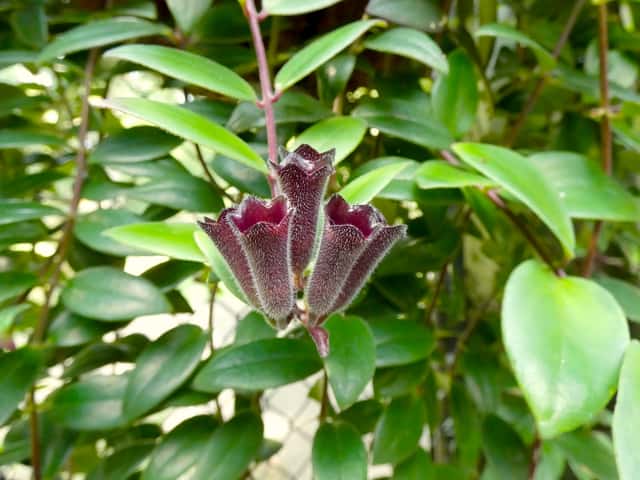
Aeschynanthus is a genus of trailing, epiphytic plants in the Gesneriaceae family, native to the tropical forests of Southeast Asia, including Thailand, the Malay Peninsula, Sumatra, and Borneo. Grown widely as a hanging houseplant, it produces glossy, leathery dark-green leaves along cascading stems and tubular scarlet flowers that emerge from dark maroon calyces, resembling tubes of lipstick -- the source of its common name.
How to Propagate Lipstick Plant?
Stem cutting
Take a 4-6 inch (10-15cm) stem cutting with 2-3 leaf nodes, remove lower leaves, and root in water or moist, well-draining mix.
- 1 Cut a 4-6 inch stem section just below a leaf node
- 2 Remove leaves from the bottom half of the cutting
- 3 Dip cut end in rooting hormone (optional)
- 4 Place in water or moist potting mix
- 5 Keep in bright, indirect light and maintain humidity
- 6 Roots form in 2-4 weeks; transplant once established
Materials needed:
How Big Does Lipstick Plant Grow?
TLDR: Lipstick Plant can reach up to 90cm tall with Medium growth rate.
Max height
90cm
Growth rate
Medium
Foliage
Evergreen
Plant Uses
Ornamental
Great for decoration
Is your plant showing symptoms?
Click on the symptom to discover possible causes:
What Diseases Commonly Affect Lipstick Plant?
TLDR: Lipstick Plant is susceptible to 9 known diseases. Monitor regularly for early detection.
Root Rot
Root rot is a serious fungal disease that affects the root system of plants, causing them to decay and die. It is primarily caused by overwatering, poor drainage, or soil-borne fungi such as Pythium, Phytophthora, Rhizoctonia, and Fusarium. The disease thrives in waterlogged conditions where roots are deprived of oxygen, making them susceptible to fungal infection.
Grey Mould
Powdery Mildew
Powdery mildew is a common fungal disease caused by various fungi species including Erysiphe, Podosphaera, Oïdium, and Leveillula. It affects over 10,000 plant species worldwide. The disease thrives in warm, dry climates with high humidity and appears as a distinctive white powdery coating on plant surfaces.
Leaf Spot
Leaf spot is a common fungal disease caused by various pathogens including Alternaria, Ascochyta, Colletotrichum, Septoria, and Venturia. It primarily affects leaves, causing discolored spots that can lead to premature leaf drop if left untreated.
Meaning & Symbolism
The lipstick plant is associated with beauty, vibrancy, and confidence; its genus name comes from Greek words meaning "shame flower," a nod to how the buds stay hidden before the bold red blooms finally emerge.
Compare with similar plants
| Attribute | Difficulty | Light | Watering | Pet Safe |
|---|---|---|---|---|
| Dark Fieldcap | Medium | Low light | 2d | ⚠️ |
| Azalea | Medium | Partial shade | 3d | ⚠️ |
| Bougainvillea | Medium | Direct sun | 7d | ⚠️ |
| Wild Lettuce | Medium | Direct sun | 7d | ⚠️ |



