917 Medium Plants | 2026 Guide
Discover 917 medium plants for your garden. Complete care guide.
917 Medium Plants
Showing 1-36 of 917
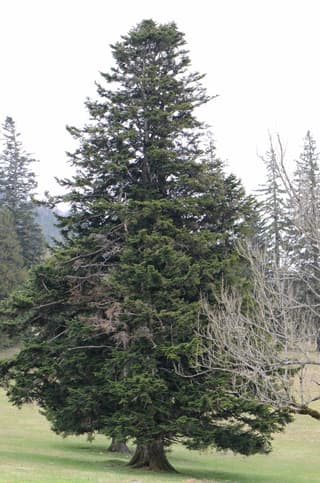
Fir
Abies
Abies is a genus of some 48-56 evergreen conifers in the pine family (Pinaceae), native to mountainous regions of Europe, Asia, and North and Central America. True firs form a distinctive pyramidal crown with flat, single needles that show two white stripes on their underside, and produce upright barrel-shaped cones that disintegrate on the tree at maturity rather than falling whole.
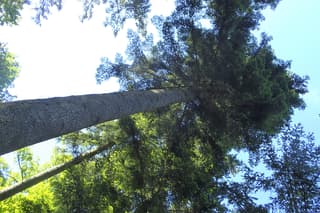
Nordmann fir
Abies nordmanniana
The Nordmann fir (Abies nordmanniana) is a large, majestic conifer native to the mountain forests of the Caucasus, northeastern Turkey, and Georgia. The tree has a graceful, broad pyramidal crown with horizontally spreading branches that grow in tiers. The glossy, dark green needles are soft and non-prickly, featuring two prominent white stripes on the underside. In the wild, the Nordmann fir can reach heights of up to 50 meters; in gardens and parks, it typically reaches a height of 9 to 15 meters. The tree is best known as a Christmas tree because its needles are very slow to drop.
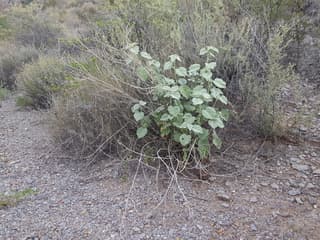
Abutilon Hybrid
Abutilon
Abutilon is a large genus of roughly 150 to 180 species of evergreen and semi-evergreen shrubs and small trees in the mallow family (Malvaceae), native to tropical and subtropical regions worldwide with the greatest diversity in South America. The name most commonly refers to garden hybrids collectively known as Abutilon x hybridum, prized for their maple-like, lobed leaves and pendulous, bell- or lantern-shaped flowers that bloom in shades of white, yellow, orange, pink and red from spring through fall. Fast-growing and easy to shape, Abutilon works equally well as a patio shrub, a trained standard, or a bright-window houseplant, and its nectar-rich flowers are a magnet for hummingbirds.
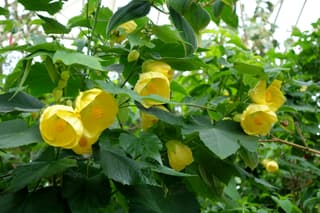
Flowering Maple
Abutilon hybridum
Abutilon hybridum, commonly known as flowering maple, is an ornamental shrub from the Malvaceae family, native to South America. Its pendulous bell-shaped flowers in shades of red, yellow, orange, and pink resemble small lanterns, making it a highly decorative plant for both indoor and outdoor settings.
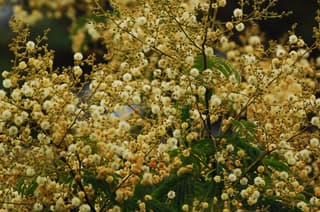
Silver Wattle
Acacia dealbata
Acacia dealbata, commonly known as silver wattle or mimosa, is a fast-growing evergreen tree native to southeastern Australia and Tasmania. Introduced to Europe in the 19th century, it is now widely naturalized along Mediterranean coasts, particularly in the French Riviera and Liguria. It is distinguished by its light silvery-green foliage and fragrant, bright yellow globular flower clusters that appear between February and March, before most other spring blooms. In the wild, it can reach 10-15 meters in height, while in pots it remains more compact, around 2 meters. It is the symbolic plant for International Women's Day in Italy. In several Mediterranean regions, it is considered a potentially invasive species due to its rapid spread via seeds and root suckers.
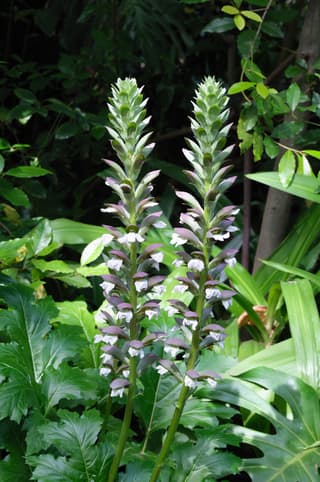
Bear's Breeches
Acanthus mollis
Acanthus mollis, commonly known as Bear's Breeches, is a bold architectural perennial native to the Mediterranean. It is prized for its dramatic, deeply lobed glossy green leaves and tall spikes of white and purple flowers that bloom in late spring to midsummer. Its striking foliage inspired the iconic leaf motif on Corinthian columns.
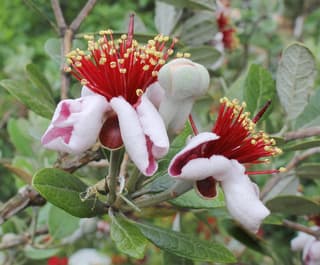
Pineapple Guava
Acca sellowiana
Acca sellowiana, commonly known as pineapple guava or feijoa, is an evergreen shrub native to southern Brazil and Uruguay. Belonging to the Myrtaceae family, it produces aromatic fruits with a flavor reminiscent of pineapple, strawberry, and guava. Its ornamental flowers feature white petals with striking red stamens — and are entirely edible.
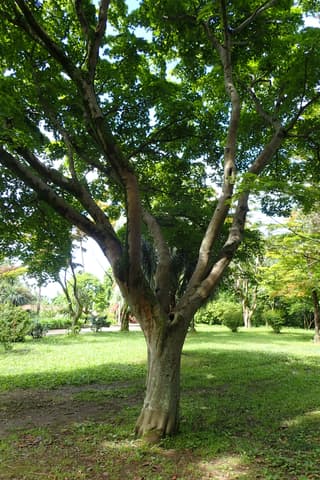
Maple
Acer
The genus Acer, commonly known as maple, encompasses more than 130 species of deciduous trees and shrubs distributed throughout the Northern Hemisphere. Famous for the exuberance of its autumn foliage, the maple is cultivated for both its ornamental value and its fine wood. The Japanese species Acer palmatum is especially prized in gardens and bonsai, while Acer saccharum provides the famous sap for maple syrup.
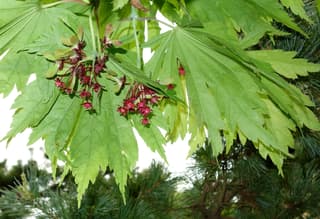
Fullmoon Maple
Acer japonicum
The Fullmoon Maple (Acer japonicum) is a small-to-medium deciduous tree native to the mountain woodlands of Japan and Korea, prized for its rounded, moon-shaped leaves with 7-11 soft lobes. In spring it bears clusters of small purplish-red flowers before the foliage unfurls, and in autumn its canopy turns brilliant shades of gold, orange, and crimson. Slow-growing and elegant, it is a signature specimen tree in Japanese-style gardens.
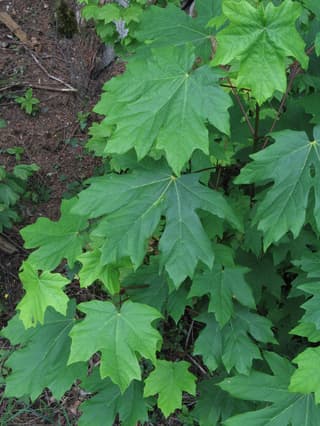
Bigleaf maple
Acer macrophyllum
The Bigleaf maple (Acer macrophyllum) is a large deciduous tree native to the western coast of North America, from southern Alaska to California, where it often grows along streams and in moist forests up to 450 m in altitude. It is the maple with the largest leaves in the world, reaching up to 15-30 cm in width and divided into five deep palmate lobes, which turn spectacular golden and yellow hues in autumn. In spring, it produces hanging clusters of small, inconspicuous greenish-yellow flowers that appear before the leaves. It can reach considerable heights in the wild, with record specimens exceeding 40 meters.
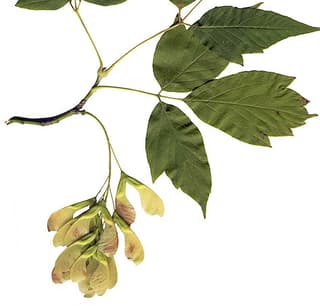
Boxelder
Acer negundo
Boxelder (Acer negundo) is a fast-growing, deciduous tree native to North America, belonging to the family Sapindaceae. It can reach up to 21 meters (70 feet) in height and is renowned for its exceptional cold hardiness and adaptability to a wide range of soil types and climatic conditions. The tree features pinnately compound leaves with 3 to 5 leaflets and produces inconspicuous green-yellow flowers in spring before the leaves emerge. It is dioecious, with male and female flowers on separate trees.
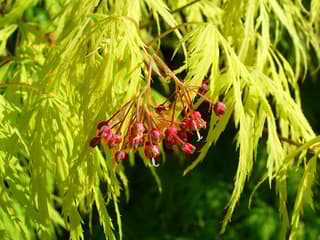
Japanese Maple
Acer palmatum
The Japanese Maple (Acer palmatum) is an ornamental tree native to Japan, China, and Korea, celebrated for the spectacular beauty of its foliage, which transforms through the seasons — from deep green in spring to vivid shades of red, orange, and yellow in autumn. With an elegant habit and deeply lobed palmate leaves, it is one of the most beloved ornamental trees in Asian-style gardens, contemplation gardens, and as a bonsai subject.
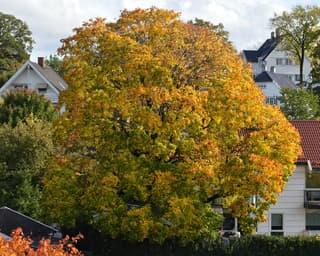
Norway Maple
Acer platanoides
The Norway Maple (Acer platanoides) is a large deciduous tree native to Europe and western Asia, widely planted as a shade and street tree. It features broad, palmate leaves, small yellow-green spring flowers, and vibrant yellow to orange autumn foliage. Extremely hardy and adaptable, it tolerates a wide range of soils, pollution, and urban conditions.
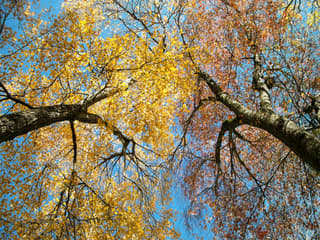
Red Maple
Acer rubrum
Acer rubrum, commonly known as the Red Maple, is one of the most abundant and widespread deciduous trees in eastern North America. Celebrated for its spectacular crimson, orange, and yellow autumn foliage, it is a fast-growing landscape tree valued for shade, wildlife habitat, and ornamental beauty.
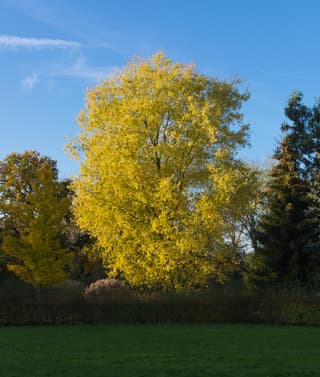
Silver Maple
Acer saccharinum
The Silver Maple (Acer saccharinum) is a fast-growing deciduous tree native to eastern and central North America. Named for the silvery underside of its leaves, it is widely planted as a shade and ornamental tree. It thrives along rivers and wetlands but adapts well to drier conditions.
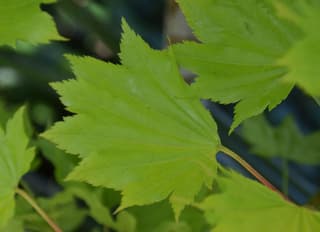
Full Moon Maple
Acer shirasawanum
Acer shirasawanum, or the Full Moon Maple, is a slow-growing deciduous tree or large shrub native to Japan, prized for its rounded, star-shaped leaves that emerge bright yellow-green in spring and turn brilliant orange and red in autumn. Reaching 5-6 meters (16-20 feet) tall and wide at maturity, it forms an elegant, rounded canopy that works beautifully as a specimen tree or understory planting.
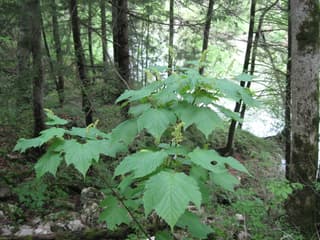
Mountain Maple
Acer spicatum
Mountain Maple (Acer spicatum) is a small deciduous shrub or understory tree native to eastern North America. It thrives on rocky slopes and stream banks in cool, shaded forests, producing brilliant yellow, orange, and red foliage in autumn. Its erect racemes of small greenish-yellow flowers appear in early summer.
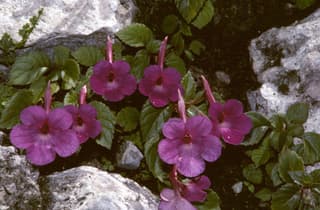
Hot Water Plant
Achimenes grandiflora
Achimenes grandiflora is a tender, rhizomatous perennial in the Gesneriaceae family, native to the mountainous regions of Mexico and Central America. Known as the "hot water plant" for its dislike of cold irrigation, it is the largest-flowered species in its genus, producing velvety, deep reddish-purple to carmine-pink blooms with a contrasting white throat above dark green, hairy foliage with purplish-red undersides. Multiple upright, slightly hairy stems arise each spring from small scaly rhizomes, flowering profusely from summer into fall before dying back to dormancy in winter.
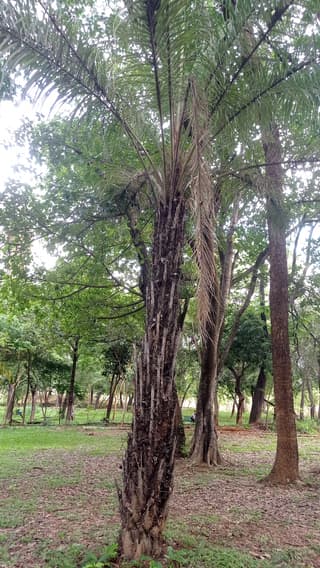
Macaw Palm
Acrocomia aculeata
Acrocomia aculeata, commonly known as the Macaw Palm or Grugru Palm, is a native Brazilian and tropical American palm tree widely distributed across the Cerrado, Atlantic Forest, and transitional zones. Its spiny trunk can reach up to 15 meters in height, crowned by long, arching pinnate leaves that give it a majestic tropical appearance. It produces abundant oil-rich fruits, making it one of the most versatile and economically promising palms in the Americas. Highly resistant to drought and fire, it adapts to different soil types and is increasingly valued in tropical landscaping and sustainable agroindustry.
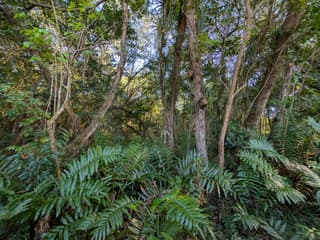
Golden Leather Fern
Acrostichum aureum
Acrostichum aureum, commonly known as the Golden Leather Fern or Mangrove Fern, is one of the largest tropical ferns in the world. Native to pantropical mangrove swamps and coastal wetlands, this robust species develops long, leathery fronds reaching up to 3 metres in length. It tolerates both saline and freshwater environments, making it one of the most adaptable ferns on Earth.
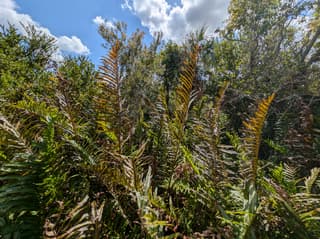
Giant Leather Fern
Acrostichum danaeifolium
The Giant Leather Fern (Acrostichum danaeifolium) is one of the largest ferns in the Americas, native to mangrove swamps and coastal wetlands of tropical America. It can reach up to 12 feet tall and thrives in consistently wet, even flooded, soils with high humidity.
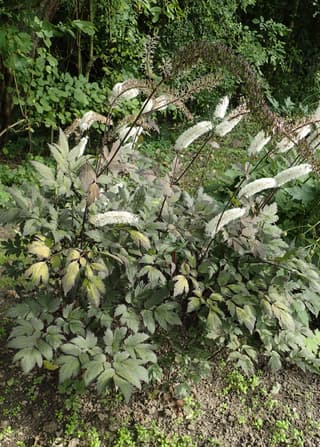
Kamchatka Bugbane
Actaea simplex
Actaea simplex is a clump-forming, rhizomatous herbaceous perennial native to Kamchatka, Sakhalin, Siberia, western China, Manchuria, Mongolia, Korea and Japan. It forms mounds of dark green, trifoliate, deeply divided foliage from which tall, wiry, arching stems rise in late summer, topped with fragrant terminal racemes of small white to cream flowers held well above the leaves. Reaching up to 150cm tall, it is prized for shade and woodland gardens for its late-season blooms, upright architectural habit, and tolerance of moist, humus-rich soil.
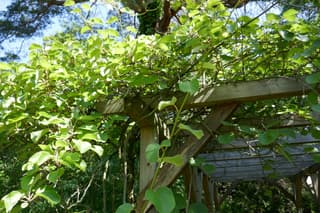
Golden Kiwifruit
Actinidia chinensis
Actinidia chinensis is a vigorous deciduous climbing vine native to China, grown for its sweet, golden-fleshed edible fruit. It is dioecious, requiring both male and female plants for fruit set, and needs sturdy support such as a trellis or pergola to climb.
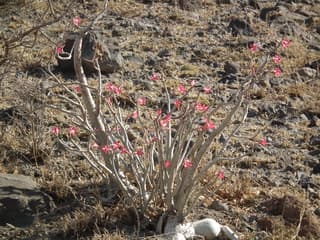
Desert Rose (genus)
Adenium
Adenium is a genus of succulent shrubs and small trees native to arid regions of Africa and the Arabian Peninsula. Famous for their swollen, water-storing caudex (trunk base) and showy trumpet-shaped flowers in shades of pink, red, and white. The most widely cultivated species is A. obesum.
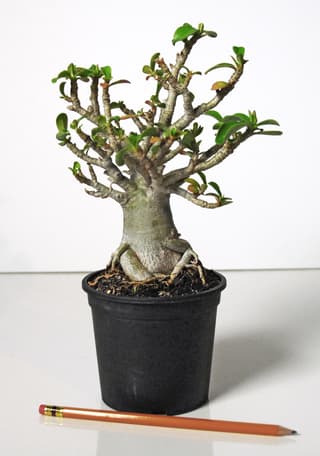
Impala Lily
Adenium multiflorum
The Impala Lily (Adenium multiflorum) is a striking succulent shrub native to southern Africa, celebrated for its spectacular winter blooms of white and crimson bicolor flowers that appear on bare branches. It develops a thick basal stem called a caudex that stores water and gives the plant a dramatic bonsai-like appearance over time.
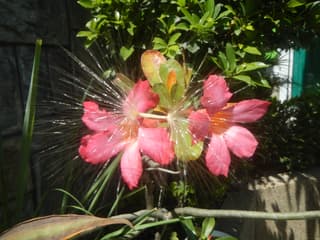
Desert Rose
Adenium obesum
Adenium obesum, commonly known as the Desert Rose, is a striking succulent shrub native to East Africa and the Arabian Peninsula. Renowned for its thick, swollen caudex and vibrant trumpet-shaped flowers in shades of pink, red, and white, it is a favorite among bonsai enthusiasts and ornamental plant collectors. Despite its exotic appearance, it is well-suited for indoor cultivation in bright, sunny spots.
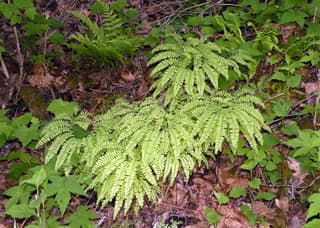
Northern Maidenhair Fern
Adiantum pedatum
Adiantum pedatum, the northern maidenhair fern, is a deciduous, clump-forming fern native to moist deciduous woodlands across North America and temperate East Asia. It is prized for its wiry black stems and delicate, fan-shaped fronds that arch outward like open hands, dying back to the rhizome each winter and returning each spring.
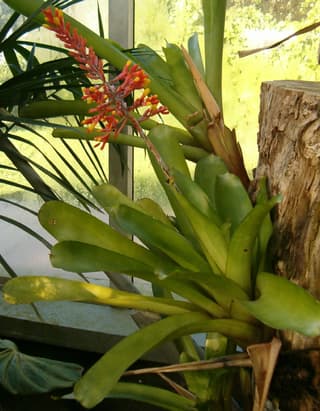
Tail Bromeliad
Aechmea caudata
Aechmea caudata is a bromeliad native to Brazil's Atlantic Forest, occurring from Espírito Santo to Rio Grande do Sul across epiphytic, rupicolous, and terrestrial habitats. It forms a funnel-shaped rosette of long arching leaves up to 128 cm, with serrated margins and a sharp tip. The erect spike inflorescence rises above the rosette, bearing yellowish flowers with orange-red sepals — a striking tropical display. Like all monocarpic bromeliads, it flowers once in its lifetime (typically in summer), then slowly declines while producing offsets.
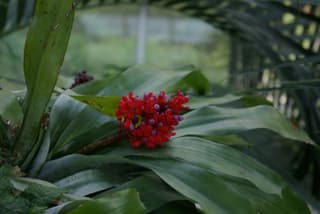
Coral Berry Bromeliad
Aechmea fulgens
Aechmea fulgens, commonly known as the Coral Berry Bromeliad, is an epiphytic bromeliad native to northeastern Brazil, particularly the states of Bahia and Pernambuco. It forms an elegant rosette of bright green, waxy leaves with marginal spines. Its striking inflorescence features red bracts and numerous purple flowers, followed by long-lasting red globose berries that persist for many months after blooming. This makes it one of the most decorative bromeliads for both indoor cultivation and tropical gardens.
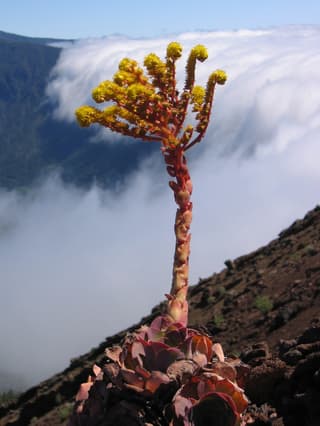
Canary Island Rose
Aeonium aureum
Aeonium aureum, commonly known as the Canary Island Rose, is a striking rosette-forming succulent native to the volcanic slopes of Tenerife in the Canary Islands. Its tightly packed, spoon-shaped leaves form a perfectly symmetrical, rose-like rosette in shades of blue-green to golden-green, giving the plant its species name "aureum" (golden). Unlike many succulents, this species follows a winter-growing, summer-dormant cycle: it grows actively through the cool, damp months of autumn, winter and spring, then closes its rosette tightly and rests through the hot, dry summer to conserve moisture. After several years of growth, mature rosettes may send up a tall, golden-yellow flower spike, a rare and spectacular event, though the flowering rosette dies afterward, leaving offsets behind to continue the plant.
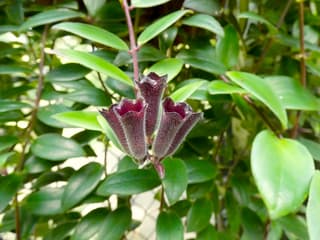
Lipstick Plant
Aeschynanthus
Aeschynanthus is a genus of trailing, epiphytic plants in the Gesneriaceae family, native to the tropical forests of Southeast Asia, including Thailand, the Malay Peninsula, Sumatra, and Borneo. Grown widely as a hanging houseplant, it produces glossy, leathery dark-green leaves along cascading stems and tubular scarlet flowers that emerge from dark maroon calyces, resembling tubes of lipstick -- the source of its common name.
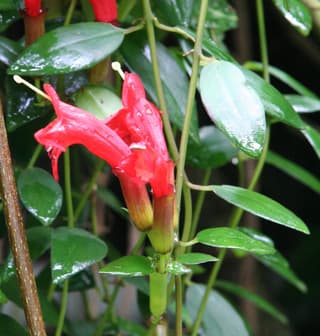
Lipstick Plant
Aeschynanthus radicans
The Lipstick Plant (Aeschynanthus radicans) is a stunning tropical epiphyte native to the humid rainforests of Southeast Asia. Known for its cascading vines adorned with glossy, waxy leaves and striking tubular red flowers that emerge from dark burgundy calyxes resembling a lipstick tube, this plant is a favorite among indoor gardeners. It thrives in hanging baskets where its trailing stems can gracefully drape, creating a lush, eye-catching display.
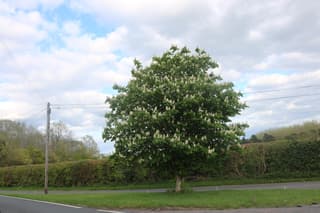
Horse Chestnut
Aesculus hippocastanum
The horse chestnut (Aesculus hippocastanum) is a large, fast-growing deciduous tree native to the Balkan Peninsula, prized across Europe and North America as a stately shade and ornamental tree. It has a broad, rounded crown, palmately compound leaves with five to seven leaflets, and produces spectacular upright clusters of white flowers with yellow-to-red throats each spring. In autumn it drops its glossy brown seeds, known as conkers, encased in spiny green husks.
Common Fieldcap
Agrocybe pediades
Agrocybe pediades is a small, cosmopolitan saprophytic fungus that frequently grows in nutrient-rich soils, such as lawns, gardens, and pastures. It is characterized by its initially hemispherical cap that flattens with age, displaying a yellowish-ochre or cinnamon color. It is an essential organism for the decomposition of organic matter and nutrient recycling in the soil. Although edible, its small size and the potential for confusion with similar toxic species require caution.
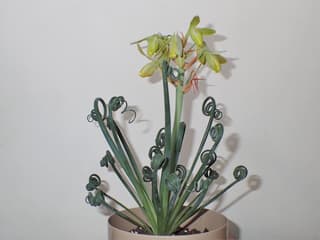
Slime Lily
Albuca
Albuca is a large genus of bulbous geophytes in the family Asparagaceae (subfamily Scilloideae), with over 100 species native mainly to southern Africa, extending into tropical Africa and Arabia. The genus name and the common nickname "slime lily" refer to the mucilaginous sap released when the leaves or bulb scales are cut. Most species are winter-growers: they produce leaves during the cool, wet months, flower in late winter to spring, then lose their foliage and go fully dormant through the hot, dry summer. Popular cultivated species such as Albuca spiralis and Albuca namaquensis are prized for their narrow, curly, spiral-tipped leaves and upright stalks of pendent, yellow-green, vanilla-scented flowers. As desert-adapted geophytes they are tough and forgiving once their dormancy cycle is respected, but are highly sensitive to overwatering while the bulb is dormant.
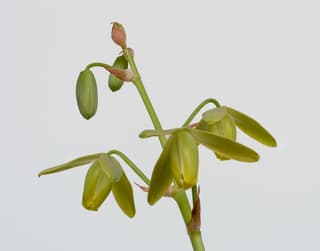
Curly Tamarak
Albuca spiralis
Albuca spiralis, commonly known as 'Frizzle Sizzle', is a unique bulbous succulent native to South Africa. It is celebrated for its distinctive, corkscrew-shaped leaves that curl more tightly when exposed to high light levels. In late spring, it produces spikes of nodding, bell-shaped yellow-green flowers that emit a sweet vanilla fragrance. The plant undergoes a summer dormancy period where its foliage may die back completely.
What are Medium Plants?
Medium Plants require a bit more attention and basic gardening knowledge. These plants thrive with regular care and some cultivation experience. Ideal for those who already master the basics.
Tips for Growing Medium Plants
medium plants need a balance between attention and freedom. Keep a regular care routine, watch leaves to identify problems early, and adjust watering by season.