Amaryllidaceae
Ramsons (Allium ursinum)
Allium ursinum
Ramsons thrive in partial to full shade with consistently moist, humus-rich soil. Water every 4-7 days during the active spring growing season. Allow natural dormancy in summer — do not water during this period. Feed monthly with a balanced fertiliser during spring growth. Plant bulbs in autumn for best results.
Every 5 days
Low light
5° - 20°C
40% - 70%
Categories
What is Ramsons?
Ramsons (Allium ursinum) is a easy-care plant from the Amaryllidaceae family. Allium ursinum, commonly known as ramsons or wild garlic, is a bulbous perennial herb native to the temperate woodlands of Europe and Asia. It forms lush carpets of broad, lance-shaped leaves in spring, filling forest floors with a distinctive garlic scent. Star-shaped white flowers appear from Marc...
Ramsons grows up to 30cm, spread of 30cm, watering every 5 days, 5°C – 20°C, 40–70% humidity. It is not suitable for indoor environments and not safe for pets.
Unlike many tropical plants, Ramsons tolerates watering mistakes. Best for beginners. Without precautions, ingestion can cause irritation in pets. Keep out of reach of cats and dogs.
How to Care for Ramsons?
TLDR: Ramsons needs Low light, watering every 5 days, and temperatures between 5-20°C with 40-70% humidity.
How Often Should You Water Ramsons?
Keep soil consistently moist but never waterlogged during the active spring growing season. Water every 4-7 days with approximately 250 ml. Reduce watering as leaves die back in early summer and stop completely during summer dormancy.
How Much Light Does Ramsons Need?
Prefers dappled shade to full shade — ideal under deciduous trees. Tolerates 2-4 hours of indirect sunlight daily. Avoid direct afternoon sun which can scorch the delicate leaves and cause yellowing.
What Is the Best Soil for Ramsons?
Plant in moist, loamy soil rich in organic matter. Amend with leaf mould or compost before planting. Soil must be well-draining despite needing to stay consistently moist. Avoid compacted or waterlogged soils.
Care Schedule
Fertilize
Every 30 days
Misting
Every 3 days
Rotate
Every 7 days
What Is Ramsons and Where Does It Come From?
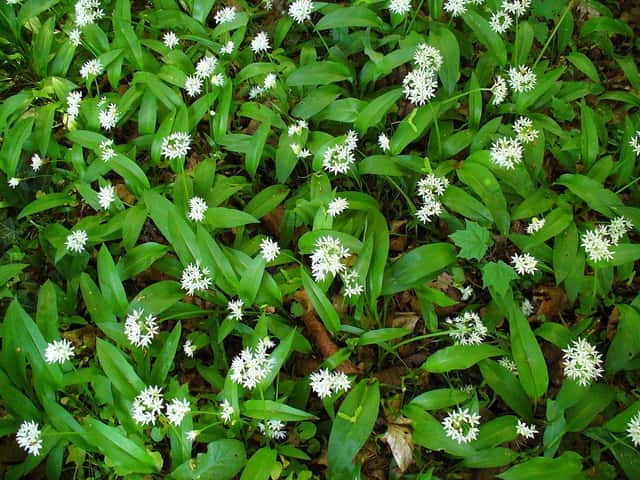
Allium ursinum, commonly known as ramsons or wild garlic, is a bulbous perennial herb native to the temperate woodlands of Europe and Asia. It forms lush carpets of broad, lance-shaped leaves in spring, filling forest floors with a distinctive garlic scent. Star-shaped white flowers appear from March to May, attracting pollinators. All parts of the plant are edible and it has been treasured for centuries both as a food source and medicinal herb.
How Big Does Ramsons Grow?
TLDR: Ramsons can reach up to 30cm tall with Medium growth rate.
Max height
30cm
Spread
30cm
Growth rate
Medium
Foliage
Deciduous
Warning: Toxic Plant
This plant can be toxic if ingested. Keep out of reach of:
Plant Uses
Edible
Can be consumed
Medicinal
Medicinal properties
Ornamental
Great for decoration
Medicinal Uses
- Traditional cardiovascular tonic and hypotensive herb
- Used in folk medicine to treat digestive complaints and intestinal parasites
- Antiseptic wound dressing used historically across Europe
- Supports healthy cholesterol levels
Culinary Uses
- Young leaves used raw in salads and as a pesto substitute
- Flowers and bulbs eaten raw or cooked
- Classic ingredient in wild garlic butter and soups
- Leaves can be made into a sauce similar to basil pesto
Is your plant showing symptoms?
Click on the symptom to discover possible causes:
What Diseases Commonly Affect Ramsons?
TLDR: Ramsons is susceptible to 5 known diseases. Monitor regularly for early detection.
Slugs and Snails
Slugs and snails are mollusks that feed on plant tissue, causing irregular holes in leaves and damage to young seedlings. They are most active at night and in moist conditions, leaving characteristic silvery slime trails. These pests can quickly devastate gardens, especially during wet seasons.
Rust
Rust is a common fungal disease caused by fungi in the order Pucciniales that affects a wide variety of plants. The disease gets its name from the characteristic orange, yellow, or reddish-brown pustules that appear on leaves, resembling metal rust. This obligate fungal parasite requires living plants to survive and can cause significant economic losses in agricultural crops.
Downy Mildew
Downy mildew is a fungal-like disease caused by oomycetes (water molds) that thrives in cool, wet conditions. It affects a wide range of plants, causing yellowing leaves with fuzzy white-gray growth underneath, leading to defoliation and reduced yields if left untreated.
Aphids
Aphids are small, soft-bodied, pear-shaped insects (1/16 to 1/8 inch long) that feed by sucking nutrient-rich sap from plants. They reproduce rapidly and can quickly weaken plants, causing distorted growth and transmitting plant viruses. Aphids come in various colors including green, black, red, yellow, brown, and gray. They secrete honeydew, a sticky substance that attracts ants and encourages sooty mold growth.
Fun Facts
The name "ursinum" comes from the Latin for bear — folklore says brown bears dig up the bulbs after waking from hibernation.
Ramsons can form dense carpets covering entire woodland floors, creating a spectacular white floral display in spring.
It can be easily confused with toxic lookalikes such as lily of the valley and Colchicum autumnale — always identify by its distinctive garlic smell.
Every part of the plant is edible: leaves, flowers, bulbs, and even the seeds.
Wild garlic has been used as food and medicine in Europe since the Stone Age.
Compare with similar plants
| Attribute | Difficulty | Light | Watering | Pet Safe |
|---|---|---|---|---|
| Field Maple | Easy | Bright indirect | 14d | ✓ |
| Silver Birch | Easy | Direct sun | 14d | ✓ |
| Cushion Bush | Easy | Direct sun | 14d | ✓ |
| Peruvian peppertree | Easy | Direct sun | 14d | ⚠️ |