Celastraceae
Oriental Bittersweet (Celastrus orbiculatus): Care Guide
Celastrus orbiculatus
A robust, fast-growing plant adaptable to various conditions. Prefers full sun but tolerates partial shade. Water moderately as it is drought-tolerant. Soil can range from sandy to clay. Regular pruning is essential to control its vigorous growth. WARNING: all parts of the plant, especially the berries, are toxic.
Every 7 days
Bright indirect
-20° - 35°C
40% - 80%
Categories
What is Oriental Bittersweet?
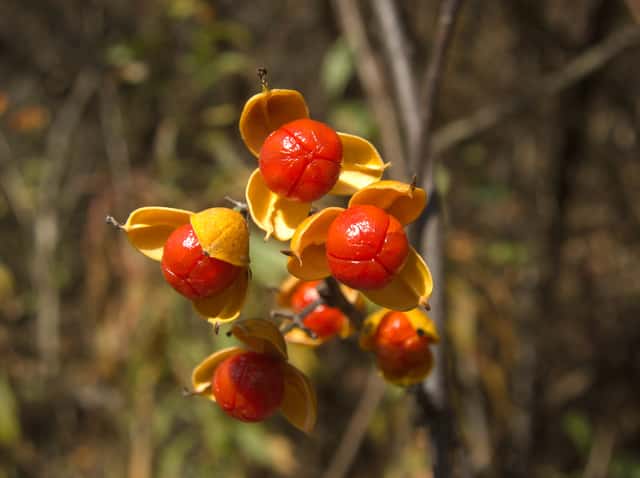
Oriental Bittersweet (Celastrus orbiculatus) is a easy-care plant from the Celastraceae family. Celastrus orbiculatus, commonly known as Oriental bittersweet or Asian bittersweet, is a deciduous woody vine native to East Asia. It grows vigorously, reaching up to 60 feet in length, twining around and girdling native trees with its spiraling stems. Its ornamental yellow-orange capsules with brig...
Oriental Bittersweet grows up to 18.0m, spread of 300cm, watering every 7 days, -20°C – 35°C, 40–80% humidity. It is not suitable for indoor environments and not safe for pets.
Unlike many tropical plants, Oriental Bittersweet tolerates watering mistakes. Best for beginners. Without precautions, ingestion can cause irritation in pets. Keep out of reach of cats and dogs.
How to Care for Oriental Bittersweet?
TLDR: Oriental Bittersweet needs Bright indirect, watering every 7 days, and temperatures between -20-35°C with 40-80% humidity.
How Often Should You Water Oriental Bittersweet?
Water every 7 days during the growing season. Avoid waterlogging the soil. May need more frequent watering during hot weather. Reduce watering in winter during dormancy.
How Much Light Does Oriental Bittersweet Need?
Prefers full sun (6 or more hours of direct sunlight daily). Tolerates partial shade, but produces fewer flowers and berries. The more sunlight, the more vigorous and rapid the growth.
What Is the Best Soil for Oriental Bittersweet?
Adapts to any soil type but thrives in light sandy and medium loamy, well-drained soils. Tolerates poor, acidic, neutral, or alkaline soils. Avoid permanently waterlogged soils.
What Pot Should You Use for Oriental Bittersweet?
For invasive species, prefer large, sturdy containers that limit root expansion. Use ceramic or heavy-duty plastic pots with good drainage.
What Is Oriental Bittersweet and Where Does It Come From?
Celastrus orbiculatus, commonly known as Oriental bittersweet or Asian bittersweet, is a deciduous woody vine native to East Asia. It grows vigorously, reaching up to 60 feet in length, twining around and girdling native trees with its spiraling stems. Its ornamental yellow-orange capsules with bright red seeds are highly attractive in autumn but are toxic to humans, dogs, and cats. It is considered a highly invasive species in North America and other regions outside its native range.
How to Propagate Oriental Bittersweet?
Seed Propagation
Cold stratification significantly increases germination rates. Use fresh seeds for best results.
- 1 Cold-stratify seeds for 3 months before planting
- 2 Sow in moist, well-drained substrate
- 3 Keep in indirect light until germination
- 4 Transplant to final location after rooting
Materials needed:
Stem Cutting
Keep substrate moisture consistent. Avoid direct sunlight until fully rooted.
- 1 Take a semi-hardwood cutting 10-15 cm long in July or August
- 2 Remove lower leaves, keeping 2-3 at the top
- 3 Apply rooting hormone to the base
- 4 Plant in moist substrate and place in indirect light
Materials needed:
How Big Does Oriental Bittersweet Grow?
TLDR: Oriental Bittersweet can reach up to 18.0m tall with Fast growth rate.
Max height
18.0m
Spread
3.0m
Growth rate
Fast
Foliage
Deciduous
Warning: Toxic Plant
This plant can be toxic if ingested. Keep out of reach of:
Plant Uses
Ornamental
Great for decoration
Is your plant showing symptoms?
Click on the symptom to discover possible causes:
What Diseases Commonly Affect Oriental Bittersweet?
TLDR: Oriental Bittersweet is susceptible to 3 known diseases. Monitor regularly for early detection.
Root Rot
Root rot is a serious fungal disease that affects the root system of plants, causing them to decay and die. It is primarily caused by overwatering, poor drainage, or soil-borne fungi such as Pythium, Phytophthora, Rhizoctonia, and Fusarium. The disease thrives in waterlogged conditions where roots are deprived of oxygen, making them susceptible to fungal infection.
Bacterial Blight
Bacterial blight is a serious plant disease caused by pathogenic bacteria that enters plants through wounds or natural openings. It spreads rapidly in warm, wet conditions and can cause significant damage to leaves, stems, and flowers. The bacteria are transmitted by water splash, contaminated tools, and insects.
Scale Insects
Scale insects are small sap-sucking pests that appear as brown, shell-like bumps on plant stems and leaves. There are over 25 species, divided into armored (hard) and unarmored (soft) scales. They feed by piercing plant tissue and extracting sap, which weakens the plant and can lead to yellowing, stunted growth, and even death if left untreated. They also excrete honeydew, which attracts ants and promotes sooty mold growth.
Fun Facts
Can grow up to 60 feet long, smothering entire trees
Its orange capsules with red seeds are highly decorative but extremely toxic
It is one of the most problematic invasive species in the United States, introduced in 1860
Birds eat the berries and spread the seeds, accelerating its invasion
Frequently asked questions
Is Oriental Bittersweet toxic?
How often should I water Oriental Bittersweet?
Does Oriental Bittersweet need a lot of sun?
How do I control Oriental Bittersweet growth?
Can Oriental Bittersweet be grown in a container?
Compare with similar plants
| Attribute | Difficulty | Light | Watering | Pet Safe |
|---|---|---|---|---|
| Field Maple | Easy | Bright indirect | 14d | ✓ |
| Silver Birch | Easy | Direct sun | 14d | ✓ |
| Cushion Bush | Easy | Direct sun | 14d | ✓ |
| Peruvian peppertree | Easy | Direct sun | 14d | ⚠️ |





