Simaroubaceae
Tree of Heaven: The World's Most Resilient Invasive Tree
Ailanthus altissima
An extremely tough and low-maintenance tree once established. Tolerates poor, compacted, and polluted soils. Water regularly during the first 2-3 seasons; after establishment it is nearly self-sufficient. Full sun promotes the most vigorous growth. No fertilization needed in poor soils. Caution: invasive species that can dominate surrounding vegetation.
Every 21 days
Direct sun
-12° - 35°C
30% - 70%
Categories
What is Tree of Heaven?
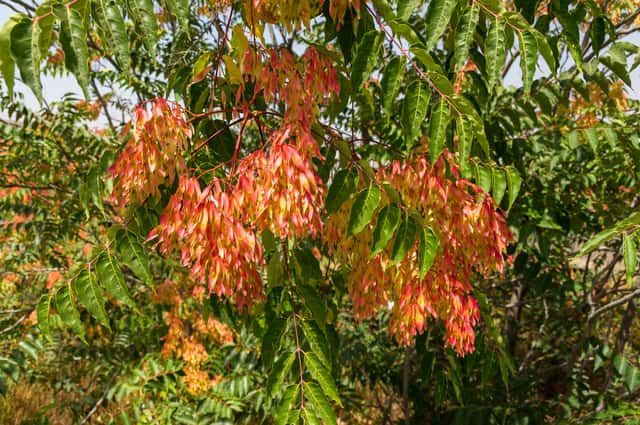
Tree of Heaven (Ailanthus altissima) is a easy-care plant from the Simaroubaceae family. Tree of Heaven (Ailanthus altissima) is an extremely fast-growing deciduous tree native to northern and central China, belonging to the family Simaroubaceae. It is widely regarded as one of the most aggressive invasive species in the world, rapidly colonizing roadsides, vacant lots, and disturbed ur...
Tree of Heaven grows up to 24.0m, spread of 1000cm, watering every 21 days, -12°C – 35°C, 30–70% humidity. It is not suitable for indoor environments and not safe for pets.
Unlike many tropical plants, Tree of Heaven tolerates watering mistakes. Best for beginners. Without precautions, ingestion can cause irritation in pets. Keep out of reach of cats and dogs.
How to Care for Tree of Heaven?
TLDR: Tree of Heaven needs Direct sun, watering every 21 days, and temperatures between -12-35°C with 30-70% humidity.
How Often Should You Water Tree of Heaven?
Water weekly (every 7 days) during the first 2-3 years. Once established, it is highly drought-tolerant and needs irrigation only during extreme heat. Allow soil to dry between waterings to prevent root rot.
How Much Light Does Tree of Heaven Need?
Prefers full sun with at least 6 hours of direct sunlight daily. Tolerates partial shade but growth will be reduced. Avoid full shade for optimal performance.
What Is the Best Soil for Tree of Heaven?
Adapts to almost any soil type: sandy, clay, chalky, compacted, or polluted. Prefers well-drained soil with pH 5.5–7.5. Does not need fertile soil — it thrives where other trees cannot grow.
What Pot Should You Use for Tree of Heaven?
Large clay or plastic pot for initial growth; adult tree must be planted directly in the ground
Care Schedule
Fertilize
Every 14 days
Misting
Every 3 days
Rotate
Every 7 days
Repot
Every 365 days
What Is Tree of Heaven and Where Does It Come From?
Tree of Heaven (Ailanthus altissima) is an extremely fast-growing deciduous tree native to northern and central China, belonging to the family Simaroubaceae. It is widely regarded as one of the most aggressive invasive species in the world, rapidly colonizing roadsides, vacant lots, and disturbed urban environments across 30+ U.S. states and much of Europe. A single female tree can produce over 300,000 seeds per year and spreads aggressively via root sprouts. Despite its invasive character, it has traditional medicinal uses in Chinese medicine. WARNING: invasive species — illegal to plant in many jurisdictions. Contact with sap may cause skin irritation and respiratory allergic reactions.
How to Propagate Tree of Heaven?
Seed propagation
Cold stratification improves germination rates. Seeds germinate readily in spring. Avoid planting near native vegetation to prevent ecological harm.
- 1 Collect mature samaras (winged seeds) in autumn when they turn brown.
- 2 Cold-stratify seeds in moist medium for 4-6 weeks in the refrigerator.
- 3 Sow in containers with well-draining substrate and cover lightly.
- 4 Keep in a bright, moist location until germination occurs.
Materials needed:
How Big Does Tree of Heaven Grow?
TLDR: Tree of Heaven can reach up to 24.0m tall with Fast growth rate.
Max height
24.0m
Spread
10.0m
Growth rate
Fast
Foliage
Deciduous
Warning: Toxic Plant
This plant can be toxic if ingested. Keep out of reach of:
Plant Uses
Ornamental
Great for decoration
Medicinal
Medicinal properties
Medicinal Uses
- Bark used in traditional Chinese medicine for diarrhea, fevers, and intestinal parasites
- Leaf extracts studied for antimicrobial and antitumor properties
Is your plant showing symptoms?
Click on the symptom to discover possible causes:
What Diseases Commonly Affect Tree of Heaven?
TLDR: Tree of Heaven is susceptible to 9 known diseases. Monitor regularly for early detection.
Verticillium Wilt
Verticillium wilt is a soil-borne fungal disease caused primarily by the fungi Verticillium dahliae and V. albo-atrum. These pathogens infect plant roots and grow within the vascular tissues, blocking water and nutrient transport, resulting in wilting and eventual plant death. The disease affects over 350 plant species including vegetables, fruits, ornamental flowers, and trees. The fungi can survive in soil for more than 10 years as resistant structures called microsclerotia.
Anthracnose
Anthracnose is a fungal disease caused by fungi in the genus Colletotrichum that affects many plants, including vegetables, fruits, and trees. The disease thrives in cool, wet conditions, causing dark, sunken lesions on leaves, stems, flowers, and fruits.
Leaf Spot
Leaf spot is a common fungal disease caused by various pathogens including Alternaria, Ascochyta, Colletotrichum, Septoria, and Venturia. It primarily affects leaves, causing discolored spots that can lead to premature leaf drop if left untreated.
Root Rot
Root rot is a serious fungal disease that affects the root system of plants, causing them to decay and die. It is primarily caused by overwatering, poor drainage, or soil-borne fungi such as Pythium, Phytophthora, Rhizoctonia, and Fusarium. The disease thrives in waterlogged conditions where roots are deprived of oxygen, making them susceptible to fungal infection.
Meaning & Symbolism
In Western culture, the Tree of Heaven symbolizes resilience, adaptability, and survival against all odds. It became a cultural symbol of hope in blighted urban environments, most famously depicted in the novel "A Tree Grows in Brooklyn".
Fun Facts
A single female tree can produce over 300,000 seeds per year, making it one of the most prolific seed producers among invasive trees.
The Tree of Heaven is the tree featured in the beloved American novel "A Tree Grows in Brooklyn" (1943) by Betty Smith.
Its roots release allelopathic chemicals that suppress the growth of surrounding plants — a form of chemical warfare against competitors.
It can grow up to 3 meters (10 feet) per year under ideal conditions, one of the fastest growth rates of any temperate tree.
Frequently asked questions
Is Tree of Heaven toxic to pets?
Can I plant Tree of Heaven in my garden?
How often should I water Tree of Heaven?
What diseases affect Tree of Heaven?
Compare with similar plants
| Attribute | Difficulty | Light | Watering | Pet Safe |
|---|---|---|---|---|
| Field Maple | Easy | Bright indirect | 14d | ✓ |
| Silver Birch | Easy | Direct sun | 14d | ✓ |
| Cushion Bush | Easy | Direct sun | 14d | ✓ |
| Peruvian peppertree | Easy | Direct sun | 14d | ⚠️ |
Choose & Compare
Sources & References
- Tree of Heaven (Ailanthus altissima) - How to Grow & Care Guide
- Ailanthus altissima - Missouri Botanical Garden Plant Finder
- Ailanthus altissima Care & Tips - Viriar Tree Encyclopedia
- Ailanthus altissima Growing & Care Guide - GardenersHQ
- Ailanthus Tree of Heaven Verticillium Wilt - PNW Pest Management Handbooks