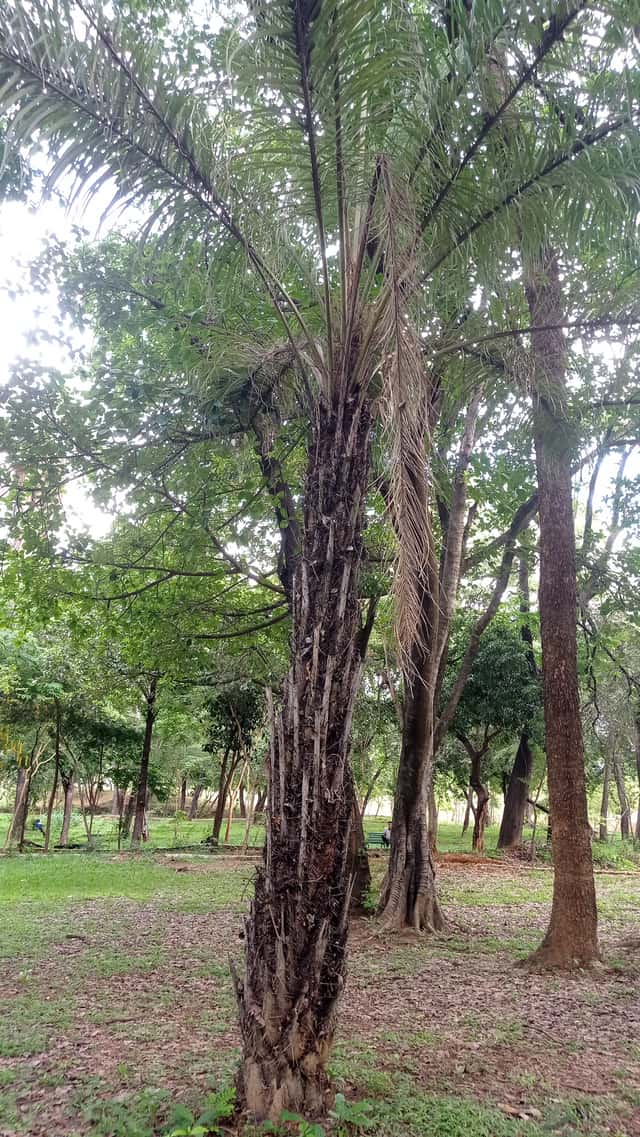
Arecaceae
Macaw Palm: The Native Brazilian Palm That Combines Beauty, Resilience and Utility
Acrocomia aculeata
The Macaw Palm is a robust and low-maintenance palm once established. It requires full sun throughout the day and well-drained soil. During the first years of cultivation, water regularly to encourage root development; once established, it tolerates extended drought periods. Fertilize with balanced fertilizer in spring and early summer. Remove dead or damaged fronds periodically.
Every 14 days
Direct sun
10° - 45°C
40% - 80%
Categories
What is Macaw Palm?
Macaw Palm (Acrocomia aculeata) is a medium-care plant from the Arecaceae family. Acrocomia aculeata, commonly known as the Macaw Palm or Grugru Palm, is a native Brazilian and tropical American palm tree widely distributed across the Cerrado, Atlantic Forest, and transitional zones. Its spiny trunk can reach up to 15 meters in height, crowned by long, arching pinnate leaves that...
Macaw Palm grows up to 15.0m, spread of 700cm, watering every 14 days, 10°C – 45°C, 40–80% humidity. It is not suitable for indoor environments and safe for pets.
Unlike many popular species, Macaw Palm is safe to keep around pets.
How to Care for Macaw Palm?
TLDR: Macaw Palm needs Direct sun, watering every 14 days, and temperatures between 10-45°C with 40-80% humidity.
How Often Should You Water Macaw Palm?
During the first 12 to 18 months after planting, water every 7 to 10 days, keeping the soil slightly moist. Once established, reduce to watering every 14 days or according to rainfall. Avoid waterlogging the soil, as roots in permanently wet soil are susceptible to root rot.
How Much Light Does Macaw Palm Need?
The Macaw Palm requires full sun and does not thrive in partial shade or shade. Plant in a location with direct sun exposure for at least 6 to 8 hours per day. Indoor cultivation is practically unfeasible without high-intensity artificial lighting.
What Is the Best Soil for Macaw Palm?
Use well-draining soil, preferably sandy or sandy loam, with a pH between 5.5 and 7.5. The Macaw Palm adapts to poor soils but grows more vigorously in substrate rich in organic matter. Avoid heavy clay soils or permanently waterlogged conditions.
What Pot Should You Use for Macaw Palm?
As a large-growing palm, the Macaw Palm is not suitable for permanent container cultivation. For young seedlings, use medium-sized clay or rigid plastic pots (20-30 cm diameter) with ample drainage holes. Transplant to permanent ground as soon as possible.
Care Schedule
Fertilize
Every 90 days
What Is Macaw Palm and Where Does It Come From?
Acrocomia aculeata, commonly known as the Macaw Palm or Grugru Palm, is a native Brazilian and tropical American palm tree widely distributed across the Cerrado, Atlantic Forest, and transitional zones. Its spiny trunk can reach up to 15 meters in height, crowned by long, arching pinnate leaves that give it a majestic tropical appearance. It produces abundant oil-rich fruits, making it one of the most versatile and economically promising palms in the Americas. Highly resistant to drought and fire, it adapts to different soil types and is increasingly valued in tropical landscaping and sustainable agroindustry.
How to Propagate Macaw Palm?
Seed propagation
Macaw Palm germination is slow and irregular. Use mechanical scarification to increase germination rates. Never let the substrate dry out completely during the process.
- 1 Collect ripe fruits and remove the pulp completely
- 2 Perform scarification by carefully cracking the hard endocarp with a vise or filing it down
- 3 Soak seeds in warm water for 3 to 7 days
- 4 Sow in moist, well-drained substrate in a warm environment (25-30°C)
- 5 Keep in a shaded, humid area until germination, which may take 6 to 18 months
- 6 Transplant seedlings to a permanent full-sun location when they reach 30-50 cm
Materials needed:
How Big Does Macaw Palm Grow?
TLDR: Macaw Palm can reach up to 15.0m tall with Fast growth rate.
Max height
15.0m
Spread
7.0m
Growth rate
Fast
Foliage
Evergreen
Plant Uses
Edible
Can be consumed
Ornamental
Great for decoration
Medicinal
Medicinal properties
Medicinal Uses
- Root tea with antidiabetic and antioxidant properties
- Seed oil with anti-inflammatory and wound-healing activity
- Fruit pulp extract with potential hepatoprotective effects
Culinary Uses
- Fresh fruit pulp consumed as is or in juices, ice creams, and sweets
- Oil extracted from seeds and pulp for fine cuisine and frying
- Edible palm heart (heart of palm)
- Trunk starch used in traditional communities
Is your plant showing symptoms?
Click on the symptom to discover possible causes:
What Diseases Commonly Affect Macaw Palm?
TLDR: Macaw Palm is susceptible to 5 known diseases. Monitor regularly for early detection.
Root Rot
Root rot is a serious fungal disease that affects the root system of plants, causing them to decay and die. It is primarily caused by overwatering, poor drainage, or soil-borne fungi such as Pythium, Phytophthora, Rhizoctonia, and Fusarium. The disease thrives in waterlogged conditions where roots are deprived of oxygen, making them susceptible to fungal infection.
Leaf Spot
Leaf spot is a common fungal disease caused by various pathogens including Alternaria, Ascochyta, Colletotrichum, Septoria, and Venturia. It primarily affects leaves, causing discolored spots that can lead to premature leaf drop if left untreated.
Phytophthora Root Rot
Disease caused by fungus-like organisms (oomycetes) that live in soil and can survive for years. It affects roots, stem, and crown of plants, being especially severe in waterlogged or poorly drained soils. It is the second most common cause of root rot in trees and shrubs.
Mealybugs
Mealybugs are small, soft-bodied insects covered with a white, waxy, cottony material. They are common pests of houseplants and outdoor plants in mild climates. These sap-sucking insects feed on plant tissue, causing damage, stunted growth, and can lead to plant death if left untreated. They produce sticky honeydew which attracts sooty mold.
Meaning & Symbolism
The Macaw Palm symbolizes resilience and abundance for Brazilian indigenous peoples. Its fibers, fruits, and oil were used in rituals, food, and crafts for centuries, making it a symbol of sustainability and connection to the land.
Fun Facts
The Macaw Palm can produce more than 3 tonnes of oil per hectare per year, surpassing soybean and oil palm in oil productivity
Its sharp, rigid spines on the trunk and leaves are an evolutionary adaptation against herbivores
The palm is fire-resistant and can regrow after wildfires thanks to nutrient reserves stored in its trunk
Brazilian indigenous communities have used Macaw Palm leaf fibers to make hammocks, baskets, and ropes for centuries
Frequently asked questions
Is the Macaw Palm drought-tolerant?
Can I grow a Macaw Palm in a container?
How long does it take for a Macaw Palm to bear fruit?
Is the Macaw Palm toxic to pets or humans?
What soil is best for the Macaw Palm?
Compare with similar plants
| Attribute | Difficulty | Light | Watering | Pet Safe |
|---|---|---|---|---|
| Dark Fieldcap | Medium | Low light | 2d | ⚠️ |
| Azalea | Medium | Partial shade | 3d | ⚠️ |
| Bougainvillea | Medium | Direct sun | 7d | ⚠️ |
| Wild Lettuce | Medium | Direct sun | 7d | ⚠️ |



