Poaceae
Supine bluegrass: Ground Cover Plant
Poa supina
A hardy and easy-to-grow plant, suitable for cool and temperate climates. It tolerates intense shade and is ideal for lawns in challenging areas. It requires regular watering every 7-8 days and fertilization every 6 weeks during the growing season. Frequent mowing (every 14 days) keeps the lawn dense and uniform. It does not require misting or repotting.
Every 8 days
Low light
2° - 26°C
40% - 70%
Categories
What is Supine bluegrass?
Supine bluegrass (Poa supina) is a easy-care plant from the Poaceae family. Supine bluegrass (Poa supina) is a low-growing perennial grass native to the alpine and subalpine regions of Europe. It is distinguished by its smooth, soft, bright green leaves and its creeping habit, which forms a dense turf through stolon propagation. It is one of the few grasses capable of thriv...
Supine bluegrass grows up to 25cm, spread of 60cm, watering every 8 days, 2°C – 26°C, 40–70% humidity. It is not suitable for indoor environments and safe for pets.
Unlike many tropical plants, Supine bluegrass tolerates watering mistakes. Best for beginners. Unlike many popular species, Supine bluegrass is safe to keep around pets.
How to Care for Supine bluegrass?
TLDR: Supine bluegrass needs Low light, watering every 8 days, and temperatures between 2-26°C with 40-70% humidity.
How Often Should You Water Supine bluegrass?
Water every 7-8 days, applying approximately 2-3 cm (1 inch) of water per session. Irrigate in the morning to allow foliage to dry before nightfall and reduce the risk of fungal diseases. Avoid waterlogging, which can cause root rot.
How Much Light Does Supine bluegrass Need?
Supine bluegrass is exceptionally shade-tolerant: it thrives with just 2-4 hours of filtered light per day and can survive up to 90% shade. It is an ideal choice for shaded areas where most grasses fail to grow. It also tolerates full sun exposure in cool climates.
What Is the Best Soil for Supine bluegrass?
Prefers loamy or clay-loam soil, well-draining, rich in organic matter, with a pH between 6.0 and 7.5. Avoid poor sandy soils or heavy clay soils without amendments. On sandy soils, add compost and humus to improve water retention.
Care Schedule
Fertilize
Every 42 days
What Is Supine bluegrass and Where Does It Come From?
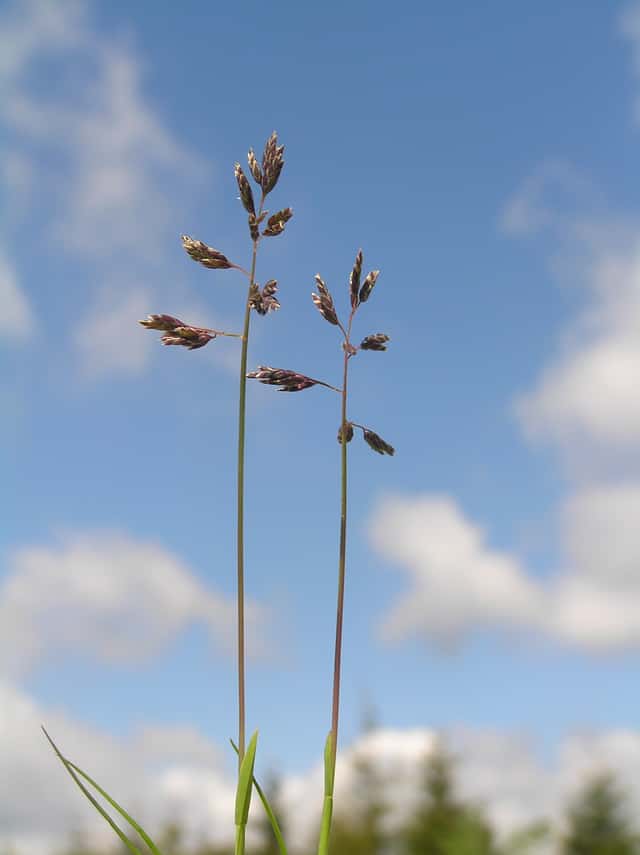
Supine bluegrass (Poa supina) is a low-growing perennial grass native to the alpine and subalpine regions of Europe. It is distinguished by its smooth, soft, bright green leaves and its creeping habit, which forms a dense turf through stolon propagation. It is one of the few grasses capable of thriving in conditions of intense shade, up to 90% shade, making it ideal for difficult areas such as under dense trees, walkways, and sports fields in shady environments. In spring, it produces seed heads with characteristic purplish coverings.
How to Propagate Supine bluegrass?
Sowing
- 1 Sow between mid-August and mid-September for best establishment
- 2 Use 5-10 g per sq meter for monoculture or 10-20 g per sq meter in a mix
- 3 Bury seeds approximately 6 mm (1/4 inch) deep in well-prepared soil
- 4 Keep the soil moist for 10-21 days until germination
- 5 Avoid sowing during periods of intense summer heat
Division by stolons
- 1 The plant naturally propagates via stolons (horizontal surface stems)
- 2 Cut and transplant portions of stolons with developed roots at the nodes
- 3 Plant in moist, shady soil, keep irrigated during establishment
How Big Does Supine bluegrass Grow?
TLDR: Supine bluegrass can reach up to 25cm tall with Fast growth rate.
Max height
25cm
Spread
60cm
Growth rate
Fast
Foliage
Evergreen
Plant Uses
Ornamental
Great for decoration
Ground Cover
Soil coverage
Is your plant showing symptoms?
Click on the symptom to discover possible causes:
What Diseases Commonly Affect Supine bluegrass?
TLDR: Supine bluegrass is susceptible to 5 known diseases. Monitor regularly for early detection.
Root Rot
Root rot is a serious fungal disease that affects the root system of plants, causing them to decay and die. It is primarily caused by overwatering, poor drainage, or soil-borne fungi such as Pythium, Phytophthora, Rhizoctonia, and Fusarium. The disease thrives in waterlogged conditions where roots are deprived of oxygen, making them susceptible to fungal infection.
Rust
Rust is a common fungal disease caused by fungi in the order Pucciniales that affects a wide variety of plants. The disease gets its name from the characteristic orange, yellow, or reddish-brown pustules that appear on leaves, resembling metal rust. This obligate fungal parasite requires living plants to survive and can cause significant economic losses in agricultural crops.
Leaf Spot
Leaf spot is a common fungal disease caused by various pathogens including Alternaria, Ascochyta, Colletotrichum, Septoria, and Venturia. It primarily affects leaves, causing discolored spots that can lead to premature leaf drop if left untreated.
Powdery Mildew
Powdery mildew is a common fungal disease caused by various fungi species including Erysiphe, Podosphaera, Oïdium, and Leveillula. It affects over 10,000 plant species worldwide. The disease thrives in warm, dry climates with high humidity and appears as a distinctive white powdery coating on plant surfaces.
Compare with similar plants
| Attribute | Difficulty | Light | Watering | Pet Safe |
|---|---|---|---|---|
| Field Maple | Easy | Bright indirect | 14d | ✓ |
| Silver Birch | Easy | Direct sun | 14d | ✓ |
| Cushion Bush | Easy | Direct sun | 14d | ✓ |
| Peruvian peppertree | Easy | Direct sun | 14d | ⚠️ |





