Salicaceae
Poplar: Full Sun Plant
Populus
Populus trees are easy-care, full-sun plants that demand consistently moist, well-drained soil with a pH of 5.5–8.0. Water deeply and regularly during dry periods; apply an annual spring feeding with a balanced organic fertilizer. Prune only in summer or autumn to avoid heavy sap bleeding.
Every 7 days
Direct sun
-40° - 38°C
30% - 80%
Categories
What is Poplar?
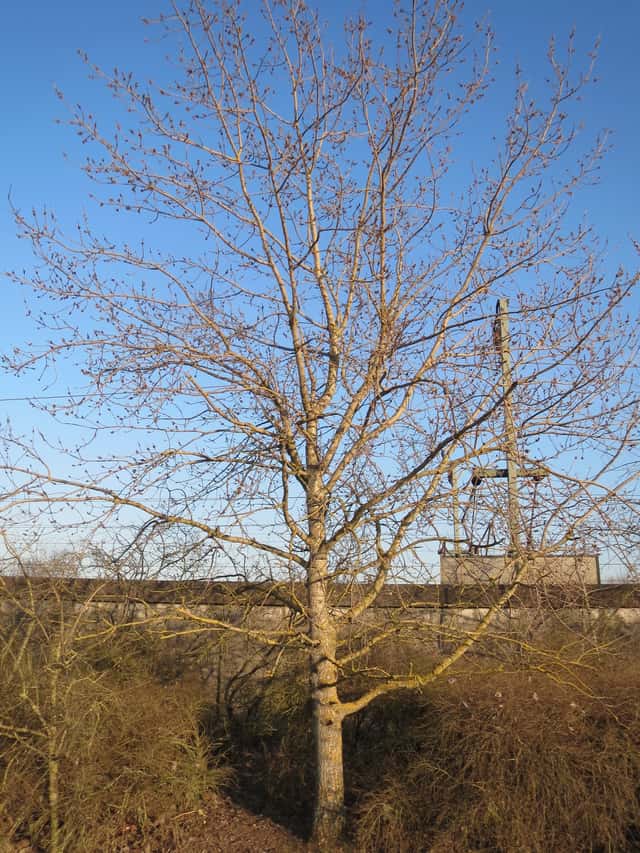
Poplar (Populus) is a easy-care plant from the Salicaceae family. Populus is a large genus of about 25–57 deciduous trees in the family Salicaceae, commonly known as poplars, aspens, and cottonwoods. Native to the Northern Hemisphere across North America, Europe, and Asia, these fast-growing trees can reach heights of 15–50 m and are recognized by their trembling...
Poplar grows up to 50.0m, spread of 1500cm, watering every 7 days, -40°C – 38°C, 30–80% humidity. It is not suitable for indoor environments and safe for pets.
Unlike many tropical plants, Poplar tolerates watering mistakes. Best for beginners. Unlike many popular species, Poplar is safe to keep around pets.
How to Care for Poplar?
TLDR: Poplar needs Direct sun, watering every 7 days, and temperatures between -40-38°C with 30-80% humidity.
How Often Should You Water Poplar?
Water deeply once a week during the first few years; established trees tolerate short dry spells but thrive with consistent soil moisture. Avoid waterlogged soils — Populus tolerates wet feet temporarily but not prolonged flooding.
How Much Light Does Poplar Need?
Plant in a location with full sun (at least 6–8 hours of direct sunlight daily). Populus species are shade-intolerant and will become thin and weak without adequate direct sun.
What Is the Best Soil for Poplar?
Prefers deep, loamy, moist but well-drained soil. Adaptable to sandy, clay, or loamy substrates and tolerates a wide pH range (5.5–8.0). Incorporate compost at planting and apply an organic mulch layer to retain moisture and moderate soil temperature.
What Pot Should You Use for Poplar?
Not applicable — Populus are large landscape trees unsuitable for container cultivation.
Care Schedule
Fertilize
Every 365 days
What Is Poplar and Where Does It Come From?
Populus is a large genus of about 25–57 deciduous trees in the family Salicaceae, commonly known as poplars, aspens, and cottonwoods. Native to the Northern Hemisphere across North America, Europe, and Asia, these fast-growing trees can reach heights of 15–50 m and are recognized by their trembling leaves, wind-pollinated catkins in early spring, and cottony seed dispersal. They thrive in full sun and moist, well-drained soils and are valued for timber, phytoremediation, windbreaks, and ornamental planting.
How Big Does Poplar Grow?
TLDR: Poplar can reach up to 50.0m tall with Fast growth rate.
Max height
50.0m
Spread
15.0m
Growth rate
Fast
Foliage
Deciduous
Plant Uses
Ornamental
Great for decoration
Medicinal
Medicinal properties
Air Purifying
Improves air quality
Medicinal Uses
- Bark and bud preparations rich in salicin (a precursor to aspirin) used historically to relieve pain, fever, and inflammation
- Traditional treatment for rheumatism, arthritis, and gout via salicin's analgesic and anti-inflammatory action
- Decoctions of buds used for bronchitis, coughs, and respiratory congestion
- Diuretic and antiseptic properties applied to urinary tract conditions (nephritis, cystitis, kidney stones)
- External poultices for wound healing, burns, hemorrhoids, and muscle/joint pain
- Flavonoids (quercetin, chrysin) provide antioxidant and anti-inflammatory benefits
Culinary Uses
- The starchy inner bark (cambium layer) is edible raw or cooked and was consumed by various Indigenous peoples as an emergency food source
- Young catkins have been eaten as a spring vegetable in some traditional cultures
- Poplar logs provide a growing medium for edible shiitake and oyster mushrooms (Pleurotus populinus)
Is your plant showing symptoms?
Click on the symptom to discover possible causes:
What Diseases Commonly Affect Poplar?
TLDR: Poplar is susceptible to 8 known diseases. Monitor regularly for early detection.
Powdery Mildew
Powdery mildew is a common fungal disease caused by various fungi species including Erysiphe, Podosphaera, Oïdium, and Leveillula. It affects over 10,000 plant species worldwide. The disease thrives in warm, dry climates with high humidity and appears as a distinctive white powdery coating on plant surfaces.
Rust
Rust is a common fungal disease caused by fungi in the order Pucciniales that affects a wide variety of plants. The disease gets its name from the characteristic orange, yellow, or reddish-brown pustules that appear on leaves, resembling metal rust. This obligate fungal parasite requires living plants to survive and can cause significant economic losses in agricultural crops.
Leaf Spot
Leaf spot is a common fungal disease caused by various pathogens including Alternaria, Ascochyta, Colletotrichum, Septoria, and Venturia. It primarily affects leaves, causing discolored spots that can lead to premature leaf drop if left untreated.
Cercospora Leaf Spot
Cercospora leaf spot is a common fungal disease caused by Cercospora species that affects many plant types, particularly beets, roses, and leafy vegetables. The disease thrives in warm, humid conditions and can cause significant defoliation, reducing plant vigor and yield. It spreads rapidly through water splash, wind, and contaminated tools.
Meaning & Symbolism
In Greek mythology the poplar was sacred to Hades and symbolized passage to the underworld; the white poplar was consecrated to Hercules by the Romans. In Celtic tradition it appears in the Ogham alphabet representing transformation, victory, and vision. Across many cultures the poplar stands for resilience, rapid renewal, and the enduring cycle of life.
Compare with similar plants
| Attribute | Difficulty | Light | Watering | Pet Safe |
|---|---|---|---|---|
| Field Maple | Easy | Bright indirect | 14d | ✓ |
| Silver Birch | Easy | Direct sun | 14d | ✓ |
| Cushion Bush | Easy | Direct sun | 14d | ✓ |
| Peruvian peppertree | Easy | Direct sun | 14d | ⚠️ |
Choose & Compare
Sources & References
- Populus - Wikipedia
- How to Grow Poplar, Cottonwood, Aspen – Populus | Harvest to Table
- Poplars, Cottonwoods, And Aspens (Populus) Plant Care | Plantiary
- Medicinal Properties of Poplar – Botanical Online
- Cottonwood and Poplar | Texas Plant Disease Handbook (TAMU)
- Poplar (Populus spp.)-Canker | Pacific Northwest Pest Management Handbooks
- Poplar Tree Care Tips: How to Grow a Poplar Tree | MasterClass
- Poplar Symbolism: Its Meanings and Mythology | Biology Insights