Amaryllidaceae
Field Garlic: complete growing guide
Allium oleraceum
Grow in a sunny spot with well-drained soil; water moderately, letting the soil dry between waterings, and avoid waterlogging to prevent bulb rot. It is a hardy, low-maintenance plant, cold-tolerant and suited to wildlife gardens or vegetable patches.
Every 7 days
Direct sun
-20° - 28°C
30% - 60%
Categories
What is Field Garlic?
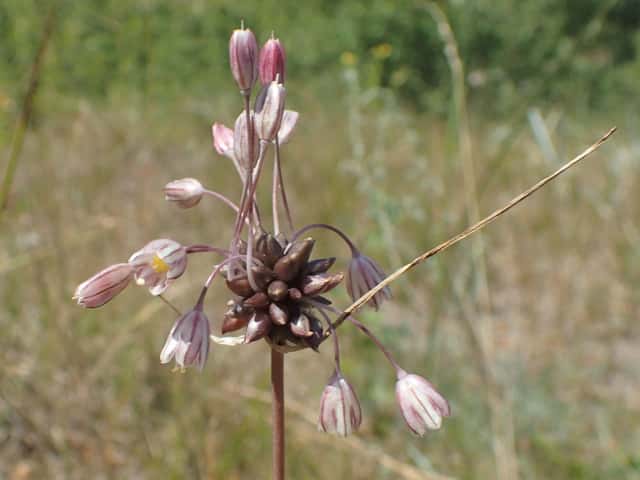
Field Garlic (Allium oleraceum) is a easy-care plant from the Amaryllidaceae family. Field garlic (Allium oleraceum) is a wild bulbous perennial in the Amaryllidaceae family, native to Europe, where it grows in fields, banks, and roadsides. It produces narrow, semi-cylindrical leaves and, in summer, a loose umbel of bell-shaped flowers ranging from white to greenish, pink, or browni...
Field Garlic grows up to 80cm, spread of 20cm, watering every 7 days, -20°C – 28°C, 30–60% humidity. It is not suitable for indoor environments and not safe for pets.
Unlike many tropical plants, Field Garlic tolerates watering mistakes. Best for beginners. Without precautions, ingestion can cause irritation in pets. Keep out of reach of cats and dogs.
How to Care for Field Garlic?
TLDR: Field Garlic needs Direct sun, watering every 7 days, and temperatures between -20-28°C with 30-60% humidity.
How Often Should You Water Field Garlic?
Water moderately every 7-10 days, letting the soil dry out well between waterings; overwatering encourages fungal rot in the bulbs.
How Much Light Does Field Garlic Need?
Prefers full sun; tolerates light partial shade but flowers and bulks up best with direct sun exposure.
What Is the Best Soil for Field Garlic?
Light, sandy to loamy, well-drained soil with a mildly acidic to alkaline pH; avoid compacted or waterlogged soils.
What Pot Should You Use for Field Garlic?
Not recommended for pots; best planted directly in garden soil.
Care Schedule
Repot
Every 24 days
What Is Field Garlic and Where Does It Come From?
Field garlic (Allium oleraceum) is a wild bulbous perennial in the Amaryllidaceae family, native to Europe, where it grows in fields, banks, and roadsides. It produces narrow, semi-cylindrical leaves and, in summer, a loose umbel of bell-shaped flowers ranging from white to greenish, pink, or brownish, often accompanied by small aerial bulbils that enable vegetative propagation. It is a hardy, easy-to-grow species traditionally foraged as an edible aromatic herb similar to cultivated garlic.
How to Propagate Field Garlic?
Bulb division
Divide bulbs after the foliage has died back. Aerial bulbils from the flower head can also be planted directly.
- 1 Dig up mature bulbs in late summer or autumn
- 2 Carefully separate the bulbils formed around the main bulb
- 3 Replant immediately about 5-8 cm deep in well-drained soil
- 4 Water lightly after planting
Materials needed:
Sowing
Germination can be slow and uneven; be patient.
- 1 Collect seeds from dried flower heads in late summer
- 2 Sow in trays with light, well-drained substrate
- 3 Keep moist in a cool spot until germination
- 4 Transplant young seedlings the following spring
Materials needed:
How Big Does Field Garlic Grow?
TLDR: Field Garlic can reach up to 80cm tall with Medium growth rate.
Max height
80cm
Spread
20cm
Growth rate
Medium
Foliage
Deciduous
Warning: Toxic Plant
This plant can be toxic if ingested. Keep out of reach of:
Plant Uses
Edible
Can be consumed
Ornamental
Great for decoration
Medicinal Uses
- Traditionally used as a digestive aid and for mild respiratory ailments, similar to other wild alliums
Culinary Uses
- Leaves, flowers, and bulbils used as a seasoning, similar to garlic and chives, in salads and cooked dishes
Is your plant showing symptoms?
Click on the symptom to discover possible causes:
What Diseases Commonly Affect Field Garlic?
TLDR: Field Garlic is susceptible to 3 known diseases. Monitor regularly for early detection.
Rust
Rust is a common fungal disease caused by fungi in the order Pucciniales that affects a wide variety of plants. The disease gets its name from the characteristic orange, yellow, or reddish-brown pustules that appear on leaves, resembling metal rust. This obligate fungal parasite requires living plants to survive and can cause significant economic losses in agricultural crops.
Downy Mildew
Downy mildew is a fungal-like disease caused by oomycetes (water molds) that thrives in cool, wet conditions. It affects a wide range of plants, causing yellowing leaves with fuzzy white-gray growth underneath, leading to defoliation and reduced yields if left untreated.
Thrips
Thrips are tiny cigar-shaped insects (1/25-inch long) that damage plants by sucking plant juices and scraping at fruits, flowers, and leaves. With over 6,000 species and rapid reproduction (lifecycle as short as 14 days), they can quickly infest plants and transmit viruses like tomato spotted wilt virus.
Meaning & Symbolism
Symbolizes resilience and rustic simplicity, associated with the wild fields of Europe and self-sufficiency.
Fun Facts
Produces small aerial bulbils in its flower head that allow vegetative propagation
It is a wild plant widely naturalized across Europe
Its flowers range from white to pink and brown within the same population
Frequently asked questions
Is field garlic edible?
Is it toxic to dogs and cats?
How often should I water it?
What is the best planting location?
Compare with similar plants
| Attribute | Difficulty | Light | Watering | Pet Safe |
|---|---|---|---|---|
| Field Maple | Easy | Bright indirect | 14d | ✓ |
| Silver Birch | Easy | Direct sun | 14d | ✓ |
| Cushion Bush | Easy | Direct sun | 14d | ✓ |
| Peruvian peppertree | Easy | Direct sun | 14d | ⚠️ |
Choose & Compare
Sources & References
- Allium oleraceum - Wikipedia
- Allium oleraceum - PFAF Plant Database
- Allium oleraceum field garlic - RHS Gardening
- Allium oleraceum (L.) Chevall, Field Garlic - BSBI
- Rust / Onion and Garlic - UC IPM
- Onion (Allium cepa)-Downy Mildew - PNW Handbooks
- Development of Insecticide Resistance in Field Populations of Onion Thrips