Caprifoliaceae
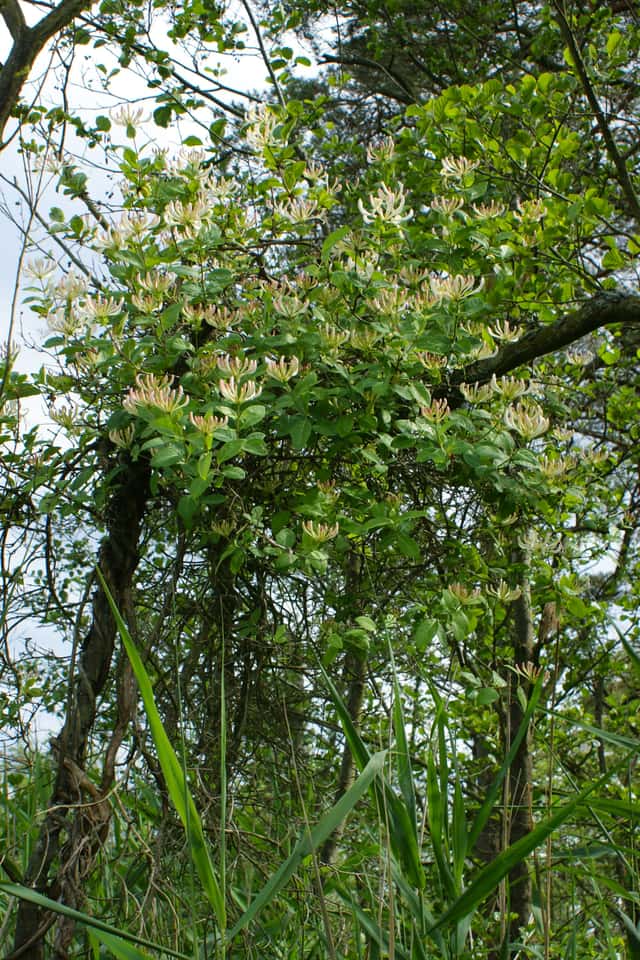
European Honeysuckle (Lonicera periclymenum)
Lonicera periclymenum
Plant in a sunny to partially shaded spot with well-drained, loamy soil. Water regularly during the growing season, especially in dry spells, but allow the soil to dry slightly between waterings. Prune after flowering to maintain shape. Feed monthly during the growing season. Shade the roots while allowing foliage to climb toward light.
Every 7 days
Bright indirect
-20° - 35°C
40% - 70%
Categories
What is European Honeysuckle?
European Honeysuckle (Lonicera periclymenum) is a medium-care plant from the Caprifoliaceae family. Lonicera periclymenum, commonly known as European Honeysuckle or Woodbine, is a vigorous deciduous climbing vine native to Europe and Western Asia. Celebrated for its intensely fragrant tubular flowers that transition from creamy white and pink to golden yellow, it blooms from late spring through su...
European Honeysuckle grows up to 7.0m, spread of 350cm, watering every 7 days, -20°C – 35°C, 40–70% humidity. It is not suitable for indoor environments and not safe for pets.
Without precautions, ingestion can cause irritation in pets. Keep out of reach of cats and dogs.
How to Care for European Honeysuckle?
TLDR: European Honeysuckle needs Bright indirect, watering every 7 days, and temperatures between -20-35°C with 40-70% humidity.
How Often Should You Water European Honeysuckle?
Water deeply every 5–10 days during the growing season, allowing the top few centimetres of soil to dry between waterings. Reduce to once every 2–3 weeks in autumn and winter. Avoid waterlogging, which can cause root rot.
How Much Light Does European Honeysuckle Need?
Thrives in full sun to partial shade (at least 4–6 hours of direct sunlight). In hotter climates, afternoon shade helps prevent powdery mildew. Plant so roots are shaded while stems climb toward sunlight.
What Is the Best Soil for European Honeysuckle?
Prefers moist, well-drained loamy soil enriched with organic matter. Tolerates clay, sandy, and chalky soils as long as drainage is good. Ideal pH range is 5.5–7.5.
What Pot Should You Use for European Honeysuckle?
A large terracotta or wooden planter (minimum 45 cm diameter) with drainage holes works well. Provide a trellis or obelisk for support. Outdoors in the ground is ideal.
Care Schedule
Fertilize
Every 30 days
What Is European Honeysuckle and Where Does It Come From?
Lonicera periclymenum, commonly known as European Honeysuckle or Woodbine, is a vigorous deciduous climbing vine native to Europe and Western Asia. Celebrated for its intensely fragrant tubular flowers that transition from creamy white and pink to golden yellow, it blooms from late spring through summer, attracting bees, moths, and butterflies. Its twining stems can reach 7 metres, making it ideal for covering trellises, fences, and pergolas. The plant produces small red berries in autumn that are attractive to birds but mildly toxic to humans and pets.
How to Propagate European Honeysuckle?
Stem Cutting
Layering
Seed
How Big Does European Honeysuckle Grow?
TLDR: European Honeysuckle can reach up to 7.0m tall with Fast growth rate.
Max height
7.0m
Spread
3.5m
Growth rate
Fast
Foliage
Deciduous
Warning: Toxic Plant
This plant can be toxic if ingested. Keep out of reach of:
Plant Uses
Ornamental
Great for decoration
Medicinal
Medicinal properties
Aromatic
Pleasant fragrance
Medicinal Uses
- Flowers have historically been used as an expectorant for coughs and respiratory conditions
- Traditionally used as a febrifuge (fever reducer) and mild diuretic
- Bark and leaf extracts have astringent properties used in folk medicine for skin conditions and mouth ulcers
Is your plant showing symptoms?
Click on the symptom to discover possible causes:
What Diseases Commonly Affect European Honeysuckle?
TLDR: European Honeysuckle is susceptible to 5 known diseases. Monitor regularly for early detection.
Powdery Mildew
Powdery mildew is a common fungal disease caused by various fungi species including Erysiphe, Podosphaera, Oïdium, and Leveillula. It affects over 10,000 plant species worldwide. The disease thrives in warm, dry climates with high humidity and appears as a distinctive white powdery coating on plant surfaces.
Downy Mildew
Downy mildew is a fungal-like disease caused by oomycetes (water molds) that thrives in cool, wet conditions. It affects a wide range of plants, causing yellowing leaves with fuzzy white-gray growth underneath, leading to defoliation and reduced yields if left untreated.
Aphids
Aphids are small, soft-bodied, pear-shaped insects (1/16 to 1/8 inch long) that feed by sucking nutrient-rich sap from plants. They reproduce rapidly and can quickly weaken plants, causing distorted growth and transmitting plant viruses. Aphids come in various colors including green, black, red, yellow, brown, and gray. They secrete honeydew, a sticky substance that attracts ants and encourages sooty mold growth.
Spider Mites
Spider mites are tiny arachnids (less than 1/20 inch long) related to spiders and ticks that feed on plant sap. They thrive in hot, dry conditions and can cause significant damage to ornamental and vegetable plants. During severe infestations, crop losses can reach 14% or higher as these pests disrupt vital plant processes including photosynthesis, carbon dioxide absorption, and transpiration.
Meaning & Symbolism
European honeysuckle is a classic symbol of devoted love, fidelity, and lasting bonds in the Victorian language of flowers. Its clinging, twining nature embodies affection that persists through time, and in folk tradition it was planted near doorways to bring good luck and keep evil spirits away.
Fun Facts
The fragrance of European Honeysuckle is strongest at dusk and dawn, when it attracts its main pollinators — moths, including the elephant hawk-moth.
Shakespeare mentioned woodbine (honeysuckle) in A Midsummer Night's Dream and Much Ado About Nothing, cementing its place in English cultural heritage.
The nectar of the flowers is edible and children traditionally suck the base of the flowers to enjoy it — giving honeysuckle its common name.
European Honeysuckle is an important food plant for the larvae of many moth species, making it a valuable addition to any wildlife garden.
Frequently asked questions
Is European Honeysuckle toxic to dogs and cats?
How fast does Lonicera periclymenum grow?
Why is my honeysuckle not flowering?
How do I prevent powdery mildew on honeysuckle?
Compare with similar plants
| Attribute | Difficulty | Light | Watering | Pet Safe |
|---|---|---|---|---|
| Dark Fieldcap | Medium | Low light | 2d | ⚠️ |
| Azalea | Medium | Partial shade | 3d | ⚠️ |
| Bougainvillea | Medium | Direct sun | 7d | ⚠️ |
| Wild Lettuce | Medium | Direct sun | 7d | ⚠️ |



