Araceae
Alocasia Polly (African Mask Plant): Complete Care Guide
Alocasia × mortfontanensis
Thrives in high humidity and bright, indirect light. Keep the soil consistently moist but never waterlogged, and protect from cold drafts.
Every 9 days
Bright indirect
16° - 30°C
50% - 70%
Categories
What is Alocasia Polly?
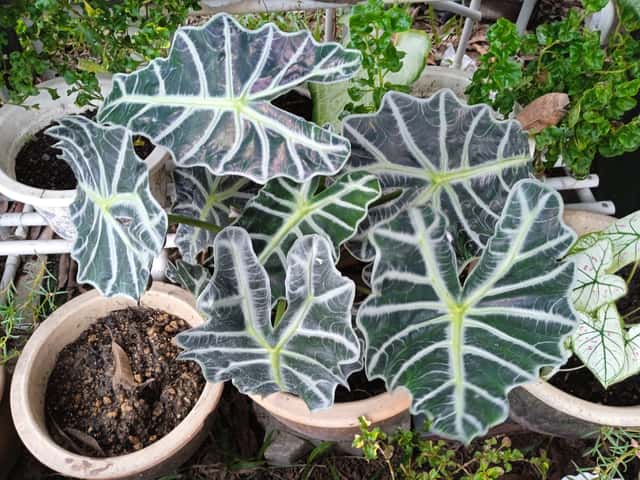
Alocasia Polly (Alocasia × mortfontanensis) is a medium-care plant from the Araceae family. Alocasia × mortfontanensis, commonly known as the African Mask Plant or Alocasia Amazonica, is a stunning hybrid featuring large, arrow-shaped leaves. The foliage is a deep, dark green, almost black, with dramatic, thick silvery-white veins and wavy, scalloped edges. It is a centerpiece plant that b...
Alocasia Polly grows up to 90cm, spread of 60cm, watering every 9 days, 16°C – 30°C, 50–70% humidity. It is suitable for indoor environments and not safe for pets.
Without precautions, ingestion can cause irritation in pets. Keep out of reach of cats and dogs. Without adequate drainage, root rot can develop within 18 days.
How to Care for Alocasia Polly?
TLDR: Alocasia Polly needs Bright indirect, watering every 9 days, and temperatures between 16-30°C with 50-70% humidity.
How Often Should You Water Alocasia Polly?
Water when the top inch of soil feels dry. Use lukewarm water to avoid shocking the tropical roots.
How Much Light Does Alocasia Polly Need?
Provide bright, filtered light. Avoid direct afternoon sun, which can bleach or burn the dark leaves.
What Is the Best Soil for Alocasia Polly?
Use a chunky, airy mix consisting of orchid bark, perlite, and peat moss to ensure oxygen reaches the roots.
What Pot Should You Use for Alocasia Polly?
Use a pot with drainage holes slightly larger than the root ball. Terracotta pots help wick away excess moisture, reducing root rot risk. Avoid overly large pots as excess soil stays wet.
Care Schedule
Fertilize
Every 30 days
Misting
Every 3 days
Rotate
Every 14 days
Repot
Every 548 days
What Is Alocasia Polly and Where Does It Come From?
Alocasia × mortfontanensis, commonly known as the African Mask Plant or Alocasia Amazonica, is a stunning hybrid featuring large, arrow-shaped leaves. The foliage is a deep, dark green, almost black, with dramatic, thick silvery-white veins and wavy, scalloped edges. It is a centerpiece plant that brings a tropical, prehistoric aesthetic to any indoor space.
How to Propagate Alocasia Polly?
Rhizome Division
Divide only when the plant is actively growing. Keep divisions warm and humid; avoid drafts. Do not water excessively until new roots establish.
- 1 Gently remove the entire plant from its pot during spring repotting.
- 2 Shake off excess soil to expose the rhizomes.
- 3 Use a clean, sharp knife to separate individual rhizomes, ensuring each has at least one healthy stem and roots.
- 4 Dust cut surfaces with cinnamon or powdered sulfur to prevent rot.
- 5 Plant each division in a small pot with moist, well-draining mix.
- 6 Maintain high humidity (60-70%) and warmth (22-25°C) until new growth appears.
Materials needed:
How Big Does Alocasia Polly Grow?
TLDR: Alocasia Polly can reach up to 90cm tall with Medium growth rate.
Max height
90cm
Spread
60cm
Growth rate
Medium
Foliage
Evergreen
Warning: Toxic Plant
This plant can be toxic if ingested. Keep out of reach of:
Plant Uses
Ornamental
Great for decoration
Is your plant showing symptoms?
Click on the symptom to discover possible causes:
What Diseases Commonly Affect Alocasia Polly?
TLDR: Alocasia Polly is susceptible to 14 known diseases. Monitor regularly for early detection.
Root Rot
Root rot is a serious fungal disease that affects the root system of plants, causing them to decay and die. It is primarily caused by overwatering, poor drainage, or soil-borne fungi such as Pythium, Phytophthora, Rhizoctonia, and Fusarium. The disease thrives in waterlogged conditions where roots are deprived of oxygen, making them susceptible to fungal infection.
Pythium Root Rot
Pythium root rot is a serious fungal disease caused by various Pythium species including P. aphanidermatum, P. ultimum, and P. irregulare. These water molds are present in practically all cultivated soils and attack plant roots under wet conditions, causing rapid wet rot that can extend into the stem. The disease is favored by poor drainage, overwatering, and specific temperatures depending on the species.
Phytophthora Blight
Devastating fungal disease caused by Phytophthora species (primarily P. capsici and P. infestans), famously responsible for the Irish Potato Famine in the 1840s. Affects all plant parts including roots, stems, leaves, and fruits in warm, wet conditions. The pathogen is technically an oomycete (water mold) that thrives in saturated soils and can survive in soil for 5+ years.
Leaf Spot
Leaf spot is a common fungal disease caused by various pathogens including Alternaria, Ascochyta, Colletotrichum, Septoria, and Venturia. It primarily affects leaves, causing discolored spots that can lead to premature leaf drop if left untreated.
Meaning & Symbolism
Represents mystery, exotic beauty, and the ability to thrive in challenging environments.
Fun Facts
Alocasia Polly is not a naturally occurring species — it was bred in a nursery and has never been found in the wild.
The dramatic leaf veins that give it an exotic look are a trait inherited from Alocasia sanderiana, native to the Philippines.
Like all Araceae, it contains calcium oxalate crystals that cause burning if chewed — a defense mechanism against herbivores.
Under ideal conditions, Alocasia Polly can produce a new leaf every 2-4 weeks during the growing season.
Frequently asked questions
How often should I water Alocasia Polly?
Why are my Alocasia Polly leaves turning yellow?
Is Alocasia Polly toxic to cats and dogs?
What humidity does Alocasia Polly need?
Can Alocasia Polly grow outside?
Compare with similar plants
| Attribute | Difficulty | Light | Watering | Pet Safe |
|---|---|---|---|---|
| Dark Fieldcap | Medium | Low light | 2d | ⚠️ |
| Azalea | Medium | Partial shade | 3d | ⚠️ |
| Muriel's Bamboo | Medium | Partial shade | 3d | ✓ |
| Bougainvillea | Medium | Direct sun | 7d | ⚠️ |




