Asphodelaceae
Bitter Aloe (Aloe ferox)
Aloe ferox
Grow in full sun with well-draining soil. Water only when soil is completely dry, as it is extremely drought tolerant. Protect from hard frost; grows at a moderate pace and requires minimal maintenance.
Every 21 days
Direct sun
5° - 35°C
20% - 50%
Categories
What is Bitter Aloe?
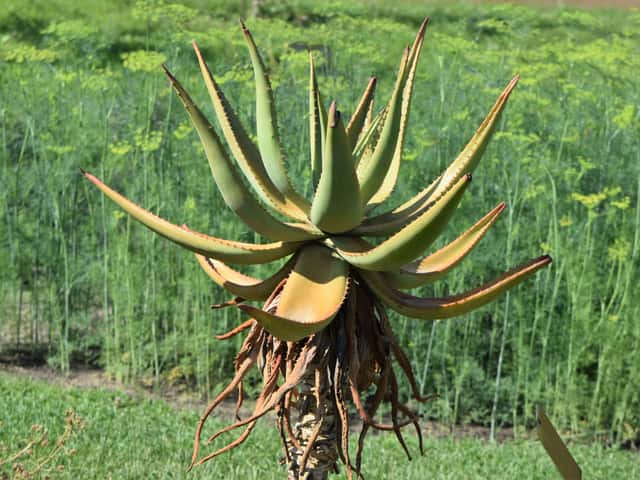
Bitter Aloe (Aloe ferox) is a easy-care plant from the Asphodelaceae family. Aloe ferox, commonly known as bitter aloe or Cape aloe, is a tree-like succulent native to South Africa, forming a single rosette of spiny, grey-green leaves atop an unbranched stem that can reach up to 3 meters tall. It is renowned for its tall flower spikes bearing tubular orange-red blooms in win...
Bitter Aloe grows up to 3.0m, spread of 100cm, watering every 21 days, 5°C – 35°C, 20–50% humidity. It is not suitable for indoor environments and safe for pets.
Unlike many tropical plants, Bitter Aloe tolerates watering mistakes. Best for beginners. Unlike many popular species, Bitter Aloe is safe to keep around pets.
How to Care for Bitter Aloe?
TLDR: Bitter Aloe needs Direct sun, watering every 21 days, and temperatures between 5-35°C with 20-50% humidity.
How Often Should You Water Bitter Aloe?
Let soil dry out completely between waterings; reduce watering significantly in winter.
How Much Light Does Bitter Aloe Need?
Prefers full, direct sunlight; tolerates light partial shade but flowers less.
What Is the Best Soil for Bitter Aloe?
Use a mineral, well-draining substrate such as a succulent mix with coarse sand or perlite.
What Pot Should You Use for Bitter Aloe?
Terracotta or clay pot with drainage holes
Care Schedule
Rotate
Every 30 days
Repot
Every 730 days
What Is Bitter Aloe and Where Does It Come From?
Aloe ferox, commonly known as bitter aloe or Cape aloe, is a tree-like succulent native to South Africa, forming a single rosette of spiny, grey-green leaves atop an unbranched stem that can reach up to 3 meters tall. It is renowned for its tall flower spikes bearing tubular orange-red blooms in winter, which attract sunbirds and bees.
How to Propagate Bitter Aloe?
Offset division
Avoid watering immediately after planting to prevent rot at the cut.
- 1 Identify offsets (pups) at the base of the mother plant
- 2 Carefully separate using a clean knife, keeping roots if possible
- 3 Let the cut callous for 2-3 days in a dry, shaded spot
- 4 Plant in well-draining substrate and water lightly after 1 week
Materials needed:
How Big Does Bitter Aloe Grow?
TLDR: Bitter Aloe can reach up to 3.0m tall with Medium growth rate.
Max height
3.0m
Spread
1.0m
Growth rate
Medium
Foliage
Evergreen
Plant Uses
Ornamental
Great for decoration
Medicinal
Medicinal properties
Medicinal Uses
- Latex traditionally used as a laxative (Cape aloes)
- Gel applied topically for burns and skin irritation
Is your plant showing symptoms?
Click on the symptom to discover possible causes:
What Diseases Commonly Affect Bitter Aloe?
TLDR: Bitter Aloe is susceptible to 5 known diseases. Monitor regularly for early detection.
Root Rot
Root rot is a serious fungal disease that affects the root system of plants, causing them to decay and die. It is primarily caused by overwatering, poor drainage, or soil-borne fungi such as Pythium, Phytophthora, Rhizoctonia, and Fusarium. The disease thrives in waterlogged conditions where roots are deprived of oxygen, making them susceptible to fungal infection.
Overwatering
Overwatering occurs when plants receive too much water, depriving roots of oxygen and causing root rot. This environmental stress is one of the most common causes of houseplant death, as waterlogged soil prevents roots from breathing and functioning properly.
Rust
Rust is a common fungal disease caused by fungi in the order Pucciniales that affects a wide variety of plants. The disease gets its name from the characteristic orange, yellow, or reddish-brown pustules that appear on leaves, resembling metal rust. This obligate fungal parasite requires living plants to survive and can cause significant economic losses in agricultural crops.
Scale Insects
Scale insects are small sap-sucking pests that appear as brown, shell-like bumps on plant stems and leaves. There are over 25 species, divided into armored (hard) and unarmored (soft) scales. They feed by piercing plant tissue and extracting sap, which weakens the plant and can lead to yellowing, stunted growth, and even death if left untreated. They also excrete honeydew, which attracts ants and promotes sooty mold growth.
Meaning & Symbolism
Symbol of resilience, healing, and protection in South African traditions.
Fun Facts
Can live over 100 years under ideal conditions
It is a major commercial source of Cape aloes, used for centuries as a laxative
Its flowers attract nectar-feeding birds such as sunbirds in South Africa
Frequently asked questions
Does Aloe ferox need a lot of water?
Is Aloe ferox toxic?
Can I grow Aloe ferox indoors?
Compare with similar plants
| Attribute | Difficulty | Light | Watering | Pet Safe |
|---|---|---|---|---|
| Field Maple | Easy | Bright indirect | 14d | ✓ |
| Silver Birch | Easy | Direct sun | 14d | ✓ |
| Cushion Bush | Easy | Direct sun | 14d | ✓ |
| Peruvian peppertree | Easy | Direct sun | 14d | ⚠️ |