Araceae
Cunjevoi (Alocasia brisbanensis): Complete Care Guide
Alocasia brisbanensis
Cunjevoi thrives in bright indirect light with consistently moist, well-draining soil. Water every 7–10 days and maintain high humidity (60–80%). Keep away from frost and direct sun. Fertilize every 6 weeks during the growing season. CAUTION: All parts are severely toxic to humans, cats, and dogs.
Every 8 days
Bright indirect
16° - 27°C
60% - 80%
Categories
What is Cunjevoi?
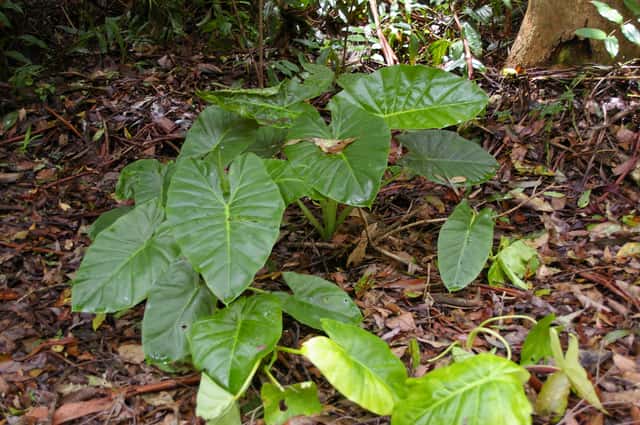
Cunjevoi (Alocasia brisbanensis) is a medium-care plant from the Araceae family. Alocasia brisbanensis, commonly known as Cunjevoi, is a large-leafed tropical perennial native to the rainforest margins of eastern Australia. It features dramatic, glossy, spade-shaped leaves up to 70 cm long on long purplish-green petioles, making it a striking ornamental plant. All parts of the p...
Cunjevoi grows up to 1.8m, spread of 120cm, watering every 8 days, 16°C – 27°C, 60–80% humidity. It is suitable for indoor environments and not safe for pets.
Without precautions, ingestion can cause irritation in pets. Keep out of reach of cats and dogs. Without adequate drainage, root rot can develop within 16 days.
How to Care for Cunjevoi?
TLDR: Cunjevoi needs Bright indirect, watering every 8 days, and temperatures between 16-27°C with 60-80% humidity.
How Often Should You Water Cunjevoi?
Water thoroughly every 7–10 days, allowing the top 2–3 cm of soil to dry slightly between waterings. Never let the plant sit in waterlogged soil — this is the leading cause of root rot. Reduce watering in winter.
How Much Light Does Cunjevoi Need?
Provide bright, indirect or dappled light. Cunjevoi is an understorey plant that thrives in filtered light beneath a canopy. Avoid direct midday sun, which can scorch the large leaves. Near a north- or east-facing window is ideal indoors.
What Is the Best Soil for Cunjevoi?
Use a well-draining mix rich in organic matter. A blend of quality potting mix, perlite, and coco coir works well. Slightly acidic pH of 5.5–6.5 is ideal. Avoid heavy clay soils that retain excess moisture.
What Pot Should You Use for Cunjevoi?
A wide, shallow pot with excellent drainage holes suits Cunjevoi best. Terracotta pots help regulate moisture but require more frequent watering. Avoid pots that retain excess water.
Care Schedule
Fertilize
Every 45 days
Misting
Every 3 days
Repot
Every 730 days
What Is Cunjevoi and Where Does It Come From?
Alocasia brisbanensis, commonly known as Cunjevoi, is a large-leafed tropical perennial native to the rainforest margins of eastern Australia. It features dramatic, glossy, spade-shaped leaves up to 70 cm long on long purplish-green petioles, making it a striking ornamental plant. All parts of the plant contain calcium oxalate crystals and are highly toxic if ingested.
How to Propagate Cunjevoi?
Rhizome Division
Wear gloves when handling — sap contains calcium oxalate crystals that irritate skin and mucous membranes. Keep divisions warm and humid to encourage establishment.
- 1 Remove the plant from its pot in early spring
- 2 Carefully separate offset clumps or rhizome sections with a clean sharp knife
- 3 Ensure each division has at least one growing point and some roots
- 4 Plant divisions in fresh well-draining potting mix
- 5 Keep moist and in a warm, humid, bright indirect-light location until established
Materials needed:
How Big Does Cunjevoi Grow?
TLDR: Cunjevoi can reach up to 1.8m tall with Medium growth rate.
Max height
1.8m
Spread
1.2m
Growth rate
Medium
Foliage
Evergreen
Warning: Toxic Plant
This plant can be toxic if ingested. Keep out of reach of:
Plant Uses
Ornamental
Great for decoration
Is your plant showing symptoms?
Click on the symptom to discover possible causes:
What Diseases Commonly Affect Cunjevoi?
TLDR: Cunjevoi is susceptible to 10 known diseases. Monitor regularly for early detection.
Root Rot
Root rot is a serious fungal disease that affects the root system of plants, causing them to decay and die. It is primarily caused by overwatering, poor drainage, or soil-borne fungi such as Pythium, Phytophthora, Rhizoctonia, and Fusarium. The disease thrives in waterlogged conditions where roots are deprived of oxygen, making them susceptible to fungal infection.
Bacterial Leaf Spot
Bacterial leaf spot is a plant disease caused by bacteria in the Xanthomonas and Pseudomonas genera that affects various ornamental and edible plants. The bacteria infect leaves through wounds or natural openings, causing characteristic lesions that can lead to premature leaf drop and plant weakening.
Aphids
Aphids are small, soft-bodied, pear-shaped insects (1/16 to 1/8 inch long) that feed by sucking nutrient-rich sap from plants. They reproduce rapidly and can quickly weaken plants, causing distorted growth and transmitting plant viruses. Aphids come in various colors including green, black, red, yellow, brown, and gray. They secrete honeydew, a sticky substance that attracts ants and encourages sooty mold growth.
Spider Mites
Spider mites are tiny arachnids (less than 1/20 inch long) related to spiders and ticks that feed on plant sap. They thrive in hot, dry conditions and can cause significant damage to ornamental and vegetable plants. During severe infestations, crop losses can reach 14% or higher as these pests disrupt vital plant processes including photosynthesis, carbon dioxide absorption, and transpiration.
Meaning & Symbolism
In Aboriginal Australian culture, cunjevoi rhizomes were a survival food prepared over many days to neutralize toxins. The plant symbolizes resilience, the richness of the Australian rainforest, and deep connection to country.
Fun Facts
Cunjevoi leaves can grow up to 70 cm long — among the largest of any Australian native houseplant.
Aboriginal Australians consumed the rhizomes as a survival food, but only after a multi-day preparation process to neutralize calcium oxalate toxins.
The plant's common name 'cunjevoi' comes from an Aboriginal Australian word.
Cunjevoi flowers in summer (December–January) with subtle greenish-cream blooms similar to an arum lily.
Frequently asked questions
Is Cunjevoi toxic to pets?
How often should I water Cunjevoi?
Can Cunjevoi grow indoors?
What light does Cunjevoi need?
How do I propagate Cunjevoi?
Compare with similar plants
| Attribute | Difficulty | Light | Watering | Pet Safe |
|---|---|---|---|---|
| Azalea | Medium | Partial shade | 3d | ⚠️ |
| Wild Lettuce | Medium | Direct sun | 7d | ⚠️ |
| Cape Primrose | Medium | Partial shade | 7d | ✓ |
| Turnip | Medium | Direct sun | 3d | ✓ |