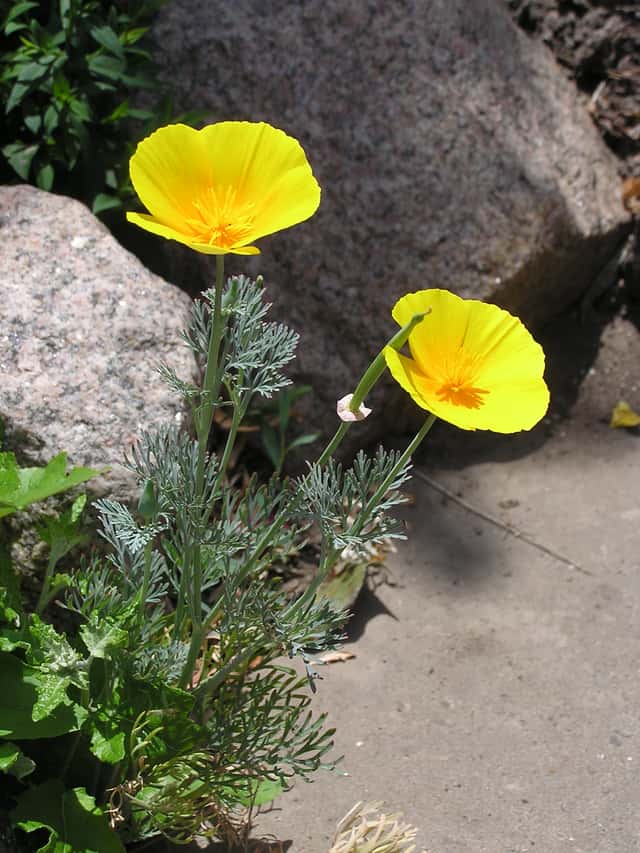
Papaveraceae
California Poppy
Eschscholzia californica
A low-maintenance plant thriving in poor, well-drained soils with full sun. Water every 4 days during active growth, reducing in winter. Drought-tolerant once established.
Every 4 days
Direct sun
10° - 24°C
30% - 60%
Categories
What is California Poppy?
California Poppy (Eschscholzia californica) is a easy-care plant from the Papaveraceae family. Eschscholzia californica, commonly known as the California poppy, is an annual or perennial wildflower native to the western United States and Mexico. It produces vibrant blooms in shades of orange, yellow, red, and white from spring through summer. As the official state flower of California, it is...
California Poppy grows up to 60cm, spread of 20cm, watering every 4 days, 10°C – 24°C, 30–60% humidity. It is not suitable for indoor environments and not safe for pets.
Unlike many tropical plants, California Poppy tolerates watering mistakes. Best for beginners. Without precautions, ingestion can cause irritation in pets. Keep out of reach of cats and dogs.
How to Care for California Poppy?
TLDR: California Poppy needs Direct sun, watering every 4 days, and temperatures between 10-24°C with 30-60% humidity.
How Often Should You Water California Poppy?
Water every 4 days, allowing soil to dry between waterings. Avoid overwatering as root rot is the main risk for this species.
How Much Light Does California Poppy Need?
Requires full sun — at least 6 hours of direct sunlight per day. It performs best in open, sunny locations.
What Is the Best Soil for California Poppy?
Prefers sandy, poor, well-drained soil. Avoid rich organic soils as they encourage excessive foliage growth at the expense of flowering.
What Pot Should You Use for California Poppy?
Outdoor bed or terracotta pot with excellent drainage
Care Schedule
Fertilize
Every 90 days
What Is California Poppy and Where Does It Come From?
Eschscholzia californica, commonly known as the California poppy, is an annual or perennial wildflower native to the western United States and Mexico. It produces vibrant blooms in shades of orange, yellow, red, and white from spring through summer. As the official state flower of California, it is celebrated for its drought tolerance, low maintenance needs, and stunning visual impact in gardens and naturalized landscapes.
How Big Does California Poppy Grow?
TLDR: California Poppy can reach up to 60cm tall with Fast growth rate.
Max height
60cm
Spread
20cm
Growth rate
Fast
Foliage
Deciduous
Warning: Toxic Plant
This plant can be toxic if ingested. Keep out of reach of:
Plant Uses
Ornamental
Great for decoration
Medicinal
Medicinal properties
Is your plant showing symptoms?
Click on the symptom to discover possible causes:
What Diseases Commonly Affect California Poppy?
TLDR: California Poppy is susceptible to 5 known diseases. Monitor regularly for early detection.
Powdery Mildew
Powdery mildew is a common fungal disease caused by various fungi species including Erysiphe, Podosphaera, Oïdium, and Leveillula. It affects over 10,000 plant species worldwide. The disease thrives in warm, dry climates with high humidity and appears as a distinctive white powdery coating on plant surfaces.
Gray Mold (Botrytis Blight)
Gray mold, caused by the fungus Botrytis cinerea, is one of the most common fungal diseases in plants. It affects over 200 plant species, including ornamentals, vegetables, fruits, and houseplants. The disease thrives in cool, humid conditions with poor air circulation, causing grayish spots and soft rot on infected tissues.
Root Rot
Root rot is a serious fungal disease that affects the root system of plants, causing them to decay and die. It is primarily caused by overwatering, poor drainage, or soil-borne fungi such as Pythium, Phytophthora, Rhizoctonia, and Fusarium. The disease thrives in waterlogged conditions where roots are deprived of oxygen, making them susceptible to fungal infection.
Leaf Spot
Leaf spot is a common fungal disease caused by various pathogens including Alternaria, Ascochyta, Colletotrichum, Septoria, and Venturia. It primarily affects leaves, causing discolored spots that can lead to premature leaf drop if left untreated.
Meaning & Symbolism
Symbol of hope, rest, and relief. California's state flower represents the golden abundance and freedom of the American West.
Fun Facts
It has been California's official state flower since 1903.
The flowers close at night and on cloudy days, reopening when sunlight returns.
It has recognized medicinal properties and is used in herbal medicine as a mild sedative.
It self-seeds readily, returning to the garden year after year.
Frequently asked questions
Is California poppy toxic to pets?
Can I grow it in a container?
Why do the flowers close at night?
Compare with similar plants
| Attribute | Difficulty | Light | Watering | Pet Safe |
|---|---|---|---|---|
| Field Maple | Easy | Bright indirect | 14d | ✓ |
| Silver Birch | Easy | Direct sun | 14d | ✓ |
| Cushion Bush | Easy | Direct sun | 14d | ✓ |
| Peruvian peppertree | Easy | Direct sun | 14d | ⚠️ |





