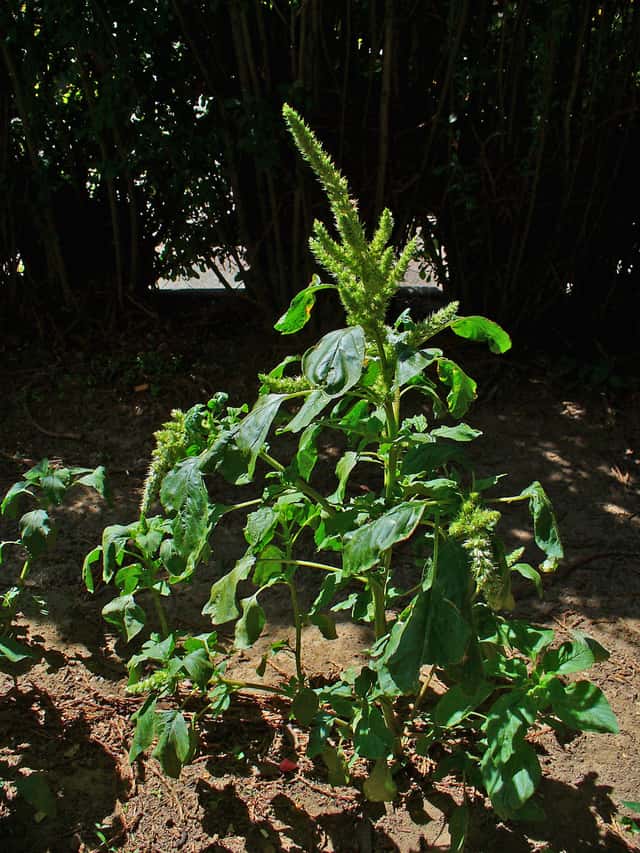
Amaranthaceae
Smooth Amaranth: Edible Plant
Amaranthus hybridus
A low-maintenance plant that thrives in full sun. Water weekly, allowing the soil to dry slightly between waterings. It is drought-tolerant once established. Fertilize monthly with a balanced fertilizer for optimal growth. Prune the flowers to prolong leaf production.
Every 7 days
Direct sun
15° - 35°C
40% - 70%
Categories
What is Smooth Amaranth?
Smooth Amaranth (Amaranthus hybridus) is a easy-care plant from the Amaranthaceae family. Amaranthus hybridus, commonly known as smooth amaranth or slim amaranth, is a fast-growing annual plant native to the tropical and subtropical Americas. Belonging to the Amaranthaceae family, it is valued as both a food and medicinal plant. Its green leaves and nutritious seeds are consumed in many...
Smooth Amaranth grows up to 2.0m, spread of 60cm, watering every 7 days, 15°C – 35°C, 40–70% humidity. It is not suitable for indoor environments and safe for pets.
Unlike many tropical plants, Smooth Amaranth tolerates watering mistakes. Best for beginners. Unlike many popular species, Smooth Amaranth is safe to keep around pets.
How to Care for Smooth Amaranth?
TLDR: Smooth Amaranth needs Direct sun, watering every 7 days, and temperatures between 15-35°C with 40-70% humidity.
How Often Should You Water Smooth Amaranth?
Water the plant once a week, providing about 1 inch (2.5 cm) of water. Amaranth is drought-tolerant after establishment, so avoid waterlogging the soil. It is best to water at the base of the plant to keep the foliage dry and prevent fungal issues.
How Much Light Does Smooth Amaranth Need?
Smooth amaranth requires full sun—at least 6 to 8 hours of direct sunlight per day. In locations with less light, growth becomes weaker and leaf production decreases. Position in an open, sunny spot for the best results.
What Is the Best Soil for Smooth Amaranth?
Prefers fertile, well-drained soil rich in organic matter. It tolerates a wide variety of soil types but thrives best in loamy to silty soils with a pH between 6.0 and 7.5. Incorporate organic compost before planting to improve fertility.
What Pot Should You Use for Smooth Amaranth?
Large clay or ceramic pots with good drainage are ideal if grown in containers. Ensure there are adequate drainage holes. Prefer containers at least 12 inches (30 cm) deep to accommodate the root system.
Care Schedule
Fertilize
Every 30 days
What Is Smooth Amaranth and Where Does It Come From?
Amaranthus hybridus, commonly known as smooth amaranth or slim amaranth, is a fast-growing annual plant native to the tropical and subtropical Americas. Belonging to the Amaranthaceae family, it is valued as both a food and medicinal plant. Its green leaves and nutritious seeds are consumed in many cultures around the world. The plant produces dense inflorescences in shades of red, green, or purple during summer and fall.
How to Propagate Smooth Amaranth?
Direct sowing
Sow after the last frosts when the soil temperature exceeds 68°F (20°C). Transplanting is also possible: start seedlings 6-8 weeks before final planting.
- 1 Prepare the soil by loosening it to a depth of 6 inches (15 cm) and incorporating organic compost
- 2 Sow seeds 1/4 to 1/2 inch (0.5-1 cm) deep directly in the final location after the last frosts
- 3 Cover lightly with soil and keep moist until germination
- 4 Thin seedlings leaving 12-18 inches (30-45 cm) between plants when they reach 4 inches (10 cm) in height
- 5 Water regularly in the first few weeks until fully established
Materials needed:
How Big Does Smooth Amaranth Grow?
TLDR: Smooth Amaranth can reach up to 2.0m tall with Fast growth rate.
Max height
2.0m
Spread
60cm
Growth rate
Fast
Foliage
Deciduous
Plant Uses
Edible
Can be consumed
Medicinal
Medicinal properties
Medicinal Uses
- Leaves used in the treatment of inflammation and as a natural diuretic in folk medicine
- Seeds used for cholesterol control and cardiovascular health
Culinary Uses
- Young leaves consumed cooked like spinach or sautéed with garlic
- Seeds ground into flour for breads and porridges
- Flowers used as decoration in salads and dishes
Is your plant showing symptoms?
Click on the symptom to discover possible causes:
What Diseases Commonly Affect Smooth Amaranth?
TLDR: Smooth Amaranth is susceptible to 5 known diseases. Monitor regularly for early detection.
Damping Off
Damping off is a soil-borne fungal disease that affects seeds and young seedlings, causing rotting of stem and root tissues at and below the soil line. It is caused by several fungi including Pythium, Rhizoctonia, Fusarium, and Phytophthora. The disease thrives in cold, wet conditions with poor air circulation.
Downy Mildew
Downy mildew is a fungal-like disease caused by oomycetes (water molds) that thrives in cool, wet conditions. It affects a wide range of plants, causing yellowing leaves with fuzzy white-gray growth underneath, leading to defoliation and reduced yields if left untreated.
Cercospora Leaf Spot
Cercospora leaf spot is a common fungal disease caused by Cercospora species that affects many plant types, particularly beets, roses, and leafy vegetables. The disease thrives in warm, humid conditions and can cause significant defoliation, reducing plant vigor and yield. It spreads rapidly through water splash, wind, and contaminated tools.
Root-Knot Nematodes
Root-knot nematodes (Meloidogyne species) are microscopic roundworms that parasitize plant roots, causing characteristic galls or knots. These soil-borne pests are among the most economically damaging plant pathogens worldwide, affecting a wide range of ornamental and edible plants. The nematodes inject enzymes into root cells, causing abnormal swelling and disrupting water and nutrient uptake.
Meaning & Symbolism
Represents resilience, abundance, and immortality. The name Amaranthus derives from the Greek 'amarantos,' meaning 'unfading,' symbolizing longevity and vitality.
Compare with similar plants
| Attribute | Difficulty | Light | Watering | Pet Safe |
|---|---|---|---|---|
| Field Maple | Easy | Bright indirect | 14d | ✓ |
| Silver Birch | Easy | Direct sun | 14d | ✓ |
| Cushion Bush | Easy | Direct sun | 14d | ✓ |
| Peruvian peppertree | Easy | Direct sun | 14d | ⚠️ |





