Alismataceae
American water plantain: Edible Plant
Alisma subcordatum
An easy, hardy emergent for full sun and permanently wet feet. Grow it in mucky, rich soil in standing or slow-moving fresh water up to a few centimeters deep. It self-seeds readily once established and dies back to its corm over winter, returning each spring. It will not tolerate drought - keep the substrate saturated at all times.
Every 1 days
Bright indirect
-35° - 35°C
60% - 100%
Categories
What is American water plantain?
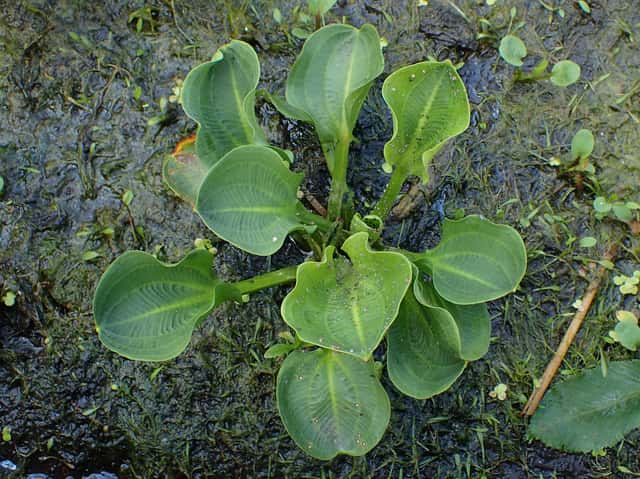
American water plantain (Alisma subcordatum) is a easy-care plant from the Alismataceae family. Alisma subcordatum, the American water plantain, is a native perennial emergent aquatic plant in the water-plantain family (Alismataceae). It forms a rosette of long-stalked, oval to heart-shaped leaves rising from a bulbous corm, and through summer sends up airy, much-branched panicles of tiny thre...
American water plantain grows up to 1.0m, spread of 60cm, watering every 1 days, -35°C – 35°C, 60–100% humidity. It is not suitable for indoor environments and safe for pets.
Unlike many tropical plants, American water plantain tolerates watering mistakes. Best for beginners. Unlike many popular species, American water plantain is safe to keep around pets.
How to Care for American water plantain?
TLDR: American water plantain needs Bright indirect, watering every 1 days, and temperatures between -35-35°C with 60-100% humidity.
How Often Should You Water American water plantain?
Keep it permanently inundated or saturated; site it in shallow standing water or consistently boggy mud at a pond edge. Never let the soil dry out.
How Much Light Does American water plantain Need?
Best flowering and compact growth come in full sun (6+ hours), though it tolerates light partial shade.
What Is the Best Soil for American water plantain?
Plant in heavy, rich, mucky loam or organic pond substrate; sandy muck also works as long as it stays constantly wet.
What Pot Should You Use for American water plantain?
Grow in a wide, no-drainage-hole aquatic planting basket filled with heavy loam and topped with gravel, then submerge it so the crown sits at or just below the water surface.
Care Schedule
Repot
Every 730 days
What Is American water plantain and Where Does It Come From?
Alisma subcordatum, the American water plantain, is a native perennial emergent aquatic plant in the water-plantain family (Alismataceae). It forms a rosette of long-stalked, oval to heart-shaped leaves rising from a bulbous corm, and through summer sends up airy, much-branched panicles of tiny three-petaled flowers that open white to pale pink. Reaching about 1 m tall, it colonizes pond margins, ditches, marshes and muddy shallows across eastern and central North America, where it self-seeds freely.
How to Propagate American water plantain?
Seed
- Cold-moist stratify the seed for about 30 days before sowing.
- Replicate a warm, intensely lit mudflat to trigger germination.
- 1 Stratify
Chill the seed in a cool, moist medium for roughly 30 days to break dormancy.
- 2 Sow
Surface-sow onto saturated seed-starting mud in bright, warm conditions.
- 3 Grow on
Keep the substrate flooded and transplant seedlings to the pond margin once established.
Materials needed:
Division
- Divide established clumps in spring as growth resumes.
- 1 Lift
Lift a mature corm clump from the mud in early spring.
- 2 Divide
Separate offsets, each with roots and a growing point.
- 3 Replant
Replant divisions into wet mud at the same depth and keep flooded.
Materials needed:
How Big Does American water plantain Grow?
TLDR: American water plantain can reach up to 1.0m tall with Medium growth rate.
Max height
1.0m
Spread
60cm
Growth rate
Medium
Foliage
Deciduous
Plant Uses
Ornamental
Great for decoration
Medicinal
Medicinal properties
Edible
Can be consumed
Medicinal Uses
- Traditionally used as a diuretic in folk herbal medicine
- Used to support urinary and kidney health
Culinary Uses
- Starchy corms are edible once thoroughly cooked or dried
- Historically gathered as a wild survival food; the fresh plant is acrid and should not be eaten raw
Is your plant showing symptoms?
Click on the symptom to discover possible causes:
What Diseases Commonly Affect American water plantain?
TLDR: American water plantain is susceptible to 4 known diseases. Monitor regularly for early detection.
Aphids
Aphids are small, soft-bodied, pear-shaped insects (1/16 to 1/8 inch long) that feed by sucking nutrient-rich sap from plants. They reproduce rapidly and can quickly weaken plants, causing distorted growth and transmitting plant viruses. Aphids come in various colors including green, black, red, yellow, brown, and gray. They secrete honeydew, a sticky substance that attracts ants and encourages sooty mold growth.
Slugs and Snails
Slugs and snails are mollusks that feed on plant tissue, causing irregular holes in leaves and damage to young seedlings. They are most active at night and in moist conditions, leaving characteristic silvery slime trails. These pests can quickly devastate gardens, especially during wet seasons.
Cercospora Leaf Spot
Cercospora leaf spot is a common fungal disease caused by Cercospora species that affects many plant types, particularly beets, roses, and leafy vegetables. The disease thrives in warm, humid conditions and can cause significant defoliation, reducing plant vigor and yield. It spreads rapidly through water splash, wind, and contaminated tools.
Leaf Spot
Leaf spot is a common fungal disease caused by various pathogens including Alternaria, Ascochyta, Colletotrichum, Septoria, and Venturia. It primarily affects leaves, causing discolored spots that can lead to premature leaf drop if left untreated.
Meaning & Symbolism
Water plantains are emblematic of clean wetlands and pond margins, long valued in water gardens as a symbol of purity and the living boundary between land and water.
Compare with similar plants
| Attribute | Difficulty | Light | Watering | Pet Safe |
|---|---|---|---|---|
| Field Maple | Easy | Bright indirect | 14d | ✓ |
| Silver Birch | Easy | Direct sun | 14d | ✓ |
| Cushion Bush | Easy | Direct sun | 14d | ✓ |
| Peruvian peppertree | Easy | Direct sun | 14d | ⚠️ |





