Lamiaceae
Hoary Basil: Aromatic Plant
Ocimum americanum
Hoary basil thrives in full sun, regular watering without waterlogging, and fertile, well-draining soil. It shows strong resistance to fungal diseases like downy mildew compared to sweet basil. Regular harvesting encourages bushier growth.
Every 4 days
Direct sun
12° - 35°C
40% - 70%
Categories
What is Hoary Basil?
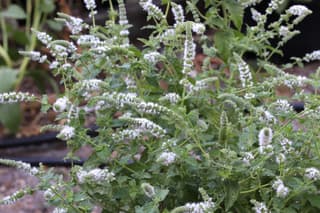
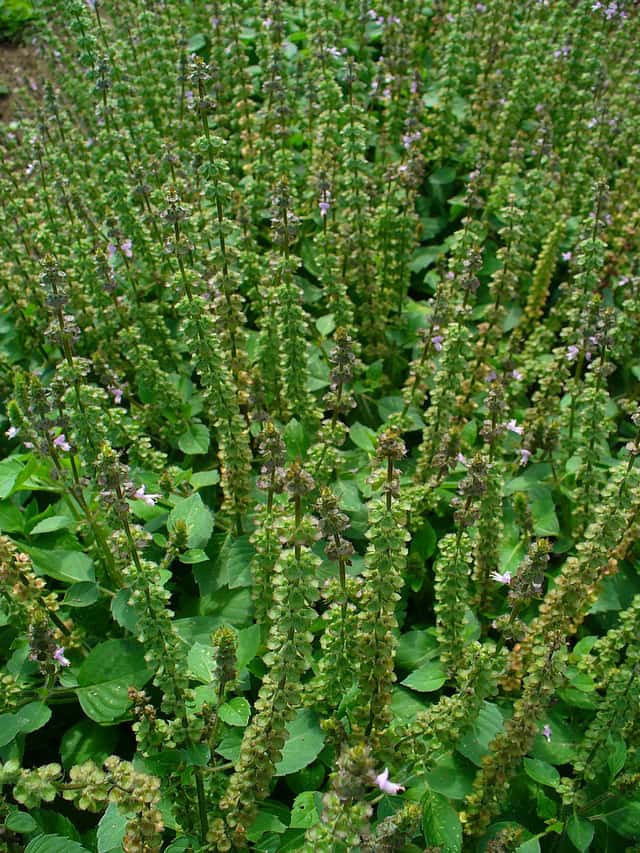
Hoary Basil (Ocimum americanum) is a easy-care plant from the Lamiaceae family. Hoary basil (Ocimum americanum) is an annual aromatic herb native to tropical Africa and South Asia, now naturalized across the tropics, including Brazil. Its small, slightly hairy leaves release a citrusy, lime-like aroma. It is more disease-resistant than sweet basil, especially against downy mild...
Hoary Basil grows up to 60cm, spread of 40cm, watering every 4 days, 12°C – 35°C, 40–70% humidity. It is suitable for indoor environments and safe for pets.
Unlike many tropical plants, Hoary Basil tolerates watering mistakes. Best for beginners. Unlike many popular species, Hoary Basil is safe to keep around pets. Without adequate drainage, root rot can develop within 8 days.
How to Care for Hoary Basil?
TLDR: Hoary Basil needs Direct sun, watering every 4 days, and temperatures between 12-35°C with 40-70% humidity.
How Often Should You Water Hoary Basil?
Water every 3-4 days, letting the top layer of soil dry slightly between waterings. Avoid waterlogging, which promotes root rot. Water in the morning, directly at the base of the plant.
How Much Light Does Hoary Basil Need?
Needs full sun, at least 6-8 hours of direct light daily. Indoors, place near a sunny south-facing window or use supplemental grow lights.
What Is the Best Soil for Hoary Basil?
Use a light, fertile, well-draining substrate with a pH between 6.0 and 7.5. Add organic compost to improve fertility and drainage.
What Pot Should You Use for Hoary Basil?
Terracotta or ceramic pots with good drainage, 15-20 cm wide, suit a single plant well. Avoid oversized pots that retain excess moisture.
Care Schedule
Fertilize
Every 30 days
Rotate
Every 14 days
Repot
Every 365 days
What Is Hoary Basil and Where Does It Come From?
Hoary basil (Ocimum americanum) is an annual aromatic herb native to tropical Africa and South Asia, now naturalized across the tropics, including Brazil. Its small, slightly hairy leaves release a citrusy, lime-like aroma. It is more disease-resistant than sweet basil, especially against downy mildew.
How to Propagate Hoary Basil?
Seed Sowing
Keep temperature above 20°C for good germination and avoid covering seeds too deeply.
- 1 Fill a pot with light, well-draining substrate
- 2 Sow seeds 0.5 cm deep
- 3 Keep the substrate moist and in a warm spot
- 4 Germination occurs in 7-14 days above 20°C
Materials needed:
Stem Cutting
Use young, healthy stems; keep in bright indirect light while rooting.
- 1 Cut a healthy 10-15 cm stem below a node
- 2 Remove the lower leaves
- 3 Place the stem in water or moist substrate
- 4 Wait for roots, changing the water every 2 days
Materials needed:
How Big Does Hoary Basil Grow?
TLDR: Hoary Basil can reach up to 60cm tall with Fast growth rate.
Max height
60cm
Spread
40cm
Growth rate
Fast
Foliage
Evergreen
Plant Uses
Edible
Can be consumed
Medicinal
Medicinal properties
Aromatic
Pleasant fragrance
Medicinal Uses
- Digestive aid
- Antiseptic
- Anti-inflammatory
- Natural insect repellent
- Calming
Culinary Uses
- Herbal teas
- Salads
- Sauces
- Marinades
- Citrus-flavored garnish
Is your plant showing symptoms?
Click on the symptom to discover possible causes:
What Diseases Commonly Affect Hoary Basil?
TLDR: Hoary Basil is susceptible to 4 known diseases. Monitor regularly for early detection.
Downy Mildew
Downy mildew is a fungal-like disease caused by oomycetes (water molds) that thrives in cool, wet conditions. It affects a wide range of plants, causing yellowing leaves with fuzzy white-gray growth underneath, leading to defoliation and reduced yields if left untreated.
Aphids
Aphids are small, soft-bodied, pear-shaped insects (1/16 to 1/8 inch long) that feed by sucking nutrient-rich sap from plants. They reproduce rapidly and can quickly weaken plants, causing distorted growth and transmitting plant viruses. Aphids come in various colors including green, black, red, yellow, brown, and gray. They secrete honeydew, a sticky substance that attracts ants and encourages sooty mold growth.
Whiteflies
Whiteflies are small, soft-bodied, winged insects closely related to aphids and mealybugs. They are moth-like in appearance, about 1/16 inch long, triangular in shape, and gray-white in color. These sap-sucking pests feed on plant tissue, causing yellowing, stunted growth, and wilting. They also excrete honeydew, which attracts ants and promotes sooty mold growth. Whiteflies can transmit serious plant viruses.
Fusarium Wilt
Fusarium wilt is a serious fungal disease caused by the soil-borne fungus Fusarium oxysporum. The fungus invades roots and blocks the water-conducting vessels (xylem) of the plant, causing progressive wilting and eventual death. Host-specific forms of the pathogen exist that attack different plant species.
Meaning & Symbolism
Associated with purification and hospitality in West African and South Asian traditions; its citrus scent is traditionally used to freshen homes and repel insects.
Compare with similar plants
| Attribute | Difficulty | Light | Watering | Pet Safe |
|---|---|---|---|---|
| Field Maple | Easy | Bright indirect | 14d | ✓ |
| Silver Birch | Easy | Direct sun | 14d | ✓ |
| Cushion Bush | Easy | Direct sun | 14d | ✓ |
| Peruvian peppertree | Easy | Direct sun | 14d | ⚠️ |