Araceae
How to Care for the Flamingo Flower (Anthurium scherzerianum)
Anthurium scherzerianum
Low-maintenance plant that thrives in bright indirect light, moderate watering, and high humidity. Avoid direct sun and soggy soil. Fertilize every 14 days during the growing season and keep humidity between 60-80%.
Every 7 days
Partial shade
15° - 32°C
60% - 80%
Categories
What is Flamingo Flower?
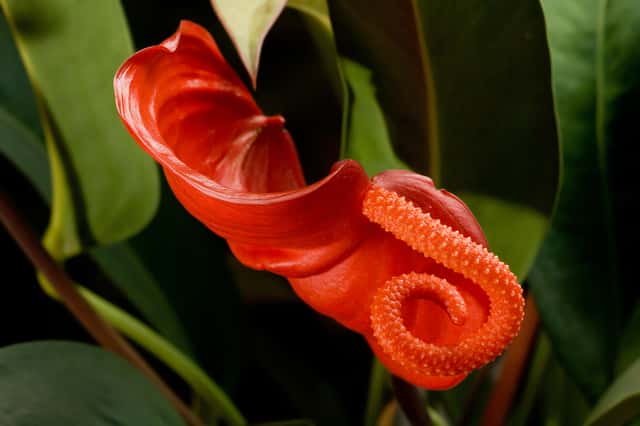
Flamingo Flower (Anthurium scherzerianum) is a easy-care plant from the Araceae family. Anthurium scherzerianum, commonly known as the Flamingo Flower or Pigtail Anthurium, is a tropical species native to Costa Rica. It is distinguished by its curling, pig-tail spadix and glossy oval spathe, usually in vivid red. It is one of the most robust and beginner-friendly anthurium species for...
Flamingo Flower grows up to 30cm, spread of 30cm, watering every 7 days, 15°C – 32°C, 60–80% humidity. It is suitable for indoor environments and not safe for pets.
Unlike many tropical plants, Flamingo Flower tolerates watering mistakes. Best for beginners. Without precautions, ingestion can cause irritation in pets. Keep out of reach of cats and dogs. Without adequate drainage, root rot can develop within 14 days.
How to Care for Flamingo Flower?
TLDR: Flamingo Flower needs Partial shade, watering every 7 days, and temperatures between 15-32°C with 60-80% humidity.
How Often Should You Water Flamingo Flower?
Water every 7 days when the top 2-3 cm of soil is dry. Never let the pot sit in standing water — overwatering is the leading cause of root rot. Use room-temperature, ideally chlorine-free water.
How Much Light Does Flamingo Flower Need?
Place in bright indirect light away from direct sun. Insufficient light reduces flowering and causes leggy growth; too much sun scorches leaves and spathes.
What Is the Best Soil for Flamingo Flower?
Use a rich, well-draining aroid potting mix. A good blend includes pine bark, coco coir, and perlite. Optimal pH is 5.5–6.5.
What Pot Should You Use for Flamingo Flower?
Terracotta or ceramic pot with drainage holes. Avoid oversized pots — anthuriums bloom better when slightly root-bound.
Care Schedule
Fertilize
Every 14 days
Misting
Every 3 days
Rotate
Every 30 days
Repot
Every 548 days
What Is Flamingo Flower and Where Does It Come From?
Anthurium scherzerianum, commonly known as the Flamingo Flower or Pigtail Anthurium, is a tropical species native to Costa Rica. It is distinguished by its curling, pig-tail spadix and glossy oval spathe, usually in vivid red. It is one of the most robust and beginner-friendly anthurium species for indoor cultivation.
How to Propagate Flamingo Flower?
Plant Division
Divide in early spring for best results. Always sterilize cutting tools before use.
- 1 Carefully remove the plant from its pot
- 2 Separate offshoots that have their own roots using a clean knife
- 3 Plant each division in moist, well-draining aroid mix
- 4 Keep in a warm, humid location until established
Materials needed:
Stem Cutting
Best for leggy plants. Change water every 3-4 days if propagating in water.
- 1 Cut a stem with 2-3 leaves and at least one node
- 2 Allow the cut to callous for a few hours
- 3 Place in moist substrate or a jar of water
- 4 Keep in a warm, humid location
Materials needed:
How Big Does Flamingo Flower Grow?
TLDR: Flamingo Flower can reach up to 30cm tall with Slow growth rate.
Max height
30cm
Spread
30cm
Growth rate
Slow
Foliage
Evergreen
Warning: Toxic Plant
This plant can be toxic if ingested. Keep out of reach of:
Plant Uses
Ornamental
Great for decoration
Air Purifying
Improves air quality
Is your plant showing symptoms?
Click on the symptom to discover possible causes:
What Diseases Commonly Affect Flamingo Flower?
TLDR: Flamingo Flower is susceptible to 6 known diseases. Monitor regularly for early detection.
Root Rot
Root rot is a serious fungal disease that affects the root system of plants, causing them to decay and die. It is primarily caused by overwatering, poor drainage, or soil-borne fungi such as Pythium, Phytophthora, Rhizoctonia, and Fusarium. The disease thrives in waterlogged conditions where roots are deprived of oxygen, making them susceptible to fungal infection.
Bacterial Blight
Bacterial blight is a serious plant disease caused by pathogenic bacteria that enters plants through wounds or natural openings. It spreads rapidly in warm, wet conditions and can cause significant damage to leaves, stems, and flowers. The bacteria are transmitted by water splash, contaminated tools, and insects.
Anthracnose
Anthracnose is a fungal disease caused by fungi in the genus Colletotrichum that affects many plants, including vegetables, fruits, and trees. The disease thrives in cool, wet conditions, causing dark, sunken lesions on leaves, stems, flowers, and fruits.
Spider Mites
Spider mites are tiny arachnids (less than 1/20 inch long) related to spiders and ticks that feed on plant sap. They thrive in hot, dry conditions and can cause significant damage to ornamental and vegetable plants. During severe infestations, crop losses can reach 14% or higher as these pests disrupt vital plant processes including photosynthesis, carbon dioxide absorption, and transpiration.
Meaning & Symbolism
Symbol of hospitality, happiness, and lasting love. The red spathe is associated with the heart and passion in many cultures.
Fun Facts
The curling pig-tail spadix of Anthurium scherzerianum is a unique trait that sets it apart from other anthurium species
The spathes can be red, pink, white, or orange and last for weeks both on the plant and as cut flowers
Native to the tropical forests of Costa Rica, it grows epiphytically on trees in the wild
Under ideal conditions it can bloom year-round, making it one of the most decorative indoor plants available
Frequently asked questions
How often should I water my Flamingo Flower?
Is the Flamingo Flower toxic to pets?
Why is my Flamingo Flower not blooming?
What humidity does the Flamingo Flower need?
Compare with similar plants
| Attribute | Difficulty | Light | Watering | Pet Safe |
|---|---|---|---|---|
| Field Maple | Easy | Bright indirect | 14d | ✓ |
| Silver Birch | Easy | Direct sun | 14d | ✓ |
| Cushion Bush | Easy | Direct sun | 14d | ✓ |
| Peruvian peppertree | Easy | Direct sun | 14d | ⚠️ |