Gesneriaceae
Goldfish Plant: Fast Growing
Nematanthus gregarius
The Goldfish Plant thrives in bright indirect light and high humidity, requiring regular watering without waterlogging the soil.
Every 10 days
Bright indirect
10° - 27°C
50% - 70%
Categories
What is Goldfish Plant?
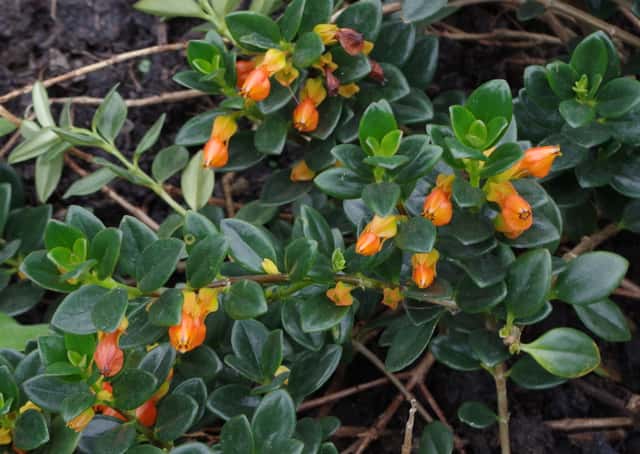
Goldfish Plant (Nematanthus gregarius) is a easy-care plant from the Gesneriaceae family. Nematanthus gregarius, popularly known as the Goldfish Plant, is an epiphytic plant native to the Brazilian tropical forests. Its leaves are small, oval, succulent in texture, and bright dark green. The common name comes from its tubular orange flowers that have a bulge on the lower part, closely re...
Goldfish Plant grows up to 90cm, spread of 60cm, watering every 10 days, 10°C – 27°C, 50–70% humidity. It is suitable for indoor environments and safe for pets.
Unlike many tropical plants, Goldfish Plant tolerates watering mistakes. Best for beginners. Unlike many popular species, Goldfish Plant is safe to keep around pets. Without adequate drainage, root rot can develop within 20 days.
How to Care for Goldfish Plant?
TLDR: Goldfish Plant needs Bright indirect, watering every 10 days, and temperatures between 10-27°C with 50-70% humidity.
How Often Should You Water Goldfish Plant?
Water whenever the soil surface feels dry to the touch. In winter, reduce the frequency of watering.
How Much Light Does Goldfish Plant Need?
Keep the plant in a very bright location, but avoid direct sun between 10 AM and 4 PM to prevent scorching the leaves.
What Is the Best Soil for Goldfish Plant?
Use a potting mix rich in organic matter, such as potting soil mixed with coco coir or fine pine bark to ensure good drainage.
What Pot Should You Use for Goldfish Plant?
Hanging baskets or plastic/ceramic bowls that allow the branches to trail.
Care Schedule
Fertilize
Every 14 days
Misting
Every 3 days
Rotate
Every 14 days
Repot
Every 730 days
What Is Goldfish Plant and Where Does It Come From?
Nematanthus gregarius, popularly known as the Goldfish Plant, is an epiphytic plant native to the Brazilian tropical forests. Its leaves are small, oval, succulent in texture, and bright dark green. The common name comes from its tubular orange flowers that have a bulge on the lower part, closely resembling a small goldfish or 'platy'. It is a trailing plant, ideal for hanging baskets.
How to Propagate Goldfish Plant?
Stem cutting
- Keep the cutting in a warm place with indirect light.
- Covering the pot with a clear plastic bag can help maintain the necessary humidity.
- 1 Cutting the stem
Cut a healthy branch about 10 to 15 cm (4 to 6 inches) long, preferably after flowering.
- 2 Preparation
Remove the leaves from the lower part of the cutting to expose the nodes where roots will grow.
- 3 Planting
Insert the base of the cutting into a light, consistently moist substrate, or place it in a container with water until roots emerge.
Materials needed:
How Big Does Goldfish Plant Grow?
TLDR: Goldfish Plant can reach up to 90cm tall with Fast growth rate.
Max height
90cm
Spread
60cm
Growth rate
Fast
Foliage
Evergreen
Plant Uses
Ornamental
Great for decoration
Is your plant showing symptoms?
Click on the symptom to discover possible causes:
What Diseases Commonly Affect Goldfish Plant?
TLDR: Goldfish Plant is susceptible to 12 known diseases. Monitor regularly for early detection.
Root Rot
Root rot is a serious fungal disease that affects the root system of plants, causing them to decay and die. It is primarily caused by overwatering, poor drainage, or soil-borne fungi such as Pythium, Phytophthora, Rhizoctonia, and Fusarium. The disease thrives in waterlogged conditions where roots are deprived of oxygen, making them susceptible to fungal infection.
Gray Mold (Botrytis Blight)
Gray mold, caused by the fungus Botrytis cinerea, is one of the most common fungal diseases in plants. It affects over 200 plant species, including ornamentals, vegetables, fruits, and houseplants. The disease thrives in cool, humid conditions with poor air circulation, causing grayish spots and soft rot on infected tissues.
Powdery Mildew
Powdery mildew is a common fungal disease caused by various fungi species including Erysiphe, Podosphaera, Oïdium, and Leveillula. It affects over 10,000 plant species worldwide. The disease thrives in warm, dry climates with high humidity and appears as a distinctive white powdery coating on plant surfaces.
Aphids
Aphids are small, soft-bodied, pear-shaped insects (1/16 to 1/8 inch long) that feed by sucking nutrient-rich sap from plants. They reproduce rapidly and can quickly weaken plants, causing distorted growth and transmitting plant viruses. Aphids come in various colors including green, black, red, yellow, brown, and gray. They secrete honeydew, a sticky substance that attracts ants and encourages sooty mold growth.
Meaning & Symbolism
It is often associated with joy, vibrancy, and adaptability.
Compare with similar plants
| Attribute | Difficulty | Light | Watering | Pet Safe |
|---|---|---|---|---|
| Field Maple | Easy | Bright indirect | 14d | ✓ |
| Silver Birch | Easy | Direct sun | 14d | ✓ |
| Rose Campion | Easy | Direct sun | 10d | ✓ |
| Cushion Bush | Easy | Direct sun | 14d | ✓ |




