Araceae
Golden Arum Lily (Zantedeschia elliottiana): Complete Care Guide
Zantedeschia elliottiana
A medium-difficulty plant requiring weekly watering during the growing season, well-draining soil, and bright indirect light. It goes dormant in autumn/winter, when watering should be drastically reduced. Fertilize every two weeks in spring and summer. Toxic — keep out of reach of children and pets.
Every 7 days
Partial shade
10° - 35°C
50% - 80%
Categories
What is Golden Arum Lily?
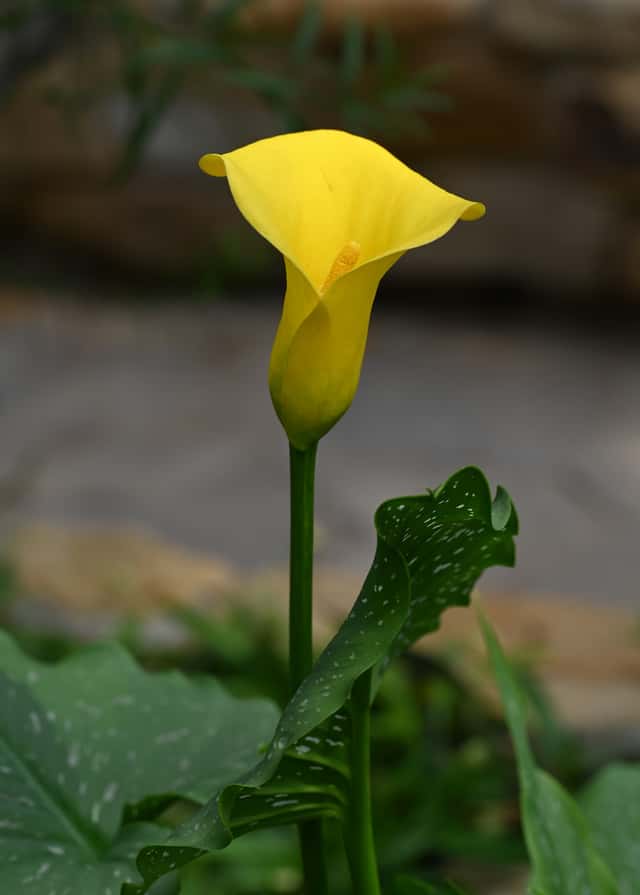
Golden Arum Lily (Zantedeschia elliottiana) is a medium-care plant from the Araceae family. The Golden Arum Lily (Zantedeschia elliottiana) is a herbaceous perennial native to South Africa, prized for its stunning golden-yellow spathes that emerge amid green leaves spotted with white translucent markings. It is one of the most elegant colored varieties in the Zantedeschia genus, widely use...
Golden Arum Lily grows up to 90cm, spread of 40cm, watering every 7 days, 10°C – 35°C, 50–80% humidity. It is suitable for indoor environments and not safe for pets.
Without precautions, ingestion can cause irritation in pets. Keep out of reach of cats and dogs. Without adequate drainage, root rot can develop within 14 days.
How to Care for Golden Arum Lily?
TLDR: Golden Arum Lily needs Partial shade, watering every 7 days, and temperatures between 10-35°C with 50-80% humidity.
How Often Should You Water Golden Arum Lily?
Water weekly during active growth, keeping the soil evenly moist but never waterlogged. After blooming, gradually reduce watering until full dormancy. Avoid leaving standing water in the saucer as this promotes rhizome rot.
How Much Light Does Golden Arum Lily Need?
Prefers bright indirect light or partial shade. Avoid intense direct sunlight, which can cause leaf scorch. Indoors, place near east- or west-facing windows for optimal light without sun damage.
What Is the Best Soil for Golden Arum Lily?
Use well-draining, slightly acidic soil (pH 6.0–6.5) rich in organic matter. Mix standard potting mix with perlite or coarse sand to ensure good drainage and prevent rhizome rot.
What Pot Should You Use for Golden Arum Lily?
Terracotta or ceramic pots with drainage holes. Choose a pot proportional to the rhizome — not too large (risk of waterlogging) nor too small (restricts growth). Repot every 2 years at the end of dormancy.
Care Schedule
Fertilize
Every 14 days
Repot
Every 730 days
What Is Golden Arum Lily and Where Does It Come From?
The Golden Arum Lily (Zantedeschia elliottiana) is a herbaceous perennial native to South Africa, prized for its stunning golden-yellow spathes that emerge amid green leaves spotted with white translucent markings. It is one of the most elegant colored varieties in the Zantedeschia genus, widely used in floral arrangements and ornamental gardens. WARNING: All parts of the plant are toxic to humans, cats, and dogs due to calcium oxalate crystals.
How to Propagate Golden Arum Lily?
Rhizome Division
Always wear gloves when handling rhizomes as the plant is toxic. Sterilize your cutting tool before use to prevent bacterial infections.
- 1 At the end of dormancy, carefully remove the rhizome from the pot
- 2 Divide the rhizome into sections, ensuring each has at least one growth point
- 3 Allow cut sections to dry for 24 hours to callous over
- 4 Plant each section in well-draining mix about 5 cm deep
- 5 Water lightly and place in indirect light until new growth appears
Materials needed:
How Big Does Golden Arum Lily Grow?
TLDR: Golden Arum Lily can reach up to 90cm tall with Medium growth rate.
Max height
90cm
Spread
40cm
Growth rate
Medium
Foliage
Deciduous
Warning: Toxic Plant
This plant can be toxic if ingested. Keep out of reach of:
Plant Uses
Ornamental
Great for decoration
Is your plant showing symptoms?
Click on the symptom to discover possible causes:
What Diseases Commonly Affect Golden Arum Lily?
TLDR: Golden Arum Lily is susceptible to 8 known diseases. Monitor regularly for early detection.
Root Rot
Root rot is a serious fungal disease that affects the root system of plants, causing them to decay and die. It is primarily caused by overwatering, poor drainage, or soil-borne fungi such as Pythium, Phytophthora, Rhizoctonia, and Fusarium. The disease thrives in waterlogged conditions where roots are deprived of oxygen, making them susceptible to fungal infection.
Bacterial Soft Rot
Bacterial soft rot is a destructive plant disease caused primarily by bacteria from the genera Pectobacterium (formerly Erwinia) and Dickeya. These bacteria produce enzymes that break down plant cell walls, causing rapid and foul-smelling tissue decomposition. It mainly affects succulent tissues such as tubers, fruits, stems, and bulbs, being especially problematic in warm and humid conditions.
Aphids
Aphids are small, soft-bodied, pear-shaped insects (1/16 to 1/8 inch long) that feed by sucking nutrient-rich sap from plants. They reproduce rapidly and can quickly weaken plants, causing distorted growth and transmitting plant viruses. Aphids come in various colors including green, black, red, yellow, brown, and gray. They secrete honeydew, a sticky substance that attracts ants and encourages sooty mold growth.
Thrips
Thrips are tiny cigar-shaped insects (1/25-inch long) that damage plants by sucking plant juices and scraping at fruits, flowers, and leaves. With over 6,000 species and rapid reproduction (lifecycle as short as 14 days), they can quickly infest plants and transmit viruses like tomato spotted wilt virus.
Meaning & Symbolism
Symbolizes elegance, purity, and magnificence. In many cultures it is associated with celebrations, new beginnings, and admiration.
Fun Facts
The white spots on Golden Arum Lily leaves are translucent air pockets in the leaf tissue — a unique characteristic of this species.
Despite being toxic, the calcium oxalate it contains is the same compound responsible for kidney stones in humans when consumed excessively from other foods.
The golden spathe that appears to be the flower is actually a modified leaf; the true flowers are tiny and located on the central spadix.
Native to eastern South Africa, it is one of the few naturally yellow Zantedeschia species — its color comes from carotenoid pigments.
Frequently asked questions
Is the Golden Arum Lily toxic to cats and dogs?
How often should I water the Golden Arum Lily?
Why is my Golden Arum Lily not blooming?
Can I grow the Golden Arum Lily indoors?
How do I propagate the Golden Arum Lily?
Compare with similar plants
| Attribute | Difficulty | Light | Watering | Pet Safe |
|---|---|---|---|---|
| Dark Fieldcap | Medium | Low light | 2d | ⚠️ |
| Azalea | Medium | Partial shade | 3d | ⚠️ |
| Bougainvillea | Medium | Direct sun | 7d | ⚠️ |
| Wild Lettuce | Medium | Direct sun | 7d | ⚠️ |



