Aspleniaceae
Ebony Spleenwort (Asplenium platyneuron): Complete Care Guide
Asplenium platyneuron
Low-maintenance fern that thrives in shaded environments with well-drained soil. Tolerates occasional drought but prefers moderate moisture. Avoid direct sun and waterlogged conditions.
Every 7 days
Low light
15° - 24°C
50% - 70%
Categories
What is Ebony Spleenwort?
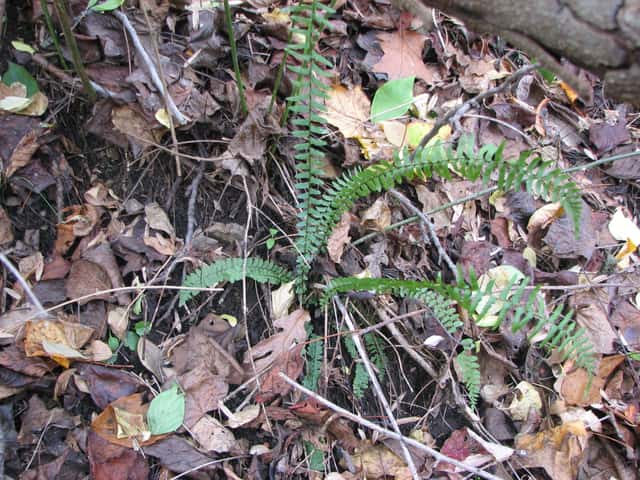
Ebony Spleenwort (Asplenium platyneuron) is a easy-care plant from the Aspleniaceae family. Ebony Spleenwort is a small dimorphic fern native to eastern North America, characterized by its glossy ebony-black rachis contrasting beautifully with dark green fronds. It produces two distinct frond types: shorter sterile fronds that spread horizontally and taller fertile fronds that stand uprigh...
Ebony Spleenwort grows up to 50cm, spread of 45cm, watering every 7 days, 15°C – 24°C, 50–70% humidity. It is suitable for indoor environments and safe for pets.
Unlike many tropical plants, Ebony Spleenwort tolerates watering mistakes. Best for beginners. Unlike many popular species, Ebony Spleenwort is safe to keep around pets. Without adequate drainage, root rot can develop within 14 days.
How to Care for Ebony Spleenwort?
TLDR: Ebony Spleenwort needs Low light, watering every 7 days, and temperatures between 15-24°C with 50-70% humidity.
How Often Should You Water Ebony Spleenwort?
Water every 7 days, keeping soil consistently moist but never soggy. Reduce frequency in winter. Avoid wetting the crown to prevent rot.
How Much Light Does Ebony Spleenwort Need?
Prefers low to moderate light mimicking its natural woodland understory habitat. Avoid direct sunlight which can scorch delicate fronds. A north or east-facing filtered window is ideal indoors.
What Is the Best Soil for Ebony Spleenwort?
Use well-draining, slightly acidic soil (pH 4.5–6.5). A fern mix with perlite and peat moss works well. In the garden, prefers rocky or sandy soils with organic matter.
What Pot Should You Use for Ebony Spleenwort?
Terracotta or ceramic pot with good drainage holes. In shade gardens, also adapts well directly in rocky ground.
Care Schedule
Fertilize
Every 30 days
Misting
Every 3 days
What Is Ebony Spleenwort and Where Does It Come From?
Ebony Spleenwort is a small dimorphic fern native to eastern North America, characterized by its glossy ebony-black rachis contrasting beautifully with dark green fronds. It produces two distinct frond types: shorter sterile fronds that spread horizontally and taller fertile fronds that stand upright. A low-maintenance native fern ideal for shade gardens and rocky landscapes.
How to Propagate Ebony Spleenwort?
Spore propagation
Sterilize growing medium beforehand to prevent fungal issues. Maintain temperature between 18-24°C during germination.
- 1 Collect mature spores from fertile fronds
- 2 Sow on sterilized moist medium
- 3 Cover with clear plastic to retain humidity
- 4 Keep in a bright location without direct sun
- 5 Wait for prothalli formation in 4-8 weeks
- 6 Transplant seedlings when 2-3 cm tall
Materials needed:
Clump division
Perform division in spring when the plant resumes growth. Use clean, sharp tools.
- 1 Remove plant from pot carefully
- 2 Separate side rosettes with intact roots
- 3 Plant each division in moist growing medium
- 4 Keep in a shaded, humid location until established
Materials needed:
How Big Does Ebony Spleenwort Grow?
TLDR: Ebony Spleenwort can reach up to 50cm tall with Slow growth rate.
Max height
50cm
Spread
45cm
Growth rate
Slow
Foliage
Semi-evergreen
Plant Uses
Ornamental
Great for decoration
Is your plant showing symptoms?
Click on the symptom to discover possible causes:
What Diseases Commonly Affect Ebony Spleenwort?
TLDR: Ebony Spleenwort is susceptible to 6 known diseases. Monitor regularly for early detection.
Crown Rot
Crown rot is a serious fungal disease that attacks the crown (base) of the plant where the stem meets the soil. It is caused by various fungal pathogens including Phytophthora, Fusarium, and Rhizoctonia. The disease thrives in waterlogged conditions and can quickly spread to kill the entire plant if not addressed promptly.
Root Rot
Root rot is a serious fungal disease that affects the root system of plants, causing them to decay and die. It is primarily caused by overwatering, poor drainage, or soil-borne fungi such as Pythium, Phytophthora, Rhizoctonia, and Fusarium. The disease thrives in waterlogged conditions where roots are deprived of oxygen, making them susceptible to fungal infection.
Aphids
Aphids are small, soft-bodied, pear-shaped insects (1/16 to 1/8 inch long) that feed by sucking nutrient-rich sap from plants. They reproduce rapidly and can quickly weaken plants, causing distorted growth and transmitting plant viruses. Aphids come in various colors including green, black, red, yellow, brown, and gray. They secrete honeydew, a sticky substance that attracts ants and encourages sooty mold growth.
Slugs and Snails
Slugs and snails are mollusks that feed on plant tissue, causing irregular holes in leaves and damage to young seedlings. They are most active at night and in moist conditions, leaving characteristic silvery slime trails. These pests can quickly devastate gardens, especially during wet seasons.
Fun Facts
It is a dimorphic fern, producing two distinct frond types — sterile and fertile — on the same plant.
The name platyneuron comes from Greek meaning "broad nerve," a reference to the frond vein pattern.
It is cold-hardy down to USDA Zone 3, surviving harsh winters across the northeastern US and Canada.
The glossy ebony-black rachis is its most distinctive feature and inspired the common name "Ebony Spleenwort."
Frequently asked questions
How often should I water Ebony Spleenwort?
Can Ebony Spleenwort grow indoors?
Is Ebony Spleenwort toxic to pets?
Why are my Ebony Spleenwort fronds turning brown?
How do I propagate Ebony Spleenwort?
Compare with similar plants
| Attribute | Difficulty | Light | Watering | Pet Safe |
|---|---|---|---|---|
| Field Maple | Easy | Bright indirect | 14d | ✓ |
| Silver Birch | Easy | Direct sun | 14d | ✓ |
| Cushion Bush | Easy | Direct sun | 14d | ✓ |
| Peruvian peppertree | Easy | Direct sun | 14d | ⚠️ |





