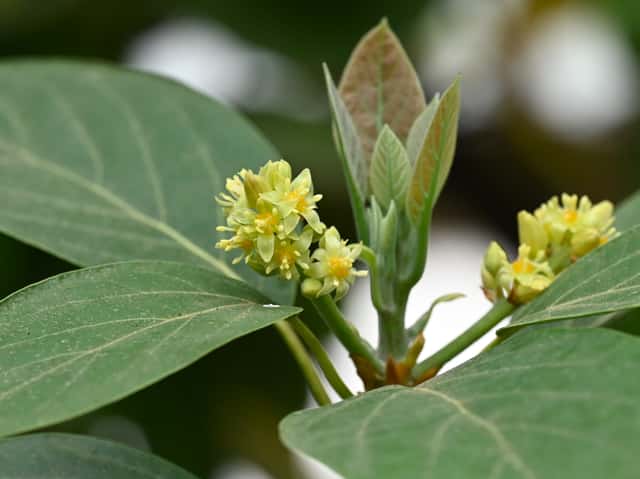
Lauraceae
Avocado Tree — Persea Genus: Care & Growing Guide
Persea
Full-sun tropical tree requiring well-draining soil, regular deep watering, and frost protection. Thrives outdoors in USDA zones 9-11. Not suited for indoor growing due to its large size.
Every 7 days
Direct sun
10° - 35°C
50% - 80%
Categories
What is Avocado Tree?
Avocado Tree (Persea) is a medium-care plant from the Lauraceae family. Persea is a genus of approximately 200 evergreen trees in the family Lauraceae, native to tropical and subtropical Americas, eastern Asia, and Macaronesia. The most famous species is the avocado (P. americana), cultivated worldwide for its nutritious fruit. The genus also includes the redbay (P. bor...
Avocado Tree grows up to 18.0m, spread of 900cm, watering every 7 days, 10°C – 35°C, 50–80% humidity. It is not suitable for indoor environments and not safe for pets.
Without precautions, ingestion can cause irritation in pets. Keep out of reach of cats and dogs.
How to Care for Avocado Tree?
TLDR: Avocado Tree needs Direct sun, watering every 7 days, and temperatures between 10-35°C with 50-80% humidity.
How Often Should You Water Avocado Tree?
Water deeply every 7 days, allowing the top few inches of soil to dry slightly between sessions. Reduce frequency in winter. Never allow standing water — root rot is the primary killer of Persea.
How Much Light Does Avocado Tree Need?
Requires full sun, minimum 8 hours daily. Does not tolerate shade. Site in an open, unobstructed location for best growth and fruiting.
What Is the Best Soil for Avocado Tree?
Use well-draining, fertile soil rich in organic matter. Ideal pH 5.0–7.0. Avoid heavy clay or waterlogged conditions. Sandy or loamy soils with amendments work well.
What Pot Should You Use for Avocado Tree?
Large terracotta or ceramic pot with drainage holes for young specimens (40-60 L minimum). Best grown directly in the ground in warm climates. Container growing limits ultimate size significantly.
Care Schedule
Fertilize
Every 90 days
Repot
Every 365 days
What Is Avocado Tree and Where Does It Come From?
Persea is a genus of approximately 200 evergreen trees in the family Lauraceae, native to tropical and subtropical Americas, eastern Asia, and Macaronesia. The most famous species is the avocado (P. americana), cultivated worldwide for its nutritious fruit. The genus also includes the redbay (P. borbonia) of the southeastern United States and other ornamental species prized for their glossy, aromatic foliage.
How to Propagate Avocado Tree?
Seed germination
Keep in a warm location with indirect light during germination. Change the water weekly to prevent bacterial buildup. Not all seeds from the same variety will produce identical fruit.
- 1 Remove the pit from a ripe avocado and rinse clean
- 2 Insert 3-4 toothpicks around the mid-section and suspend over a glass of water, pointed end up
- 3 Place in a warm, bright spot and wait 2-6 weeks for roots and a shoot to emerge
- 4 When roots are 2-3 cm long, transplant to a pot with rich organic mix
Materials needed:
Cleft or bud grafting
Grafting is strongly preferred for fruit production — grafted trees bear fruit in 3-5 years vs. 5-13+ for seed-grown. Use proven commercial varieties (e.g., Hass, Fuerte).
- 1 Grow a rootstock seedling to 30-60 cm tall
- 2 Make a clean cleft cut in the rootstock stem
- 3 Insert a scion with 2-3 buds from the desired variety and secure with grafting tape
- 4 Keep in a warm, humid environment until bud break confirms success
Materials needed:
How Big Does Avocado Tree Grow?
TLDR: Avocado Tree can reach up to 18.0m tall with Medium growth rate.
Max height
18.0m
Spread
9.0m
Growth rate
Medium
Foliage
Evergreen
Warning: Toxic Plant
This plant can be toxic if ingested. Keep out of reach of:
Plant Uses
Ornamental
Great for decoration
Edible
Can be consumed
Medicinal
Medicinal properties
Aromatic
Pleasant fragrance
Medicinal Uses
- Avocado leaves are used in traditional Latin American medicine to treat hypertension, diabetes, and kidney stones
- Avocado oil is used topically as a skin and hair moisturiser with proven emollient properties
Culinary Uses
- The avocado fruit (P. americana) is central to guacamole, salads, toast toppings, and smoothies worldwide
- Mexican bay leaves (P. drymifolia) are used as an aromatic herb in mole and barbacoa
- Avocado oil is used in gourmet cooking as a high-smoke-point, heart-healthy fat
Is your plant showing symptoms?
Click on the symptom to discover possible causes:
What Diseases Commonly Affect Avocado Tree?
TLDR: Avocado Tree is susceptible to 8 known diseases. Monitor regularly for early detection.
Root Rot
Root rot is a serious fungal disease that affects the root system of plants, causing them to decay and die. It is primarily caused by overwatering, poor drainage, or soil-borne fungi such as Pythium, Phytophthora, Rhizoctonia, and Fusarium. The disease thrives in waterlogged conditions where roots are deprived of oxygen, making them susceptible to fungal infection.
Phytophthora Root Rot
Disease caused by fungus-like organisms (oomycetes) that live in soil and can survive for years. It affects roots, stem, and crown of plants, being especially severe in waterlogged or poorly drained soils. It is the second most common cause of root rot in trees and shrubs.
Anthracnose
Anthracnose is a fungal disease caused by fungi in the genus Colletotrichum that affects many plants, including vegetables, fruits, and trees. The disease thrives in cool, wet conditions, causing dark, sunken lesions on leaves, stems, flowers, and fruits.
Spider Mites
Spider mites are tiny arachnids (less than 1/20 inch long) related to spiders and ticks that feed on plant sap. They thrive in hot, dry conditions and can cause significant damage to ornamental and vegetable plants. During severe infestations, crop losses can reach 14% or higher as these pests disrupt vital plant processes including photosynthesis, carbon dioxide absorption, and transpiration.
Meaning & Symbolism
In ancient Mesoamerican cultures, the avocado symbolised fertility, abundance, and prosperity. The Aztecs called it "ahuacatl" and considered it sacred food.
Fun Facts
The Persea genus includes around 200 species, but only the avocado (P. americana) is widely cultivated for fruit
The word "avocado" derives from the Nahuatl "ahuacatl," meaning testicle — a reference to the fruit's shape and the tree's association with fertility
Phytophthora root rot (P. cinnamomi) is the single greatest threat to avocado production worldwide
Redbay (P. borbonia) is under severe threat in the southeastern US from an invasive ambrosia beetle and laurel wilt fungus
Frequently asked questions
How often should I water a Persea tree?
Can Persea be grown indoors?
Is Persea toxic to pets?
What hardiness zones suit Persea?
When does an avocado tree start fruiting?
Compare with similar plants
| Attribute | Difficulty | Light | Watering | Pet Safe |
|---|---|---|---|---|
| Dark Fieldcap | Medium | Low light | 2d | ⚠️ |
| Azalea | Medium | Partial shade | 3d | ⚠️ |
| Bougainvillea | Medium | Direct sun | 7d | ⚠️ |
| Wild Lettuce | Medium | Direct sun | 7d | ⚠️ |



