Rosaceae
Japanese Flowering Crabapple: Care and Growing Guide
Malus × floribunda
Grows best in full sun with well-drained soil and moderate watering. Cold-hardy and low-maintenance once established.
Every 7 days
Direct sun
-30° - 35°C
40% - 70%
Categories
What is Japanese Flowering Crabapple?
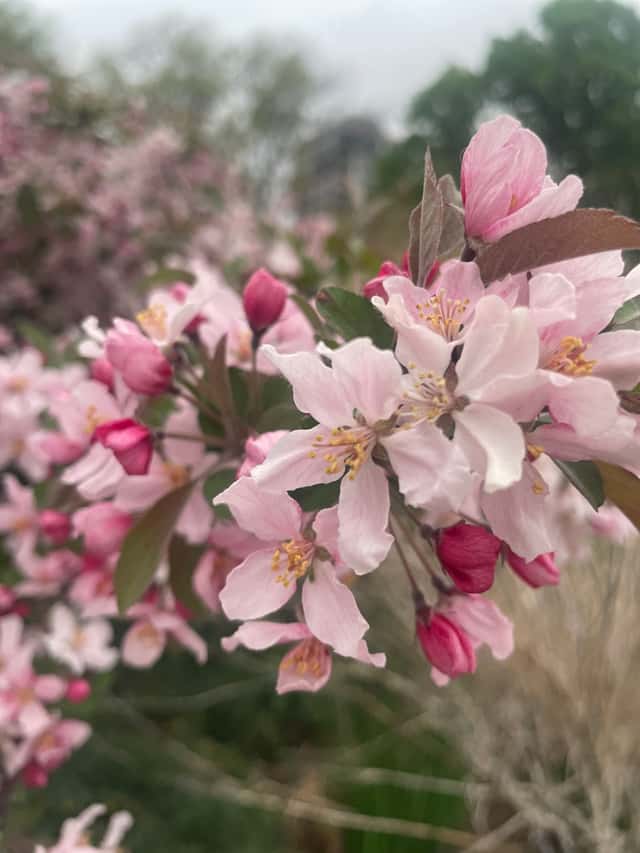
Japanese Flowering Crabapple (Malus × floribunda) is a medium-care plant from the Rosaceae family. The Japanese Flowering Crabapple (Malus × floribunda) is a small deciduous ornamental tree in the Rosaceae family, celebrated for its spectacular spring bloom. Deep pink buds open into white to pale pink flowers that smother the arching branches before the leaves emerge. In autumn it bears small yel...
Japanese Flowering Crabapple grows up to 5.0m, spread of 500cm, watering every 7 days, -30°C – 35°C, 40–70% humidity. It is not suitable for indoor environments and safe for pets.
Unlike many popular species, Japanese Flowering Crabapple is safe to keep around pets.
How to Care for Japanese Flowering Crabapple?
TLDR: Japanese Flowering Crabapple needs Direct sun, watering every 7 days, and temperatures between -30-35°C with 40-70% humidity.
How Often Should You Water Japanese Flowering Crabapple?
Water regularly during the first year to establish roots; afterward only during prolonged drought.
How Much Light Does Japanese Flowering Crabapple Need?
Plant in full sun (at least 6 hours of direct light) for the most abundant flowering.
What Is the Best Soil for Japanese Flowering Crabapple?
Fertile, well-drained, slightly acidic to neutral soil supports healthy growth.
Care Schedule
Fertilize
Every 14 days
Misting
Every 3 days
Rotate
Every 7 days
Repot
Every 365 days
What Is Japanese Flowering Crabapple and Where Does It Come From?
The Japanese Flowering Crabapple (Malus × floribunda) is a small deciduous ornamental tree in the Rosaceae family, celebrated for its spectacular spring bloom. Deep pink buds open into white to pale pink flowers that smother the arching branches before the leaves emerge. In autumn it bears small yellow-red pome fruits that are a favorite of birds.
How Big Does Japanese Flowering Crabapple Grow?
TLDR: Japanese Flowering Crabapple can reach up to 5.0m tall with Medium growth rate.
Max height
5.0m
Spread
5.0m
Growth rate
Medium
Foliage
Deciduous
Plant Uses
Ornamental
Great for decoration
Is your plant showing symptoms?
Click on the symptom to discover possible causes:
What Diseases Commonly Affect Japanese Flowering Crabapple?
TLDR: Japanese Flowering Crabapple is susceptible to 8 known diseases. Monitor regularly for early detection.
Fire Blight
Fire blight is a highly destructive and contagious bacterial disease caused by Erwinia amylovora. It primarily affects plants in the Rosaceae family, including apple, pear, quince trees, and various ornamental plants. The disease can destroy an entire orchard in a single growing season under ideal conditions, with the bacterium moving approximately 11 inches per week in new growth.
Rust
Rust is a common fungal disease caused by fungi in the order Pucciniales that affects a wide variety of plants. The disease gets its name from the characteristic orange, yellow, or reddish-brown pustules that appear on leaves, resembling metal rust. This obligate fungal parasite requires living plants to survive and can cause significant economic losses in agricultural crops.
Powdery Mildew
Powdery mildew is a common fungal disease caused by various fungi species including Erysiphe, Podosphaera, Oïdium, and Leveillula. It affects over 10,000 plant species worldwide. The disease thrives in warm, dry climates with high humidity and appears as a distinctive white powdery coating on plant surfaces.
Aphids
Aphids are small, soft-bodied, pear-shaped insects (1/16 to 1/8 inch long) that feed by sucking nutrient-rich sap from plants. They reproduce rapidly and can quickly weaken plants, causing distorted growth and transmitting plant viruses. Aphids come in various colors including green, black, red, yellow, brown, and gray. They secrete honeydew, a sticky substance that attracts ants and encourages sooty mold growth.
Meaning & Symbolism
Symbolizes renewal, fleeting beauty, and the arrival of spring, echoing the Japanese tradition of blossom appreciation.
Fun Facts
It is one of the key parent species used in breeding modern flowering crabapple cultivars.
Its deep pink buds contrast beautifully with the white open flowers.
Frequently asked questions
Does the Japanese Flowering Crabapple need pruning?
Are the fruits edible?
Compare with similar plants
| Attribute | Difficulty | Light | Watering | Pet Safe |
|---|---|---|---|---|
| Dark Fieldcap | Medium | Low light | 2d | ⚠️ |
| Azalea | Medium | Partial shade | 3d | ⚠️ |
| Bougainvillea | Medium | Direct sun | 7d | ⚠️ |
| Wild Lettuce | Medium | Direct sun | 7d | ⚠️ |



