Solanaceae
Ethiopian Eggplant – Solanum aethiopicum
Solanum aethiopicum
Easy to grow in warm, sunny conditions. Requires full sun, regular watering with well-drained soil, and warm temperatures above 18°C. Thrives outdoors in tropical and subtropical climates. Fertilize monthly and prune to encourage bushiness.
Every 5 days
Direct sun
18° - 35°C
60% - 90%
Categories
What is Ethiopian Eggplant?
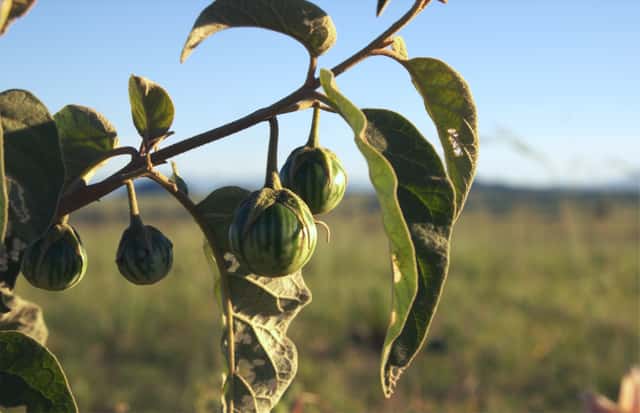
Ethiopian Eggplant (Solanum aethiopicum) is a easy-care plant from the Solanaceae family. Solanum aethiopicum, commonly known as Ethiopian eggplant or scarlet eggplant, is a fruiting shrub in the Solanaceae family native to tropical Africa. It grows up to 2.5 m tall with lobed leaves, produces star-shaped white to violet flowers, and bears small egg-shaped berries that ripen from green t...
Ethiopian Eggplant grows up to 2.5m, spread of 120cm, watering every 5 days, 18°C – 35°C, 60–90% humidity. It is not suitable for indoor environments and not safe for pets.
Unlike many tropical plants, Ethiopian Eggplant tolerates watering mistakes. Best for beginners. Without precautions, ingestion can cause irritation in pets. Keep out of reach of cats and dogs.
How to Care for Ethiopian Eggplant?
TLDR: Ethiopian Eggplant needs Direct sun, watering every 5 days, and temperatures between 18-35°C with 60-90% humidity.
How Often Should You Water Ethiopian Eggplant?
Water deeply every 4–6 days, allowing the top inch of soil to dry between waterings. Avoid wetting the foliage to reduce risk of fungal disease. Increase frequency during hot, dry spells.
How Much Light Does Ethiopian Eggplant Need?
Requires full direct sunlight for at least 6–8 hours per day. In low-light conditions, fruiting is reduced and plants become leggy. Best placed in a south-facing spot outdoors.
What Is the Best Soil for Ethiopian Eggplant?
Prefers loamy, fertile, well-draining soil rich in organic matter. pH between 5.5 and 7.0. Amend with compost before planting and ensure good drainage to prevent root rot.
Care Schedule
Fertilize
Every 30 days
Repot
Every 365 days
What Is Ethiopian Eggplant and Where Does It Come From?
Solanum aethiopicum, commonly known as Ethiopian eggplant or scarlet eggplant, is a fruiting shrub in the Solanaceae family native to tropical Africa. It grows up to 2.5 m tall with lobed leaves, produces star-shaped white to violet flowers, and bears small egg-shaped berries that ripen from green to vivid orange-red. It is one of the five most economically important vegetables in sub-Saharan Africa, valued for both its edible fruits and nutritious leaves.
How to Propagate Ethiopian Eggplant?
Seed
Stem Cutting
How Big Does Ethiopian Eggplant Grow?
TLDR: Ethiopian Eggplant can reach up to 2.5m tall with Fast growth rate.
Max height
2.5m
Spread
1.2m
Growth rate
Fast
Foliage
Deciduous
Warning: Toxic Plant
This plant can be toxic if ingested. Keep out of reach of:
Plant Uses
Edible
Can be consumed
Medicinal
Medicinal properties
Ornamental
Great for decoration
Medicinal Uses
- Anti-inflammatory properties
- Antidiabetic effects
- Antioxidant activity
- Traditionally used to treat hypertension
- Antibacterial properties
Culinary Uses
- Fruits eaten raw or cooked in soups and stews
- Leaves used in traditional soups
- Used as tomato sauce base in West Africa
- Popular in Thai and West African cuisine
- Harvested green for maximum culinary use
Is your plant showing symptoms?
Click on the symptom to discover possible causes:
What Diseases Commonly Affect Ethiopian Eggplant?
TLDR: Ethiopian Eggplant is susceptible to 13 known diseases. Monitor regularly for early detection.
Bacterial Wilt
Bacterial wilt is a fatal vascular disease caused by bacteria (Erwinia tracheiphila, Ralstonia solanacearum, Xanthomonas spp.) that infects the water-conducting tissue of plants. The bacteria multiply and block the flow of water and nutrients, causing rapid wilting and plant death within 1-2 weeks.
Fusarium Wilt
Fusarium wilt is a serious fungal disease caused by the soil-borne fungus Fusarium oxysporum. The fungus invades roots and blocks the water-conducting vessels (xylem) of the plant, causing progressive wilting and eventual death. Host-specific forms of the pathogen exist that attack different plant species.
Verticillium Wilt
Verticillium wilt is a soil-borne fungal disease caused primarily by the fungi Verticillium dahliae and V. albo-atrum. These pathogens infect plant roots and grow within the vascular tissues, blocking water and nutrient transport, resulting in wilting and eventual plant death. The disease affects over 350 plant species including vegetables, fruits, ornamental flowers, and trees. The fungi can survive in soil for more than 10 years as resistant structures called microsclerotia.
Root-Knot Nematodes
Root-knot nematodes (Meloidogyne species) are microscopic roundworms that parasitize plant roots, causing characteristic galls or knots. These soil-borne pests are among the most economically damaging plant pathogens worldwide, affecting a wide range of ornamental and edible plants. The nematodes inject enzymes into root cells, causing abnormal swelling and disrupting water and nutrient uptake.
Fun Facts
Solanum aethiopicum is considered one of the five most important vegetables in sub-Saharan Africa.
The plant can produce roughly 25 tons of fruit per hectare, making it one of the most productive vegetable crops.
Its leaves are more nutritious than the fruits — packed with iron, calcium, and vitamins.
The scarlet-red fruits get their vivid color from high carotene content.
It is also used as rootstock for grafting tomatoes and eggplants to improve disease resistance.
Compare with similar plants
| Attribute | Difficulty | Light | Watering | Pet Safe |
|---|---|---|---|---|
| Field Maple | Easy | Bright indirect | 14d | ✓ |
| Silver Birch | Easy | Direct sun | 14d | ✓ |
| Cushion Bush | Easy | Direct sun | 14d | ✓ |
| Peruvian peppertree | Easy | Direct sun | 14d | ⚠️ |