Balsaminaceae
Garden Balsam: Medicinal Uses & Care Tips
Impatiens balsamina
An easy-to-grow plant that thrives in consistently moist soil and locations with filtered light or partial shade.
Every 3 days
Bright indirect
15° - 35°C
50% - 80%
Categories
What is Garden Balsam?
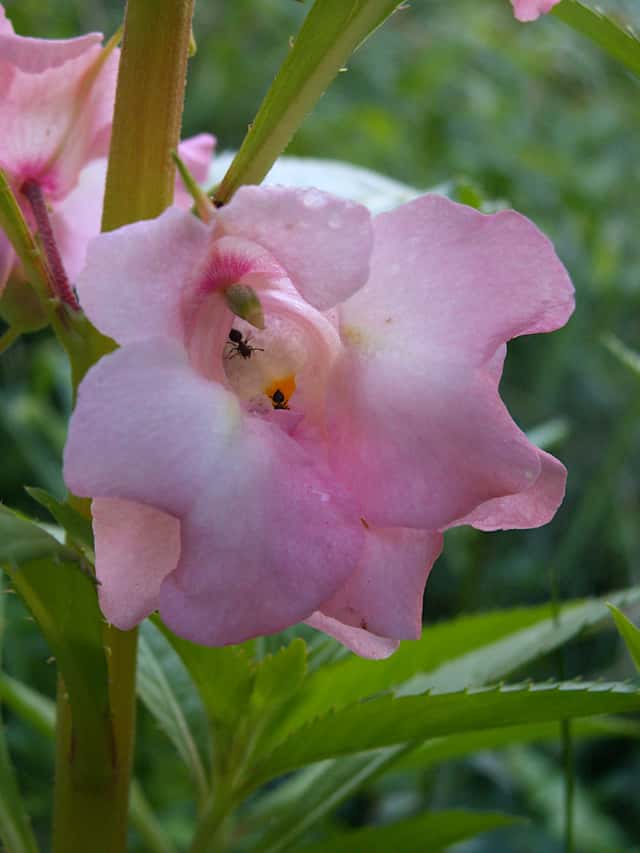
Garden Balsam (Impatiens balsamina) is a easy-care plant from the Balsaminaceae family. Impatiens balsamina, commonly known as Garden Balsam or Rose Balsam, is an annual herbaceous plant native to Southeast Asia. Its vibrant flowers grow along succulent stems, and the plant is famous for its seed pods that explode when touched once mature—a fascinating dispersal mechanism.
Garden Balsam grows up to 75cm, spread of 45cm, watering every 3 days, 15°C – 35°C, 50–80% humidity. It is suitable for indoor environments and safe for pets.
Unlike many tropical plants, Garden Balsam tolerates watering mistakes. Best for beginners. Unlike many popular species, Garden Balsam is safe to keep around pets. Without adequate drainage, root rot can develop within 7 days.
How to Care for Garden Balsam?
TLDR: Garden Balsam needs Bright indirect, watering every 3 days, and temperatures between 15-35°C with 50-80% humidity.
How Often Should You Water Garden Balsam?
Never let the soil dry out completely; if the plant wilts, water it immediately to help it recover.
How Much Light Does Garden Balsam Need?
Avoid direct sunlight during the hottest hours of the day, as it can cause the leaves to wilt quickly.
What Is the Best Soil for Garden Balsam?
Use a mixture of potting soil and worm castings to ensure nutrients and water retention.
What Pot Should You Use for Garden Balsam?
Plastic or glazed ceramic pots that better retain soil moisture.
Care Schedule
Fertilize
Every 14 days
What Is Garden Balsam and Where Does It Come From?
Impatiens balsamina, commonly known as Garden Balsam or Rose Balsam, is an annual herbaceous plant native to Southeast Asia. Its vibrant flowers grow along succulent stems, and the plant is famous for its seed pods that explode when touched once mature—a fascinating dispersal mechanism.
How to Propagate Garden Balsam?
Sowing
- Seeds need some light to germinate; do not bury them deeply.
- 1 Collection
Harvest seeds from mature pods before they explode naturally.
- 2 Planting
Sow in rich, light soil, covering lightly with a thin layer of earth.
- 3 Moisture
Keep the substrate consistently moist and in a bright location until germination.
Materials needed:
Stem cuttings
- Change the water every two days if rooting in water to prevent rot.
- 1 Cutting
Cut a healthy stem segment about 4 inches (10cm) long, preferably without flowers.
- 2 Preparation
Remove the bottom leaves and place the stem in a glass of water or directly into moist soil.
- 3 Rooting
Keep in a spot with indirect light until roots develop.
Materials needed:
How Big Does Garden Balsam Grow?
TLDR: Garden Balsam can reach up to 75cm tall with Fast growth rate.
Max height
75cm
Spread
45cm
Growth rate
Fast
Foliage
Deciduous
Plant Uses
Ornamental
Great for decoration
Medicinal
Medicinal properties
Medicinal Uses
- Treatment of burns and skin inflammations
- Topical use for nail fungus
- Relief of joint pain in compresses
Is your plant showing symptoms?
Click on the symptom to discover possible causes:
What Diseases Commonly Affect Garden Balsam?
TLDR: Garden Balsam is susceptible to 15 known diseases. Monitor regularly for early detection.
Powdery Mildew
Powdery mildew is a common fungal disease caused by various fungi species including Erysiphe, Podosphaera, Oïdium, and Leveillula. It affects over 10,000 plant species worldwide. The disease thrives in warm, dry climates with high humidity and appears as a distinctive white powdery coating on plant surfaces.
Downy Mildew
Downy mildew is a fungal-like disease caused by oomycetes (water molds) that thrives in cool, wet conditions. It affects a wide range of plants, causing yellowing leaves with fuzzy white-gray growth underneath, leading to defoliation and reduced yields if left untreated.
Root Rot
Root rot is a serious fungal disease that affects the root system of plants, causing them to decay and die. It is primarily caused by overwatering, poor drainage, or soil-borne fungi such as Pythium, Phytophthora, Rhizoctonia, and Fusarium. The disease thrives in waterlogged conditions where roots are deprived of oxygen, making them susceptible to fungal infection.
Aphids
Aphids are small, soft-bodied, pear-shaped insects (1/16 to 1/8 inch long) that feed by sucking nutrient-rich sap from plants. They reproduce rapidly and can quickly weaken plants, causing distorted growth and transmitting plant viruses. Aphids come in various colors including green, black, red, yellow, brown, and gray. They secrete honeydew, a sticky substance that attracts ants and encourages sooty mold growth.
Meaning & Symbolism
Represents impatience and ardent love, but also resilience.
Compare with similar plants
| Attribute | Difficulty | Light | Watering | Pet Safe |
|---|---|---|---|---|
| Field Maple | Easy | Bright indirect | 14d | ✓ |
| Silver Birch | Easy | Direct sun | 14d | ✓ |
| Cushion Bush | Easy | Direct sun | 14d | ✓ |
| Peruvian peppertree | Easy | Direct sun | 14d | ⚠️ |