Poaceae
Yellow Groove Bamboo — Phyllostachys aureosulcata
Phyllostachys aureosulcata
Yellow Groove Bamboo thrives in full sun with consistently moist, well-draining loamy soil. Water every 7 days, allowing the top inch of soil to dry between waterings. Fertilize in spring and early summer. Install a root barrier to prevent invasive spreading. Prune out old or damaged culms in early spring to encourage fresh growth.
Every 7 days
Direct sun
-20° - 38°C
40% - 80%
Categories
What is Yellow Groove Bamboo?
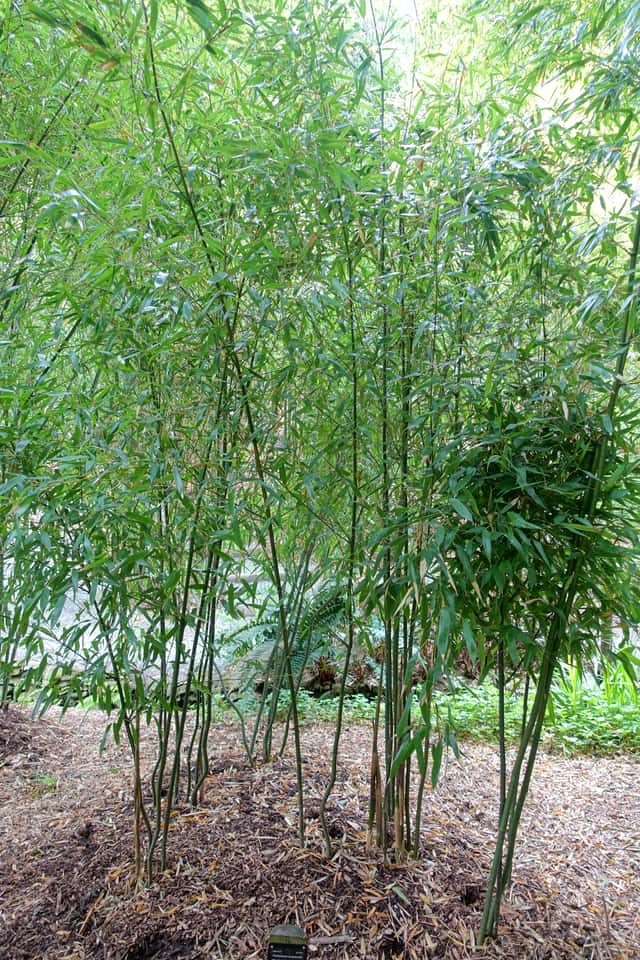
Yellow Groove Bamboo (Phyllostachys aureosulcata) is a medium-care plant from the Poaceae family. Yellow Groove Bamboo (Phyllostachys aureosulcata) is a striking running bamboo native to the Zhejiang Province of China. It is named for the distinctive yellow groove that runs along each dark green culm, creating an eye-catching two-tone effect. One of the hardiest bamboos available, it tolerates t...
Yellow Groove Bamboo grows up to 9.0m, spread of 760cm, watering every 7 days, -20°C – 38°C, 40–80% humidity. It is not suitable for indoor environments and safe for pets.
Unlike many popular species, Yellow Groove Bamboo is safe to keep around pets.
How to Care for Yellow Groove Bamboo?
TLDR: Yellow Groove Bamboo needs Direct sun, watering every 7 days, and temperatures between -20-38°C with 40-80% humidity.
How Often Should You Water Yellow Groove Bamboo?
Water every 7 days, more frequently during hot dry spells. Allow the top 2–3 cm of soil to dry between waterings. Avoid waterlogging — root rot is the primary risk. Mulching around the base helps retain moisture and regulate soil temperature.
How Much Light Does Yellow Groove Bamboo Need?
Requires full sun (6+ hours of direct sunlight daily) for best growth and vibrant culm coloration. Tolerates partial shade but growth will be slower and less vigorous. In hot climates, afternoon shade is beneficial.
What Is the Best Soil for Yellow Groove Bamboo?
Plant in deep, loamy, well-draining soil enriched with organic matter. Soil pH of 5.5–7.0 is ideal. Avoid heavy clay that retains water. Annual top-dressing with compost supports its vigorous growth.
What Pot Should You Use for Yellow Groove Bamboo?
Large outdoor container (minimum 100L) or in-ground planting with root barrier. Use a heavy, stable pot if containerizing to prevent tipping.
Care Schedule
Fertilize
Every 60 days
What Is Yellow Groove Bamboo and Where Does It Come From?
Yellow Groove Bamboo (Phyllostachys aureosulcata) is a striking running bamboo native to the Zhejiang Province of China. It is named for the distinctive yellow groove that runs along each dark green culm, creating an eye-catching two-tone effect. One of the hardiest bamboos available, it tolerates temperatures down to -20°C (-4°F), making it suitable for temperate gardens in USDA zones 4–9. Its fast, vigorous growth makes it popular as a privacy screen, windbreak, and ornamental specimen. The young shoots are edible and notably free of the bitter flavor common to many bamboo species.
How to Propagate Yellow Groove Bamboo?
Rhizome Division
Spring division has the highest success rate. Keep the division consistently moist for the first growing season. Install a root barrier at planting time.
- 1 In early spring before new shoots emerge, dig around the clump edge
- 2 Use a sharp spade or saw to cut through rhizomes, separating a section with 3-5 culms
- 3 Ensure each division has healthy rhizome sections with growth buds
- 4 Replant immediately at the same depth in prepared soil
- 5 Water thoroughly and mulch to retain moisture
Materials needed:
How Big Does Yellow Groove Bamboo Grow?
TLDR: Yellow Groove Bamboo can reach up to 9.0m tall with Fast growth rate.
Max height
9.0m
Spread
7.6m
Growth rate
Fast
Foliage
Evergreen
Plant Uses
Ornamental
Great for decoration
Edible
Can be consumed
Culinary Uses
- Young shoots are edible raw or cooked, with a mild flavor free of bitterness
Is your plant showing symptoms?
Click on the symptom to discover possible causes:
What Diseases Commonly Affect Yellow Groove Bamboo?
TLDR: Yellow Groove Bamboo is susceptible to 4 known diseases. Monitor regularly for early detection.
Leaf Spot
Leaf spot is a common fungal disease caused by various pathogens including Alternaria, Ascochyta, Colletotrichum, Septoria, and Venturia. It primarily affects leaves, causing discolored spots that can lead to premature leaf drop if left untreated.
Rust
Rust is a common fungal disease caused by fungi in the order Pucciniales that affects a wide variety of plants. The disease gets its name from the characteristic orange, yellow, or reddish-brown pustules that appear on leaves, resembling metal rust. This obligate fungal parasite requires living plants to survive and can cause significant economic losses in agricultural crops.
Spider Mites
Spider mites are tiny arachnids (less than 1/20 inch long) related to spiders and ticks that feed on plant sap. They thrive in hot, dry conditions and can cause significant damage to ornamental and vegetable plants. During severe infestations, crop losses can reach 14% or higher as these pests disrupt vital plant processes including photosynthesis, carbon dioxide absorption, and transpiration.
Root Rot
Root rot is a serious fungal disease that affects the root system of plants, causing them to decay and die. It is primarily caused by overwatering, poor drainage, or soil-borne fungi such as Pythium, Phytophthora, Rhizoctonia, and Fusarium. The disease thrives in waterlogged conditions where roots are deprived of oxygen, making them susceptible to fungal infection.
Meaning & Symbolism
Bamboo is one of the "Four Gentlemen" of Chinese art, symbolizing resilience, uprightness, and perseverance. Yellow Groove Bamboo specifically represents the interplay of strength (dark culm) and grace (yellow groove), a balance of contrasts.
Fun Facts
Yellow Groove Bamboo is native to Zhejiang Province in China and has been cultivated in Beijing for centuries
The species can grow up to 90 cm in a single day during peak spring growth
Its zigzag-bent lower culms are a distinctive feature that makes it easy to identify among Phyllostachys species
It holds the Royal Horticultural Society Award of Garden Merit in its 'spectabilis' cultivar form
Frequently asked questions
How fast does Yellow Groove Bamboo grow?
Is Yellow Groove Bamboo invasive?
Can Yellow Groove Bamboo survive frost?
Are Yellow Groove Bamboo shoots edible?
How do I control the spread of Yellow Groove Bamboo?
Compare with similar plants
| Attribute | Difficulty | Light | Watering | Pet Safe |
|---|---|---|---|---|
| Azalea | Medium | Partial shade | 3d | ⚠️ |
| Wild Lettuce | Medium | Direct sun | 7d | ⚠️ |
| Cape Primrose | Medium | Partial shade | 7d | ✓ |
| Turnip | Medium | Direct sun | 3d | ✓ |