Araceae
Water Banana – Typhonodorum lindleyanum
Typhonodorum lindleyanum
Thrives in consistently wet or waterlogged soil with full direct sun. Requires tropical warmth (18-35 degrees C), high humidity (70-100%), and is best suited for outdoor water gardens or large pond margins. Water frequently to keep soil saturated. Fertilize monthly during the growing season.
Every 3 days
Direct sun
18° - 35°C
70% - 100%
Categories
What is Water Banana?
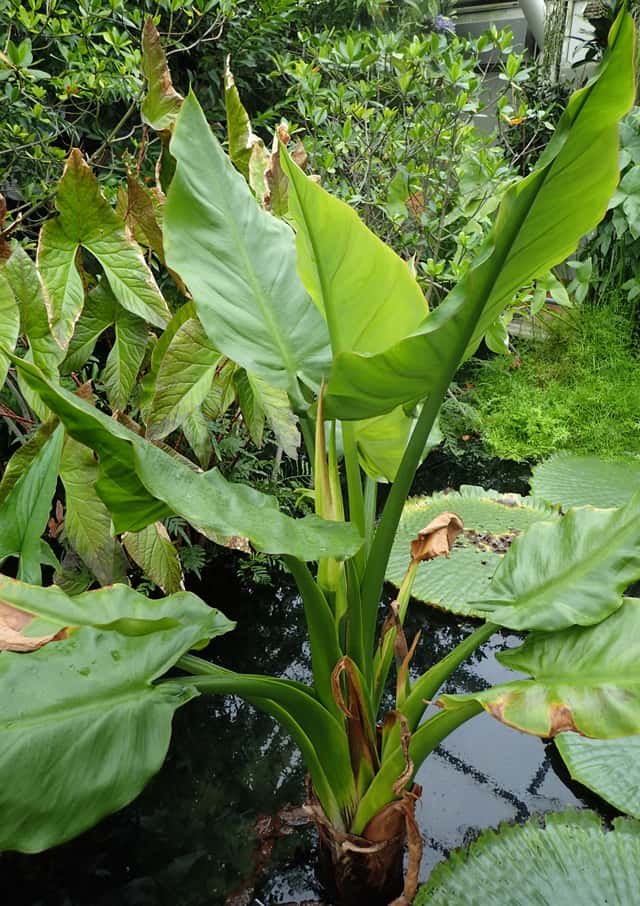
Water Banana (Typhonodorum lindleyanum) is a medium-care plant from the Araceae family. Typhonodorum lindleyanum, commonly known as the Water Banana, is a giant monotypic aroid from Madagascar, the Comoros, Zanzibar, Mauritius, and eastern Tanzania. Growing in freshwater swamps, river banks, and shallow lagoons, it produces massive arrow-shaped evergreen leaves up to 1 meter long, form...
Water Banana grows up to 4.0m, with spread of 200cm, watering every 3 days, 18°C – 35°C, 70–100% humidity. It is not suitable for indoor environments and not safe for pets.
Without precautions, ingestion can cause irritation in pets. Keep out of reach of cats and dogs.
How to Care for Water Banana?
TLDR: Water Banana needs Direct sun, watering every 3 days, and temperatures between 18-35°C with 70-100% humidity.
How Often Should You Water Water Banana?
Keep soil permanently moist to waterlogged. Water every 2-3 days in containers, or plant directly in a pond or bog garden where roots stay submerged.
How Much Light Does Water Banana Need?
Requires bright, direct sunlight for 6+ hours daily. It thrives in full sun and will struggle in shade, producing smaller foliage.
What Is the Best Soil for Water Banana?
Use heavy loamy soil with good moisture retention. For container growing, use aquatic planting compost. Drainage is not a priority — this plant tolerates and prefers waterlogged conditions.
What Pot Should You Use for Water Banana?
Large ceramic pots, aquatic pond baskets, or natural pond/bog garden settings. The container must hold water or be placed at a pond margin.
Care Schedule
Fertilize
Every 30 days
Repot
Every 730 days
What Is Water Banana and Where Does It Come From?
Typhonodorum lindleyanum, commonly known as the Water Banana, is a giant monotypic aroid from Madagascar, the Comoros, Zanzibar, Mauritius, and eastern Tanzania. Growing in freshwater swamps, river banks, and shallow lagoons, it produces massive arrow-shaped evergreen leaves up to 1 meter long, forming impressive pseudo-stems that can reach 4 meters in height. Its cream-colored spathe and spadix inflorescence and large bright-yellow berries make it a truly spectacular specimen plant.
How to Propagate Water Banana?
Root Division
Best performed in spring. Ensure each division retains healthy roots.
- 1 Select a mature plant with multiple offsets
- 2 Cut away a healthy offset with a root portion
- 3 Plant division in heavy loamy aquatic compost
- 4 Keep roots submerged or in waterlogged soil
- 5 Place in warm, sunny location
Materials needed:
Seed Propagation
Sow seeds fresh as viability decreases quickly. Maintain warm humid conditions.
- 1 Collect ripe bright-yellow berries
- 2 Extract seeds and rinse clean
- 3 Sow in moist aquatic compost, barely covered
- 4 Maintain temperatures above 22C
- 5 Keep substrate permanently wet
Materials needed:
How Big Does Water Banana Grow?
TLDR: Water Banana can reach up to 4.0m tall with Fast growth rate.
Max height
4.0m
Spread
2.0m
Growth rate
Fast
Foliage
Evergreen
Warning: Toxic Plant
This plant can be toxic if ingested. Keep out of reach of:
Plant Uses
Ornamental
Great for decoration
Edible
Can be consumed
Medicinal
Medicinal properties
Medicinal Uses
- Traditional remedy for venomous animal bites in Madagascar and East Africa
Culinary Uses
- Starchy rhizome edible after thorough cooking or complete drying to neutralize calcium oxalate
Is your plant showing symptoms?
Click on the symptom to discover possible causes:
What Diseases Commonly Affect Water Banana?
TLDR: Water Banana is susceptible to 10 known diseases. Monitor regularly for early detection.
Root Rot
Root rot is a serious fungal disease that affects the root system of plants, causing them to decay and die. It is primarily caused by overwatering, poor drainage, or soil-borne fungi such as Pythium, Phytophthora, Rhizoctonia, and Fusarium. The disease thrives in waterlogged conditions where roots are deprived of oxygen, making them susceptible to fungal infection.
Phytophthora Root Rot
Disease caused by fungus-like organisms (oomycetes) that live in soil and can survive for years. It affects roots, stem, and crown of plants, being especially severe in waterlogged or poorly drained soils. It is the second most common cause of root rot in trees and shrubs.
Pythium Root Rot
Pythium root rot is a serious fungal disease caused by various Pythium species including P. aphanidermatum, P. ultimum, and P. irregulare. These water molds are present in practically all cultivated soils and attack plant roots under wet conditions, causing rapid wet rot that can extend into the stem. The disease is favored by poor drainage, overwatering, and specific temperatures depending on the species.
Bacterial Blight
Bacterial blight is a serious plant disease caused by pathogenic bacteria that enters plants through wounds or natural openings. It spreads rapidly in warm, wet conditions and can cause significant damage to leaves, stems, and flowers. The bacteria are transmitted by water splash, contaminated tools, and insects.
Meaning & Symbolism
In Madagascar and Indian Ocean island cultures, the Water Banana symbolizes resilience and the abundance of wetland ecosystems.
Fun Facts
Typhonodorum lindleyanum is the only species in its genus — a true monotypic plant with no close relatives.
Its bright-yellow berries are dispersed by water currents, perfectly adapted to freshwater aquatic habitats.
The rhizome has served as a famine food in Madagascar requiring extensive processing to remove toxic calcium oxalate crystals.
It can grow up to 1 meter per season under ideal tropical conditions.
Frequently asked questions
How often should I water Typhonodorum lindleyanum?
Can the Water Banana be grown indoors?
Is Typhonodorum lindleyanum toxic?
What soil does the Water Banana need?
How do I propagate the Water Banana?
Compare with similar plants
| Attribute | Difficulty | Light | Watering | Pet Safe |
|---|---|---|---|---|
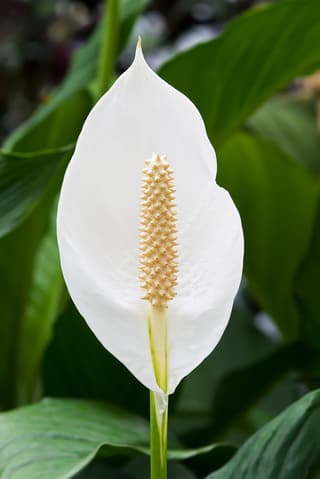
| Peace Lily | Easy | Low light | 4d | ⚠️ |
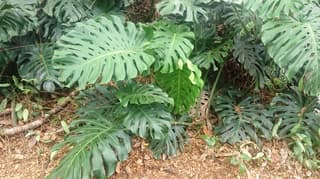
| Swiss Cheese Plant | Easy | Partial shade | 10d | ⚠️ |
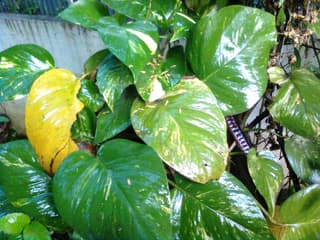
| Golden Pothos | Easy | Low light | 8d | ⚠️ |
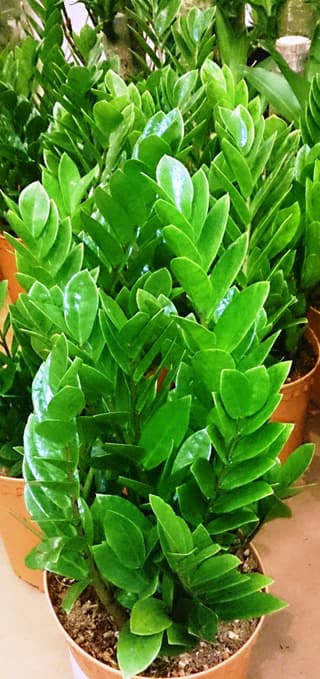
| ZZ Plant | Easy | Low light | 18d | ⚠️ |