Musaceae
Banana / Plantain (Musa × paradisiaca)
Musa × paradisiaca
A fast, lush tropical plant for full sun, constant warmth and rich, moist, well-drained soil. It is a heavy feeder and drinker that resents cold and wind; protect from frost and feed and water generously through the growing season.
Every 4 days
Direct sun
10° - 35°C
60% - 90%
Categories
What is Banana?
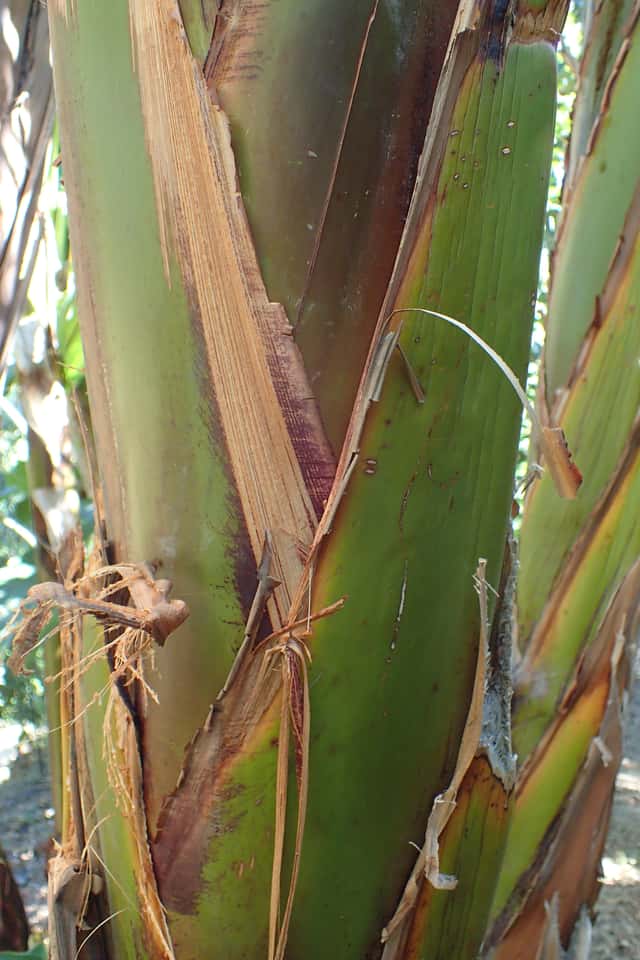
Banana (Musa × paradisiaca) is a medium-care plant from the Musaceae family. Musa × paradisiaca is the cultivated banana and plantain, a hybrid of Musa acuminata and Musa balbisiana. It is a giant herbaceous plant with a trunk-like pseudostem of leaf sheaths reaching 3-7 m, huge paddle leaves, a pendent purple flower bract, and hands of seedless edible fruit.
Banana grows up to 7.0m, spread of 300cm, watering every 4 days, 10°C – 35°C, 60–90% humidity. It is not suitable for indoor environments and safe for pets.
Unlike many popular species, Banana is safe to keep around pets.
How to Care for Banana?
TLDR: Banana needs Direct sun, watering every 4 days, and temperatures between 10-35°C with 60-90% humidity.
How Often Should You Water Banana?
Keep the soil consistently moist but never waterlogged — bananas are thirsty but rot in standing water. Water deeply and often in heat, easing off in cool weather and when growth slows.
How Much Light Does Banana Need?
Give full sun for the largest leaves and best fruiting; in very hot climates light afternoon shade prevents leaf scorch. Indoors it needs the brightest possible spot.
What Is the Best Soil for Banana?
Plant in deep, rich, organic soil that holds moisture yet drains freely; generous compost and mulch suit its huge appetite.
What Pot Should You Use for Banana?
Needs a very large container or open ground; dwarf cultivars suit big pots, but full-size bananas quickly outgrow any practical pot.
Care Schedule
Fertilize
Every 30 days
Misting
Every 7 days
Rotate
Every 7 days
What Is Banana and Where Does It Come From?
Musa × paradisiaca is the cultivated banana and plantain, a hybrid of Musa acuminata and Musa balbisiana. It is a giant herbaceous plant with a trunk-like pseudostem of leaf sheaths reaching 3-7 m, huge paddle leaves, a pendent purple flower bract, and hands of seedless edible fruit.
How to Propagate Banana?
How Big Does Banana Grow?
TLDR: Banana can reach up to 7.0m tall with Fast growth rate.
Max height
7.0m
Spread
3.0m
Growth rate
Fast
Foliage
Evergreen
Plant Uses
Edible
Can be consumed
Medicinal
Medicinal properties
Ornamental
Great for decoration
Medicinal Uses
- Ripe fruit valued as an easily digested source of energy and potassium
- Flower, peel and sap used in traditional remedies across the tropics
Culinary Uses
- Sweet dessert bananas eaten fresh
- Starchy plantains fried, boiled, baked or made into chips
- Leaves used to wrap and steam food
- Banana flower (heart) cooked as a vegetable
Is your plant showing symptoms?
Click on the symptom to discover possible causes:
What Diseases Commonly Affect Banana?
TLDR: Banana is susceptible to 9 known diseases. Monitor regularly for early detection.
Fusarium Wilt
Fusarium wilt is a serious fungal disease caused by the soil-borne fungus Fusarium oxysporum. The fungus invades roots and blocks the water-conducting vessels (xylem) of the plant, causing progressive wilting and eventual death. Host-specific forms of the pathogen exist that attack different plant species.
Cercospora Leaf Spot
Cercospora leaf spot is a common fungal disease caused by Cercospora species that affects many plant types, particularly beets, roses, and leafy vegetables. The disease thrives in warm, humid conditions and can cause significant defoliation, reducing plant vigor and yield. It spreads rapidly through water splash, wind, and contaminated tools.
Bacterial Wilt
Bacterial wilt is a fatal vascular disease caused by bacteria (Erwinia tracheiphila, Ralstonia solanacearum, Xanthomonas spp.) that infects the water-conducting tissue of plants. The bacteria multiply and block the flow of water and nutrients, causing rapid wilting and plant death within 1-2 weeks.
Anthracnose
Anthracnose is a fungal disease caused by fungi in the genus Colletotrichum that affects many plants, including vegetables, fruits, and trees. The disease thrives in cool, wet conditions, causing dark, sunken lesions on leaves, stems, flowers, and fruits.
Meaning & Symbolism
Prosperity, fertility and abundance — a symbol of generosity and plenty in many tropical cultures.
Fun Facts
The banana 'tree' is not a tree at all but the world's largest herbaceous flowering plant; its trunk is made of tightly rolled leaf bases.
Each pseudostem fruits only once, then dies back and is replaced by a sucker from the same underground corm.
Frequently asked questions
Will my banana fruit indoors?
How do I propagate a banana?
Compare with similar plants
| Attribute | Difficulty | Light | Watering | Pet Safe |
|---|---|---|---|---|
| Azalea | Medium | Partial shade | 3d | ⚠️ |
| Wild Lettuce | Medium | Direct sun | 7d | ⚠️ |
| Cape Primrose | Medium | Partial shade | 7d | ✓ |
| Honey Locust | Medium | Direct sun | 14d | ✓ |