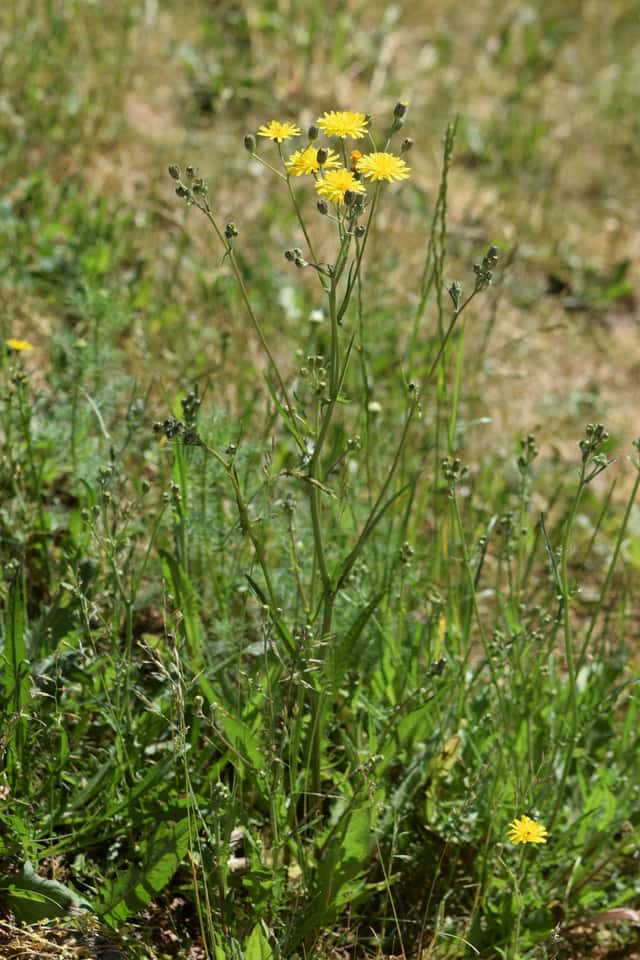
Asteraceae
Crepis (Hawksbeard) Care Guide
Crepis
Grow Crepis in full sun with well-draining, sandy or loamy soil. Water moderately, letting the topsoil dry between waterings, and avoid wetting the foliage to reduce fungal issues. Most species are easy-going self-seeders that need little fertilizing or pampering once established.
Every 7 days
Direct sun
5° - 30°C
30% - 60%
Categories
What is Hawksbeard?
Hawksbeard (Crepis) is a easy-care plant from the Asteraceae family. Crepis is a genus of roughly 200 annual, biennial, and perennial wildflowers in the daisy family (Asteraceae), commonly called hawksbeards for their dandelion-like yellow flower heads and beaked seeds. This is a genus-level care profile — it covers general growing conditions shared across Crepis spe...
Hawksbeard grows up to 1.0m, spread of 40cm, watering every 7 days, 5°C – 30°C, 30–60% humidity. It is not suitable for indoor environments and safe for pets.
Unlike many tropical plants, Hawksbeard tolerates watering mistakes. Best for beginners. Unlike many popular species, Hawksbeard is safe to keep around pets.
How to Care for Hawksbeard?
TLDR: Hawksbeard needs Direct sun, watering every 7 days, and temperatures between 5-30°C with 30-60% humidity.
How Often Should You Water Hawksbeard?
Water at the base early in the morning or evening rather than overhead, and allow the soil surface to dry out between waterings — hawksbeards tolerate short dry spells better than soggy soil.
How Much Light Does Hawksbeard Need?
Give Crepis as much direct sun as possible; a south-facing spot or open, unshaded bed produces the strongest flowering and compact growth.
What Is the Best Soil for Hawksbeard?
Use loose, well-draining soil (sandy or loamy) with a near-neutral pH of 6.0-7.0. Avoid heavy clay or waterlogged spots, which encourage root rot.
What Pot Should You Use for Hawksbeard?
Crepis is usually grown directly in garden beds or wildflower patches rather than pots; if container-grown, use a wide, shallow, well-draining pot to accommodate its basal rosette and taproot.
What Is Hawksbeard and Where Does It Come From?
Crepis is a genus of roughly 200 annual, biennial, and perennial wildflowers in the daisy family (Asteraceae), commonly called hawksbeards for their dandelion-like yellow flower heads and beaked seeds. This is a genus-level care profile — it covers general growing conditions shared across Crepis species rather than one particular species, since individual hawksbeards vary somewhat in height and habit. Native mainly to the Mediterranean Basin, Europe, Asia, and Africa, many Crepis species have naturalized worldwide along roadsides, lawns, and disturbed ground, where their nectar and seeds support bees, bumblebees, and seed-eating birds.
How to Propagate Hawksbeard?
Seed sowing
Crepis self-seeds readily once established, so a single sowing often produces plants for several seasons.
- 1 Sow seeds directly on the soil surface in early spring, as they need light to germinate
- 2 Press seeds gently into well-draining soil without covering them
- 3 Keep the soil lightly moist until seedlings establish
- 4 Thin seedlings to allow airflow between plants
Materials needed:
How Big Does Hawksbeard Grow?
TLDR: Hawksbeard can reach up to 1.0m tall with Fast growth rate.
Max height
1.0m
Spread
40cm
Growth rate
Fast
Foliage
Deciduous
Plant Uses
Ornamental
Great for decoration
Edible
Can be consumed
Culinary Uses
- Young basal leaves eaten raw or cooked as a bitter salad green in some Mediterranean cuisines, similar to chicory or dandelion greens
Is your plant showing symptoms?
Click on the symptom to discover possible causes:
What Diseases Commonly Affect Hawksbeard?
TLDR: Hawksbeard is susceptible to 4 known diseases. Monitor regularly for early detection.
Powdery Mildew
Powdery mildew is a common fungal disease caused by various fungi species including Erysiphe, Podosphaera, Oïdium, and Leveillula. It affects over 10,000 plant species worldwide. The disease thrives in warm, dry climates with high humidity and appears as a distinctive white powdery coating on plant surfaces.
Rust
Rust is a common fungal disease caused by fungi in the order Pucciniales that affects a wide variety of plants. The disease gets its name from the characteristic orange, yellow, or reddish-brown pustules that appear on leaves, resembling metal rust. This obligate fungal parasite requires living plants to survive and can cause significant economic losses in agricultural crops.
Aphids
Aphids are small, soft-bodied, pear-shaped insects (1/16 to 1/8 inch long) that feed by sucking nutrient-rich sap from plants. They reproduce rapidly and can quickly weaken plants, causing distorted growth and transmitting plant viruses. Aphids come in various colors including green, black, red, yellow, brown, and gray. They secrete honeydew, a sticky substance that attracts ants and encourages sooty mold growth.
Caterpillars
Caterpillars are the larval stage of moths and butterflies that feed voraciously on plant foliage, stems, flowers, and fruits. Common species include cabbage loopers, tomato hornworms, armyworms, and cutworms. These pests can cause extensive damage by consuming large amounts of plant tissue in a short time. They vary in size from small (1/4 inch) to large (5 inches), with colors ranging from green to brown, often featuring stripes or spots. Caterpillars are highly mobile and can quickly spread throughout gardens, making them one of the most destructive common pests.
Meaning & Symbolism
As a common wayside wildflower, Crepis is often taken as a symbol of resilience, humility, and the persistence of life in even the poorest or most disturbed soils.
Fun Facts
The genus includes roughly 200 species found from Europe and Africa to Asia, with the greatest diversity around the Mediterranean.
Many Crepis species reproduce by apomixis, producing viable seeds without fertilization.
The name hawksbeard comes from the tuft of hairs (pappus) on the seed, thought to resemble a beak or beard.
Frequently asked questions
Is Crepis the same as a dandelion?
Is Crepis toxic to pets?
How much sun does Crepis need?
Does Crepis need fertilizer?
Compare with similar plants
| Attribute | Difficulty | Light | Watering | Pet Safe |
|---|---|---|---|---|
| Field Maple | Easy | Bright indirect | 14d | ✓ |
| Silver Birch | Easy | Direct sun | 14d | ✓ |
| Cushion Bush | Easy | Direct sun | 14d | ✓ |
| Wild Lettuce | Medium | Direct sun | 7d | ⚠️ |





