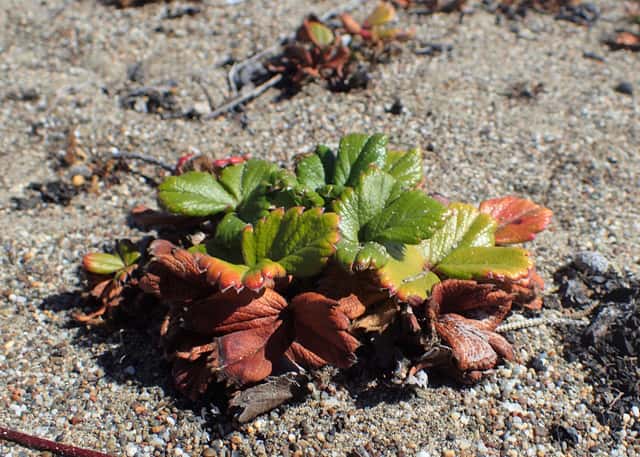
Rosaceae
Beach Strawberry (Fragaria chiloensis)
Fragaria chiloensis
A resilient, low-maintenance groundcover that thrives in full sun with well-draining soil. Water moderately, propagates easily via runners. Tolerates coastal winds and mild frost. Excellent for erosion control on sandy slopes.
Every 5 days
Bright indirect
-18° - 30°C
60% - 80%
Categories
What is Beach Strawberry?
Beach Strawberry (Fragaria chiloensis) is a medium-care plant from the Rosaceae family. Fragaria chiloensis, commonly known as Beach Strawberry or Coastal Strawberry, is a low-growing perennial native to the Pacific coastlines of the Americas, from Alaska to Chile and Argentina. It is one of the two parent species of the modern cultivated strawberry (Fragaria × ananassa). The plant pro...
Beach Strawberry grows up to 15cm, spread of 120cm, watering every 5 days, -18°C – 30°C, 60–80% humidity. It is suitable for indoor environments and safe for pets.
Unlike many popular species, Beach Strawberry is safe to keep around pets. Without adequate drainage, root rot can develop within 10 days.
How to Care for Beach Strawberry?
TLDR: Beach Strawberry needs Bright indirect, watering every 5 days, and temperatures between -18-30°C with 60-80% humidity.
How Often Should You Water Beach Strawberry?
Water every 4-6 days during the growing season, keeping soil consistently moist but never waterlogged. Water at the base to keep foliage dry and prevent fungal issues. Reduce watering significantly in winter.
How Much Light Does Beach Strawberry Need?
Requires at least 6-8 hours of direct sunlight daily for best flowering and fruiting. Can tolerate partial shade but fruit production will be reduced. A south or west-facing position is ideal.
What Is the Best Soil for Beach Strawberry?
Use fertile, well-draining soil with a pH of 6.0-7.5. A mix of garden soil, compost and perlite works well. Mulching helps retain moisture and suppress weeds around the shallow root system.
What Pot Should You Use for Beach Strawberry?
Wide, shallow terracotta or ceramic pots with drainage holes are ideal. Plastic containers also work well as long as drainage is adequate. Aim for at least 30 cm diameter to allow runner development.
Care Schedule
Fertilize
Every 30 days
Repot
Every 365 days
What Is Beach Strawberry and Where Does It Come From?
Fragaria chiloensis, commonly known as Beach Strawberry or Coastal Strawberry, is a low-growing perennial native to the Pacific coastlines of the Americas, from Alaska to Chile and Argentina. It is one of the two parent species of the modern cultivated strawberry (Fragaria × ananassa). The plant produces white to pale red, highly aromatic fruits and forms dense ground-covering mats via stolons. Its dark green, glossy trifoliate leaves may turn reddish in autumn, adding ornamental value.
How to Propagate Beach Strawberry?
Runner Division
Best done in spring or summer. Ensure the runner has visible roots before cutting for higher success rates.
- 1 Identify a healthy, rooted runner with at least one developed plantlet
- 2 Cut the runner from the mother plant using clean, disinfected scissors
- 3 Transplant the plantlet into moist, well-draining potting mix or directly into garden soil
- 4 Keep in partial shade and moist for the first 2 weeks after transplanting
Materials needed:
Crown Division
Divide on cool days to minimize transplant stress.
- 1 Carefully remove the plant from the soil
- 2 Separate individual crowns by hand or with a clean knife
- 3 Replant 30 cm apart in enriched soil
- 4 Water thoroughly after transplanting
Materials needed:
How Big Does Beach Strawberry Grow?
TLDR: Beach Strawberry can reach up to 15cm tall with Medium growth rate.
Max height
15cm
Spread
1.2m
Growth rate
Medium
Foliage
Evergreen
Plant Uses
Edible
Can be consumed
Ornamental
Great for decoration
Ground Cover
Soil coverage
Culinary Uses
- Fresh white fruits eaten straight from the plant or used in jams, jellies, and artisanal liqueurs
- Traditional ingredient in Chilean and indigenous Mapuche cuisine
- Fruits have a more intense, complex aroma than commercial strawberries
- Young leaves can be used to brew herbal tea
Is your plant showing symptoms?
Click on the symptom to discover possible causes:
What Diseases Commonly Affect Beach Strawberry?
TLDR: Beach Strawberry is susceptible to 9 known diseases. Monitor regularly for early detection.
Powdery Mildew
Powdery mildew is a common fungal disease caused by various fungi species including Erysiphe, Podosphaera, Oïdium, and Leveillula. It affects over 10,000 plant species worldwide. The disease thrives in warm, dry climates with high humidity and appears as a distinctive white powdery coating on plant surfaces.
Gray Mold (Botrytis Blight)
Gray mold, caused by the fungus Botrytis cinerea, is one of the most common fungal diseases in plants. It affects over 200 plant species, including ornamentals, vegetables, fruits, and houseplants. The disease thrives in cool, humid conditions with poor air circulation, causing grayish spots and soft rot on infected tissues.
Root Rot
Root rot is a serious fungal disease that affects the root system of plants, causing them to decay and die. It is primarily caused by overwatering, poor drainage, or soil-borne fungi such as Pythium, Phytophthora, Rhizoctonia, and Fusarium. The disease thrives in waterlogged conditions where roots are deprived of oxygen, making them susceptible to fungal infection.
Verticillium Wilt
Verticillium wilt is a soil-borne fungal disease caused primarily by the fungi Verticillium dahliae and V. albo-atrum. These pathogens infect plant roots and grow within the vascular tissues, blocking water and nutrient transport, resulting in wilting and eventual plant death. The disease affects over 350 plant species including vegetables, fruits, ornamental flowers, and trees. The fungi can survive in soil for more than 10 years as resistant structures called microsclerotia.
Meaning & Symbolism
Symbol of indigenous American heritage; its white-fleshed fruits were cultivated by indigenous peoples long before European colonization and ultimately gave rise to the modern strawberry.
Fun Facts
One of two wild species that gave rise to the modern cultivated strawberry (Fragaria × ananassa)
Its fruits are white or cream-colored — not red — and remarkably aromatic
Indigenous Mapuche peoples of Chile cultivated this strawberry centuries before European contact
Chilean plants were brought to France in the 1700s, where they were crossbred to create the modern strawberry
Frequently asked questions
How often should I water Beach Strawberry?
Is Beach Strawberry toxic to pets?
How do I propagate Beach Strawberry?
Why is my Beach Strawberry not fruiting?
Can I grow Beach Strawberry indoors?
Compare with similar plants
| Attribute | Difficulty | Light | Watering | Pet Safe |
|---|---|---|---|---|
| Dark Fieldcap | Medium | Low light | 2d | ⚠️ |
| Azalea | Medium | Partial shade | 3d | ⚠️ |
| Bougainvillea | Medium | Direct sun | 7d | ⚠️ |
| Wild Lettuce | Medium | Direct sun | 7d | ⚠️ |



