Ericaceae
Mountain Laurel: Complete Care Guide
Kalmia
Give Kalmia part shade with acidic, humus-rich, well-drained soil, keep it evenly moist without waterlogging, mulch to cool the roots, and prune only right after flowering since blooms form on old wood.
Every 7 days
Partial shade
-23° - 32°C
45% - 70%
Categories
What is Mountain Laurel?
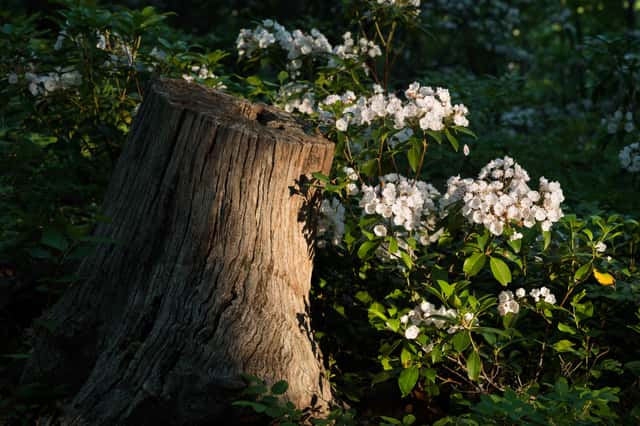
Mountain Laurel (Kalmia) is a medium-care plant from the Ericaceae family. Kalmia is a small genus of broadleaf evergreen shrubs native to eastern North America, best known through Kalmia latifolia, the showy mountain laurel of Appalachian woodlands. Clusters of saucer-shaped white-to-pink-to-purple flowers with intricate spring-loaded anthers open in late spring, set agai...
Mountain Laurel grows up to 4.5m, spread of 240cm, watering every 7 days, -23°C – 32°C, 45–70% humidity. It is not suitable for indoor environments and not safe for pets.
Without precautions, ingestion can cause irritation in pets. Keep out of reach of cats and dogs.
How to Care for Mountain Laurel?
TLDR: Mountain Laurel needs Partial shade, watering every 7 days, and temperatures between -23-32°C with 45-70% humidity.
How Often Should You Water Mountain Laurel?
Water deeply whenever the top few centimeters of soil dry out, especially through the first two summers and any prolonged dry spell; established plants tolerate brief drought but sulk in soggy, compacted ground.
How Much Light Does Mountain Laurel Need?
Morning sun with afternoon shade brings the heaviest bloom; deep shade cuts flowering, and full baking sun in hot climates can scorch the leaves.
What Is the Best Soil for Mountain Laurel?
Plant in acidic (pH 4.5-6), loose, humus-rich soil with excellent drainage - raised beds or slopes help in heavy clay; avoid wet, poorly drained sites and lime-heavy amendments.
Care Schedule
Fertilize
Every 365 days
What Is Mountain Laurel and Where Does It Come From?
Kalmia is a small genus of broadleaf evergreen shrubs native to eastern North America, best known through Kalmia latifolia, the showy mountain laurel of Appalachian woodlands. Clusters of saucer-shaped white-to-pink-to-purple flowers with intricate spring-loaded anthers open in late spring, set against glossy, leathery leaves. Every part of the plant contains grayanotoxins and is dangerously toxic if ingested.
How to Propagate Mountain Laurel?
Semi-hardwood stem cuttings
- Take cuttings in mid to late summer from the current season's growth
- Wound the base and dip in rooting hormone - Kalmia is notoriously slow and difficult to root
- Keep under mist or a humidity tent with bottom heat
- 1 Select cutting
Cut a 10-15cm semi-hardwood shoot tip in July-August.
- 2 Wound and treat
Scrape a thin strip of bark at the base and apply rooting hormone powder or gel.
- 3 Root in mix
Insert into a moist peat-perlite mix, cover for humidity, and keep at 18-21C bottom heat.
- 4 Wait and transplant
Rooting can take 4-6 months; pot up once roots are established and overwinter protected before planting out.
Materials needed:
Layering
- More reliable than cuttings for this hard-to-root genus
- Choose a low, flexible branch that can reach the soil
- 1 Wound branch
Nick the bark on the underside of a low, flexible branch.
- 2 Peg to soil
Bury the wounded section 5-8cm deep in acidic soil mix, pegging it down; leave the tip exposed.
- 3 Wait for roots
Leave undisturbed for 12-18 months, keeping the area moist, until roots form at the buried node.
- 4 Sever and transplant
Cut the rooted layer free from the parent plant and transplant in early spring or fall.
Materials needed:
How Big Does Mountain Laurel Grow?
TLDR: Mountain Laurel can reach up to 4.5m tall with Slow growth rate.
Max height
4.5m
Spread
2.4m
Growth rate
Slow
Foliage
Evergreen
Warning: Toxic Plant
This plant can be toxic if ingested. Keep out of reach of:
Plant Uses
Ornamental
Great for decoration
Is your plant showing symptoms?
Click on the symptom to discover possible causes:
What Diseases Commonly Affect Mountain Laurel?
TLDR: Mountain Laurel is susceptible to 3 known diseases. Monitor regularly for early detection.
Cercospora Leaf Spot
Cercospora leaf spot is a common fungal disease caused by Cercospora species that affects many plant types, particularly beets, roses, and leafy vegetables. The disease thrives in warm, humid conditions and can cause significant defoliation, reducing plant vigor and yield. It spreads rapidly through water splash, wind, and contaminated tools.
Pseudocercospora
Leaf Spot
Leaf spot is a common fungal disease caused by various pathogens including Alternaria, Ascochyta, Colletotrichum, Septoria, and Venturia. It primarily affects leaves, causing discolored spots that can lead to premature leaf drop if left untreated.
Meaning & Symbolism
State flower of Pennsylvania and Connecticut; in Victorian flower language it stands for ambition and the pursuit of glory.
Compare with similar plants
| Attribute | Difficulty | Light | Watering | Pet Safe |
|---|---|---|---|---|
| Dark Fieldcap | Medium | Low light | 2d | ⚠️ |
| Azalea | Medium | Partial shade | 3d | ⚠️ |
| Bougainvillea | Medium | Direct sun | 7d | ⚠️ |
| Wild Lettuce | Medium | Direct sun | 7d | ⚠️ |



